




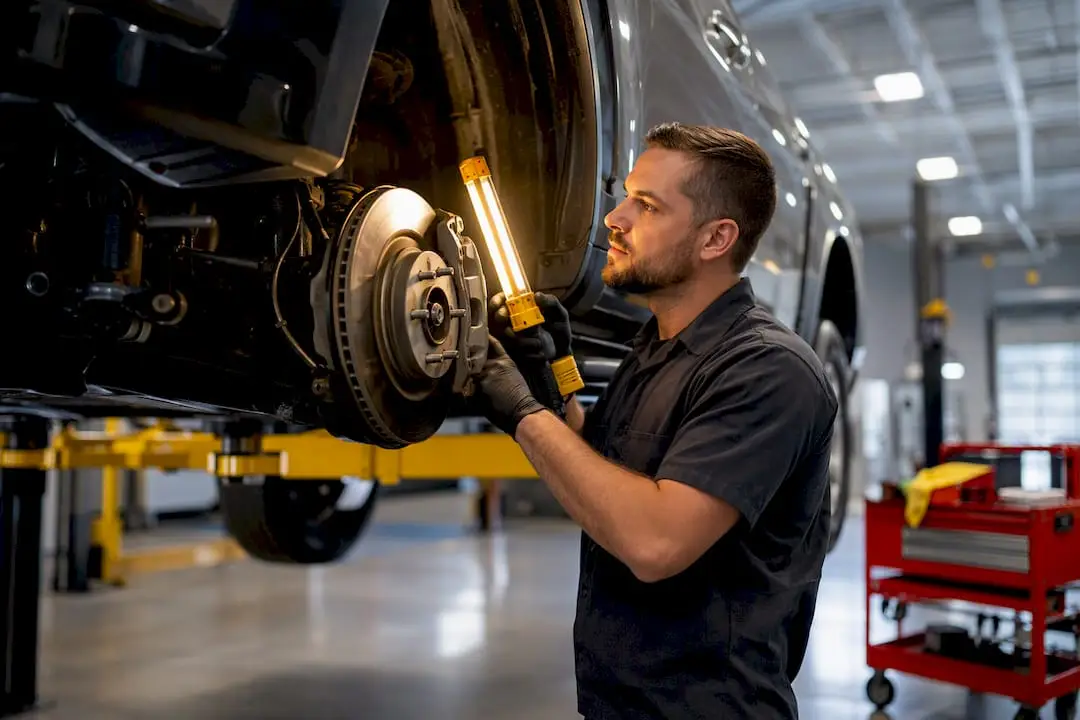
A 30,000 mile service is a milestone maintenance visit built around inspecting brakes, suspension, belts, and fluids while replacing a handful of parts that genuinely wear out on schedule, like the engine air filter and cabin air filter. The single most important move is to check your owner’s manual for your vehicle’s exact requirements, then insist that any replacement beyond routine filters be backed by an inspection or test result, not a guess.
TL;DR:
- Most vehicles at 30,000 miles should undergo a thorough inspection of brakes, suspension, belts, hoses, battery, and fluids before replacing items.
- The typical cost ranges from $150 to $450 for a comprehensive service, with premium dealership help reaching up to $850, depending on oil type and inspection findings.
- Replacements usually include the engine air filter, cabin air filter, brake fluid, and sometimes the fuel filter, but only after verification through testing or measurement.
- Always insist on evidence-based recommendations, including test results or photos, and keep worn parts for your records to avoid unnecessary repairs.
- A well-documented service protects your warranty, resale value, and safety by ensuring critical components are properly inspected and replaced based on actual condition.
Table of Contents
- What Does a 30,000 Mile Service Include?
- How Much Does a 30K Service Cost, and How Long Does It Take?
- How Do You Approve an Estimate Without Overpaying?
- Your Checklist Before You Book the Appointment
- Why This Visit Matters Beyond the Invoice
- How Kwik Kar of Van Alstyne Handles 30,000-Mile Maintenance
- When to Treat 30K as Inspect-First vs. Replace-First
- Ready to Book Your 30K Service?
- Sources
- FAQ
What Does a 30,000 Mile Service Include?
Most shops split a 30K visit into two categories: things they check and things they change. That distinction matters more than the mileage number itself, because a healthy part at 30,000 miles shouldn’t be swapped just because a sticker on the windshield says so.
On the inspection side, expect a multi-point inspection covering brake pad and rotor measurements, suspension components, belts and hoses, a battery test, a diagnostic scan for stored codes, and tire rotation with a pressure check. These are pass/fail or measurement-based checks. If your brake pads still have plenty of material left, they get documented and left alone.
On the replacement side, AAA’s guidance on 30K, 60K, and 90K service confirms the typical visit includes an oil and filter change, tire rotation, and filter replacements, layered on top of that inspection work. The parts most commonly swapped at this mileage are:
- Engine air filter, since a clogged one restricts airflow and hurts fuel economy
- Cabin air filter, which affects how clean the air smells and feels inside the car
- Brake fluid, when it’s due on the manufacturer’s time-based schedule rather than mileage alone
- Fuel filter, but only on vehicles that still use a serviceable one rather than a lifetime, in-tank filter
A good technician will run actual tests before recommending anything beyond that list. Brake fluid gets checked for moisture content, batteries get a conductance or load test, and coolant gets tested for freeze and boil protection. Those results should justify the recommendation, not the other way around. Because service intervals genuinely differ by make and model, Kelley Blue Book’s maintenance interval guide is a good reminder that your owner’s manual, not a generic checklist, is the final word for your specific car.
How Much Does a 30K Service Cost, and How Long Does It Take?
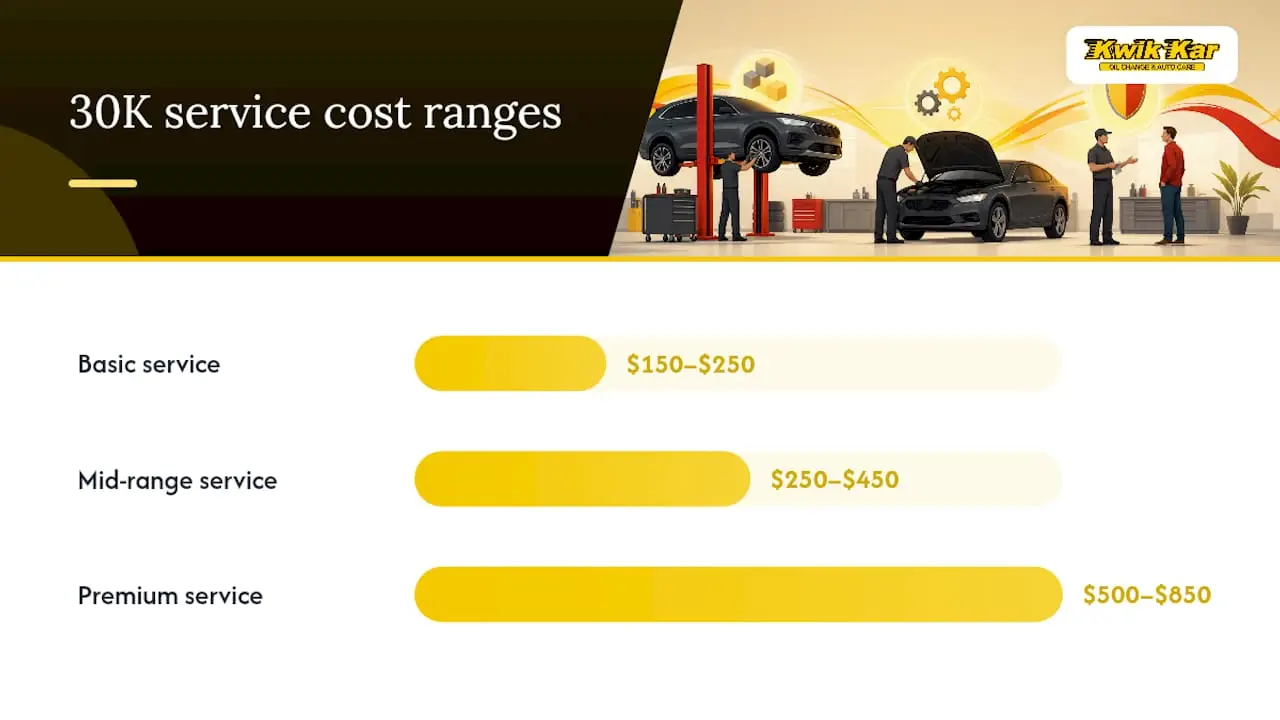
Expect to pay somewhere between $150 and $850 depending on how deep the service goes and where you take the car.
Cost Insider’s breakdown puts basic 30K packages around $150 to $250, covering an oil and filter change, tire rotation, and a visual inspection. Mid-range service lands closer to $250 to $450, usually adding filter replacements and a more thorough multi-point check. Premium dealership visits, especially ones using full-synthetic oil and manufacturer-specified parts, can run $500 to $850.
Three things drive that spread: the oil type (synthetic costs more than conventional but often lasts longer), your area’s typical labor rate, and whatever the inspection turns up. A shop that finds worn suspension bushings or a failing battery during the multi-point check will quote those separately, which is exactly how it should work. Broader cost studies also show average annual maintenance running $400 to $1,200, or roughly $0.11 per mile, so a 30K visit is one piece of a bigger yearly budget rather than an isolated expense.
Labor time for a straightforward 30K service usually runs 0.5 to 2.5 hours, depending on how much the inspection adds to the basic oil change and rotation. Ask for an itemized estimate before you approve anything, and get clear on which line items are firm versus conditional on what the technician finds once the car is on the lift.
How Do You Approve an Estimate Without Overpaying?
The best defense against unnecessary replacements is asking for evidence, not opinions. A part that’s worn enough to replace should have a measurement or a test result behind it, and any decent shop will show you that proof without hesitation.
Here’s how to work through an estimate before you sign off on it:
- Ask where the recommendation comes from. “Where does the manual call for this?” is a fair question, and the answer should point to a specific interval, not a general rule of thumb.
- Request the test result or photo. Brake pad thickness, battery conductance readings, and moisture percentage in brake fluid are all measurable. If a shop can’t show you the number, ask them to run the test again.
- Ask to keep the old part. A shop with nothing to hide will let you look at (or keep) a worn belt, filter, or pad before it goes in the trash.
- Factor in your driving conditions. Towing, frequent short trips, or lots of dusty gravel roads can legitimately move up a replacement timeline. That’s a real exception to inspection-first logic, not an excuse to skip it.
- Take your time on anything that feels off. If a recommendation doesn’t add up, it’s fine to ask for a day to think it over or get a second opinion elsewhere.
Pro Tip: Modern batteries typically last 3 to 5 years, and a conductance or load test at 30,000 miles tells you far more than the calendar does. Don’t approve a battery swap without seeing that number first.
Your Checklist Before You Book the Appointment
A little preparation turns a 30K visit from a guessing game into a documented, defensible service record.
- Screenshot or bring your owner’s manual page for the 30,000 mile interval, or your dashboard’s maintenance minder readout.
- Ask for a written, itemized estimate before any work starts, separating firm items from conditional ones.
- Request a documented multi-point inspection, ideally with photos, so you can see what the technician saw.
- Set clear conditional approvals: inspect first, then call before replacing anything beyond the basics.
- Keep the final invoice, listing mileage and every line item, for warranty claims and resale down the road.
Pairing this with a broader seasonal check, like the items covered in our spring driving maintenance checklist, helps you catch anything the 30K visit doesn’t specifically target.
Why This Visit Matters Beyond the Invoice
Skipping documented maintenance can complicate a warranty claim if a manufacturer asks for proof the schedule was followed, which is one reason factory-scheduled maintenance records matter more than most owners realize. A stack of itemized invoices also strengthens resale value, since buyers and dealers trust a documented service history over a verbal promise. Beyond paperwork, the safety case is straightforward: brakes, suspension, steering, and electrical systems are exactly the components that fail quietly until they fail badly, which is why they get measured, not guessed at, at this mileage.
How Kwik Kar of Van Alstyne Handles 30,000-Mile Maintenance
Every 30K visit at Kwik Kar of Van Alstyne starts with a Digital Vehicle Inspection, meaning you get real photos and documented findings instead of a verbal “you need this” at pickup. ASE-certified technicians run the inspection, test the parts that matter, and give you the results before recommending any replacement.
What that looks like in practice:
- DVI photos showing the actual condition of brakes, belts, and filters
- An itemized invoice separating routine work from anything the inspection flagged
- Test results, not assumptions, behind every replacement recommendation
- After-hours drop-off and free local rides so the visit fits your schedule
- A 2-year/24,000-mile warranty on repairs performed
If you want to see the brake measurements or the brake repair findings before anything gets installed, just ask. That’s a normal request, and it’s how the process is designed to work.
When to Treat 30K as Inspect-First vs. Replace-First
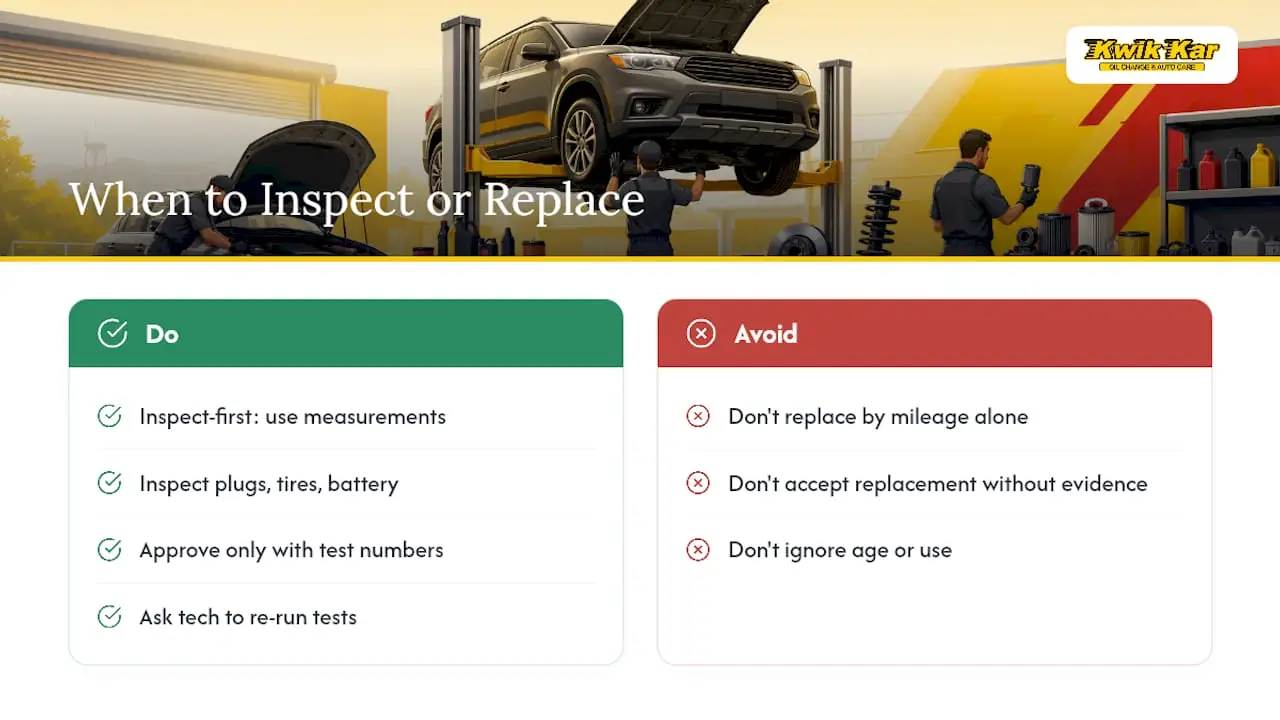
The inspect-first rule holds for most drivers most of the time: let measurements decide what gets replaced. Spark plugs, tires, and the battery are inspection items at 30K on modern vehicles, not automatic swaps.
The exceptions are age and use, not mileage. Brake fluid often needs attention on a time-based schedule, roughly every two to three years, regardless of how many miles you’ve driven. Heavy towing, constant short trips, or dusty roads accelerate wear in ways a mileage-only schedule doesn’t capture. The rule of thumb worth carrying into any service conversation: if a technician can show you the number that justifies a replacement, approve it. If they can’t, ask them to run the test again before you say yes.
— Kwik Kar
Ready to Book Your 30K Service?
You’ve got other options for a milestone service, from quick-lube chains that skip the deeper inspection to dealerships that charge premium labor rates for the same filters and fluid checks. Kwik Kar of Van Alstyne gives you the middle ground drivers in Van Alstyne, Anna, Howe, Melissa, and Gunter actually want: a documented, photo-backed inspection paired with straightforward pricing, so you’re never approving a repair you can’t see evidence for.

Our auto repair services cover everything a 30K visit typically calls for, oil and filter changes, tire rotation, fluid checks, brake inspection, and diagnostic scans, all performed by ASE-certified technicians. Every finding shows up in your Digital Vehicle Inspection report before we touch a single part, and every completed repair carries our 2-year/24,000-mile warranty. Browse the full list on our services page, then call (903) 712-5945 or request an appointment online to get your 30,000-mile service on the calendar.
Sources
- Service By Mileage – Maintenance Guide – Kelley Blue Book
- What to Expect at 30k, 60k, and 90k Mile Services
- Car parts to replace at 30,000 miles vs. what to skip | Techwalla
- 30,000 Mile Service Price Guide 2026 – Cost Insider
FAQ
What Is a 30,000 Mile Service?
It’s a milestone maintenance visit combining a multi-point inspection with routine replacements like the engine air filter and cabin air filter, guided by your owner’s manual’s schedule for your specific vehicle.
How Much Should a 30,000 Mile Service Cost?
Basic packages typically run $150 to $250, mid-range service falls between $250 and $450, and premium dealership visits with synthetic oil can reach $500 to $850.
Is a 30K Mile Service Worth It?
Yes, because the multi-point inspection catches brake, suspension, and battery issues while they’re still cheap to address, and a documented service record protects both your warranty and resale value.
How Long Should a 30,000 Mile Service Take?
Most 30K visits take 0.5 to 2.5 hours of labor, though the exact time depends on how many items the inspection flags for additional work beyond the standard oil change and rotation.