




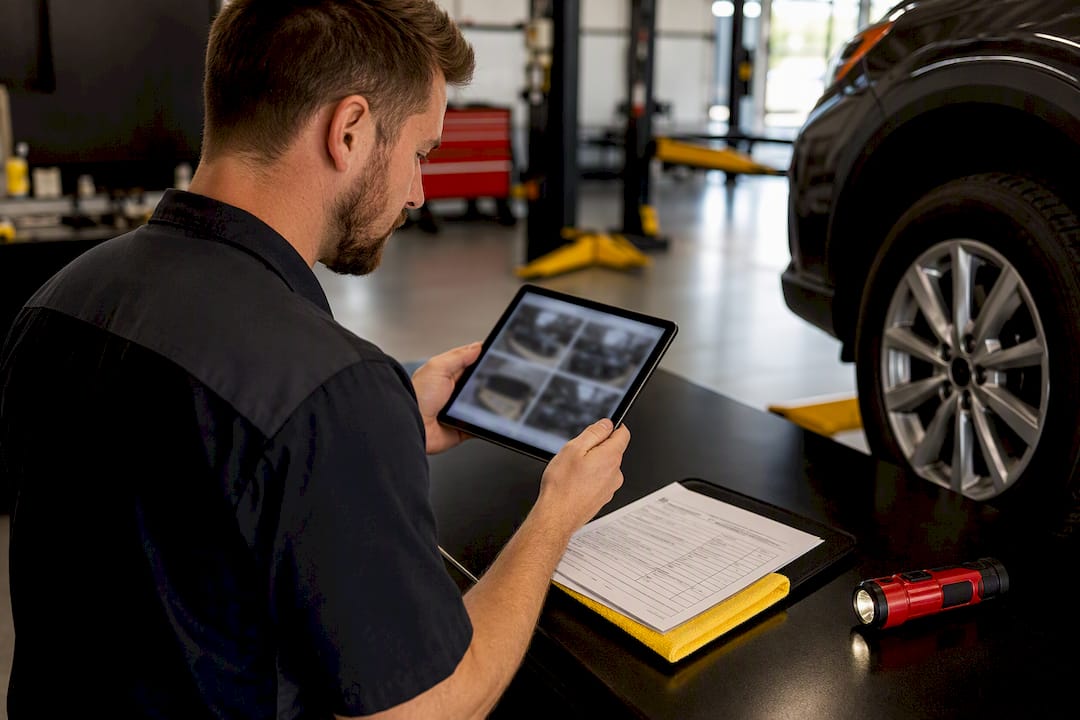
A repair-shop workmanship warranty is the shop’s written promise to fix a repair that fails because of its own work, usually covering both parts and labor for a set time or mileage. There’s no federal standard behind it, so every shop writes its own terms. Before you approve any repair, confirm two things: get the warranty in writing, and ask outright whether labor is included, not just parts.
TL;DR:
- Most auto repair warranties only cover the specific repair performed and may exclude normal wear, unrelated failures, preexisting issues, and post-repair maintenance problems.
- Confirm in writing what parts and labor are covered, understand the limits, and verify whether the warranty is transferable before approving any repair.
- Act quickly if the same problem recurs by documenting communication, scheduling an inspection, and obtaining written explanations for denial, with legal action as a last resort.
- Keeping detailed records of receipts, inspections, estimates, and invoices is essential to enforce warranty claims and prove proper maintenance.
- Repairs at Kwik Kar of Van Alstyne come with a clear, written 2-year/24,000-mile warranty backed by certified technicians and documented vehicle inspections.
Table of Contents
- What Does an Auto Repair Warranty Cover?
- How Do You Verify a Warranty Before Authorizing Work?
- What Should You Do If the Same Problem Comes Back?
- How Do You Protect Yourself Before and After Service?
- How Kwik Kar of Van Alstyne Makes Warranty Coverage Clear
- What Technicians Wish Every Driver Understood About Warranties
- Ready to Book a Repair Backed by Written Warranty Terms?
- Where to Verify Your Rights as a Repair Customer
- Sources
- FAQ
What Does an Auto Repair Warranty Cover?
An auto repair warranty is narrower than most drivers assume. It applies to the specific job the shop performed, not your whole vehicle, and it kicks in only if that exact repair fails again. If your alternator was replaced and the new one dies from a wiring problem the shop never touched, that’s a different repair, not a warranty claim.
Coverage splits into two pieces: parts and labor. A part might carry a manufacturer’s warranty on the component itself, but that doesn’t automatically mean the shop will pay someone to take the car apart and reinstall it for free. Because there’s no federal standard for auto repair workmanship warranties, shops decide their own time and mileage limits, and those limits vary widely.
Typical exclusions show up again and again across the industry:
- Normal wear and tear on unrelated parts (brake pads, tires, belts)
- Failures caused by a separate, unrelated system
- Problems tied to a preexisting condition the shop flagged before the repair
- Damage from skipping recommended maintenance after the repair
Pro Tip: Ask if the warranty is transferable if you sell the car. Some shops honor the remaining term for a new owner, which can be a small selling point when you list the vehicle.
Some shops also require warranty work to be performed at their own location or an authorized affiliate, so read that clause before assuming any mechanic can honor it.
How Do You Verify a Warranty Before Authorizing Work?
Read the warranty the same way you’d read a lease. The details matter more than the headline number. According to Auto Repair Basics from the FTC, there’s no such thing as a “standard warranty,” which means the burden falls on you to check specifics before signing anything.
Work through this list before you approve the repair order:
- Confirm exactly what’s covered: the specific part, the labor to install it, or both.
- Check the time and mileage limits, and write down the exact expiration date.
- Ask what voids the warranty, such as skipped maintenance or repairs done elsewhere.
- Find out who pays for labor if the part fails again.
- Ask whether the warranty transfers if you sell the vehicle.
- Get the shop’s claims contact and process in writing, not verbally.
Pro Tip: Request the written warranty at the same time as your estimate, not after you’ve already paid. A shop that hesitates to put it in writing before the work starts is a red flag worth noticing.
Keep a folder, digital or physical, with your estimate, the digital vehicle inspection photos if the shop provides them, and your final invoice. That paperwork is what turns a warranty from a verbal promise into something enforceable.
What Should You Do If the Same Problem Comes Back?
Act fast, but act carefully. The steps you take in the first few days after a repair fails often determine whether your claim gets honored without friction.
- Contact the shop immediately and describe exactly what’s happening, including when it started.
- Avoid authorizing repairs elsewhere before the original shop gets a chance to inspect the issue.
- Save every text, email, and voicemail related to the problem.
- Ask the shop for a written timeline of when they’ll inspect and, if approved, complete the warranty repair.
- Request a written explanation if the shop denies coverage, including the specific exclusion they’re citing.
A shop acting in good faith should schedule an inspection within a reasonable window and communicate clearly about next steps. If the shop refuses to honor a warranty you believe is valid, get a second opinion from another certified shop and put that assessment in writing. From there, Texas Attorney General guidance on car repairs recommends filing a complaint with your state’s consumer protection office, and small claims court remains an option if the dollar amount is significant and the shop won’t budge.
How Do You Protect Yourself Before and After Service?
Good recordkeeping is the cheapest insurance you’ll ever buy. Most warranty disputes come down to one side having documentation and the other side having memory.
- Keep every maintenance receipt, especially oil changes and services tied to your manufacturer’s schedule.
- Save digital vehicle inspection photos, the written estimate, and the final invoice together.
- Ask specifically whether a replacement part carries its own manufacturer warranty separate from the shop’s labor warranty.
- Confirm in writing whether labor to reinstall a warrantied part is included or billed separately.
- Get a written second-opinion inspection if you ever suspect a repair was done poorly. It’s a stronger negotiating tool than a phone call.
Following the manufacturer’s maintenance schedule also matters more than most drivers realize. Documented recordkeeping, including FTC-recommended practices like saving receipts and dates, gives you a paper trail if a shop later argues the failure came from neglect rather than defective work. A shop can’t deny a claim over “deferred maintenance” if you can prove the maintenance happened on schedule.
How Kwik Kar of Van Alstyne Makes Warranty Coverage Clear
Every repair comes with a 2 year, 24,000 mile warranty, and those terms are put in writing before approval. That’s not an accident. A warranty only means something when both sides can point to the same paperwork if a question comes up later.
Here’s how we back that up in practice:
- ASE-certified technicians perform every repair, from diagnostics to complex engine and transmission work.
- Digital Vehicle Inspections give you real-time photos of what’s failing and what gets replaced, so the repair record isn’t just a line item on an invoice.
- The 2-year/24,000-mile warranty terms are documented clearly, not buried in fine print.
- After-hours drop-off and free local rides mean warranty inspections don’t have to disrupt your whole day.
If you want warranty specifics on a repair before you say yes, ask us directly, we’ll walk through exactly what’s covered and for how long. You can review our full range of auto repair services or see how our Digital Vehicle Inspections work before you ever bring the car in.
What Technicians Wish Every Driver Understood About Warranties
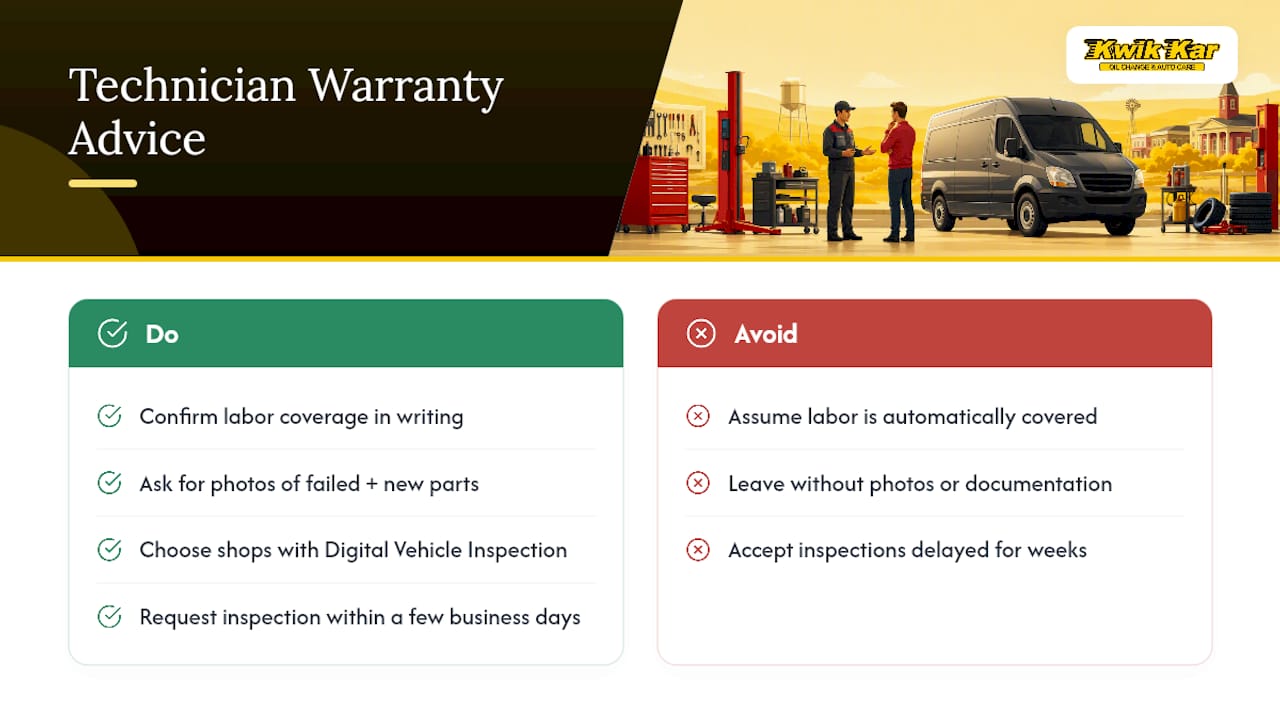
The single biggest misunderstanding in this business is labor coverage. Drivers assume that if a part is warrantied, the shop will automatically pay to remove and reinstall it for free. That’s not guaranteed unless the written terms say so explicitly, and plenty of shops separate parts coverage from labor coverage without making that distinction obvious upfront.
One habit that speeds up every claim: ask for photos of the failed part next to the new one before you leave the shop. A shop with a documented Digital Vehicle Inspection process can pull that evidence in minutes instead of debating what happened weeks later. Reasonable shops should be able to schedule an inspection within a few business days of your call, not weeks.
— Kwik Kar
Ready to Book a Repair Backed by Written Warranty Terms?
Kwik Kar of Van Alstyne gives you something most repair estimates skip entirely: warranty terms you can read before you ever approve the work, not after something goes wrong. Every repair carries a 2-year/24,000-mile warranty, backed by ASE-certified technicians and Digital Vehicle Inspection photos that document exactly what was fixed and why.
If you’re dealing with a check engine light, brake noise, or a transmission that’s acting up, start with our auto repair services page to see what’s covered, or head straight to diagnostics if you need an inspection first. Drivers in Van Alstyne, Anna, Howe, Melissa, and Gunter can call us at (903) 712-5945 to ask warranty questions before you commit to a repair, or request an appointment online. Bring your questions. We’d rather explain the fine print now than have you wonder about it later.
Where to Verify Your Rights as a Repair Customer
- The FTC’s guidance on warranties explains federal-level basics on what shops must disclose.
- Auto repair basics from the FTC covers written estimates and documentation standards.
- The Texas Attorney General’s car repair tips outline state-level complaint procedures.
- For disputes that escalate into injury or liability claims, Tyler Injury Law’s auto accident resources cover legal options beyond consumer complaints.
Sources
FAQ
Does an Auto Repair Warranty Cover Labor, Not Just Parts?
It depends entirely on what the shop’s written warranty states, since there’s no federal requirement either way. Always confirm labor coverage in writing before you approve the repair, because assuming parts coverage includes labor is one of the most common warranty misunderstandings.
What’s the Difference Between a Manufacturer Warranty and a Shop Warranty?
A manufacturer warranty covers the vehicle or a specific part as built by the manufacturer, while a shop’s workmanship warranty covers the quality of the repair work itself. Kwik Kar of Van Alstyne backs every repair with a 2-year/24,000-mile warranty on the work performed.
Can a Repair Shop Deny a Warranty Claim for Skipped Maintenance?
Yes, if the shop’s written terms specify that required maintenance must be followed and you can’t show it was, that’s a common and legitimate exclusion. This is exactly why saving maintenance receipts and following your manufacturer’s schedule matters so much.
What Should I Do If a Shop Refuses to Honor a Warranty I Believe Is Valid?
Get a written second opinion from another certified shop, then contact your state’s consumer protection office if the original shop won’t reconsider. The Texas Attorney General’s guidance outlines the complaint process, and small claims court remains an option for unresolved disputes.
Does Kwik Kar of Van Alstyne Offer a Written Warranty on Repairs?
Yes, Kwik Kar of Van Alstyne provides a 2-year/24,000-mile warranty on repairs, documented in writing before you approve the work. Call (903) 712-5945 or visit the auto repair page to ask about coverage on your specific repair.
Recommended
- Back-to-School Car Check: What Van Alstyne Parents Should Inspect Before Handing Over the Keys
- What a Long Texas Summer Did to Your Car: The End-of-August Checkup Every Van Alstyne Driver Needs
- Factory-Scheduled Maintenance Van Alstyne TX
- Does Texas Heat Mean More Frequent Oil Changes? What Van Alstyne Drivers Should Know