


The mechanic you should choose is the one who backs up work with proof: ASE-certified technicians, a written estimate that separates parts and labor, and a fair warranty on what they fix. Before you hand over your keys, confirm those three things first. Then check referrals and reviews, ask a few pointed questions, and try a small job before committing to anything bigger.
TL;DR:
- Most trustworthy shops display ASE Blue Seal certification and have technicians who pass ongoing ASE tests, confirming verified competence.
- Expect a minimum of 12 months or 12,000 miles warranty on parts and labor, with clear coverage details before authorizing repairs.
- A written estimate should itemize parts and labor separately and include a set approval limit to avoid surprise costs.
- Digital vehicle inspections with photos offer visual proof of necessary repairs, reducing disputes and increasing transparency.
- Conduct an initial trial with a routine service like an oil change to evaluate the shop’s documentation, communication, and pricing practices.
Table of Contents
- Key criteria to use when evaluating any mechanic or shop
- Where to find candidates and how to research them online
- Questions to ask a prospective mechanic before you book work
- How to vet a shop in person on your first visit
- Try-before-you-trust: testing a shop with small jobs first
- When to choose a dealership, independent shop, or chain
- Investigate the mechanic’s policy on handling disputes and customer complaints
- Evaluate the mechanic’s shop cleanliness and organization as an indicator of professionalism
- Check the mechanic’s licensing and business registration for legitimacy
- Publisher perspective: what trust and transparency actually look like
- How to book a trial visit with Kwik Kar of Van Alstyne
- Sources
- FAQ
Key criteria to use when evaluating any mechanic or shop
Start with certification. ASE stands for the National Institute for Automotive Service Excellence, and its Blue Seal designation means a shop has verified that a high share of its technicians passed ASE’s tests and keep renewing them, not just that someone hung a certificate on the wall for show. A shop can advertise “certified technicians” loosely, so ask which certifications and whether the shop itself carries the Blue Seal.
Warranty terms tell you how much a shop trusts its own work. A minimum of 12 months or 12,000 miles on parts and labor is a reasonable baseline used across certified-shop programs, and it is worth asking exactly what is covered before you agree to anything.
A written estimate should list parts and labor separately, not as one lump number, and it should state that the shop will not exceed an agreed dollar or percentage overrun without calling you first, a standard the FTC recommends for every repair.
Digital vehicle inspections with photos give you visual proof of what actually needs attention, which cuts down on disputes over whether a repair was necessary. Specialization matters too: a shop that regularly services your make, especially European vehicles or newer electronics, likely has the right diagnostic software on hand. Convenience features like after-hours drop-off and a courtesy ride reduce the real cost of a repair by saving you time off work.
- ASE Blue Seal and individual technician certifications signal verified competence, not just marketing.
- A 12-month/12,000-mile warranty on parts and labor is a fair minimum to expect.
- A written estimate separating parts and labor, with a set overrun approval limit, prevents surprise bills.
- Photo-based digital inspections give you evidence, not just a verbal claim.
Pro Tip: Ask to see the shop’s warranty in writing before you approve any repair, not after the work is done.
Where to find candidates and how to research them online
Start close to home. Referrals from friends, family, and neighbors remain one of the most reliable starting points, according to the FTC, because people you trust will tell you honestly whether a shop communicated well and priced fairly. From there, widen your search methodically.
- Ask two or three people you trust for a shop they have used more than once, then note any names that repeat.
- Cross-check those names against several review sources and look for consistent themes, not just star ratings.
- Use the ASE Blue Seal locator or RepairPal’s certified-shop directory to confirm certification status and get a rough cost estimate.
- Skim shop photos and listings for organized bays, visible diagnostic equipment, and staff presence, and read how the shop responds to negative reviews.
- Check the Better Business Bureau or your state’s consumer protection office for unresolved complaints before you commit.
A shop that responds calmly and specifically to a bad review tells you more than a wall of five-star ratings ever will.
Questions to ask a prospective mechanic before you book work
A short conversation at the counter or on the phone can tell you almost everything you need to know. Ask how much experience the shop has with your specific make and model, and whether an ASE-certified or master technician will actually handle the diagnostic work rather than an apprentice.
Confirm how estimates are built: is labor billed at a flat rate or hourly, is there a diagnostic fee, and will you get a written estimate that separates parts from labor with a clear cutoff for approval on any overrun. That last point matters because FTC guidance treats it as a basic consumer protection, not an extra courtesy.
Ask about warranty length and exactly what it covers, and ask how the shop documents repairs, whether through photos, a digital vehicle inspection, or both. Before you leave, ask about turnaround time, where parts are sourced from, and what payment or financing options are available. It is reasonable to ask to see the worn or failed part once the work is done.
- Ask if a certified technician handles diagnostics on your specific make and model.
- Request a written estimate with parts and labor listed separately and a set approval threshold.
- Ask what the warranty covers and for how long, and how repairs are documented.
Pro Tip: If a shop hesitates to put an estimate in writing, treat that hesitation as your answer.
How to vet a shop in person on your first visit
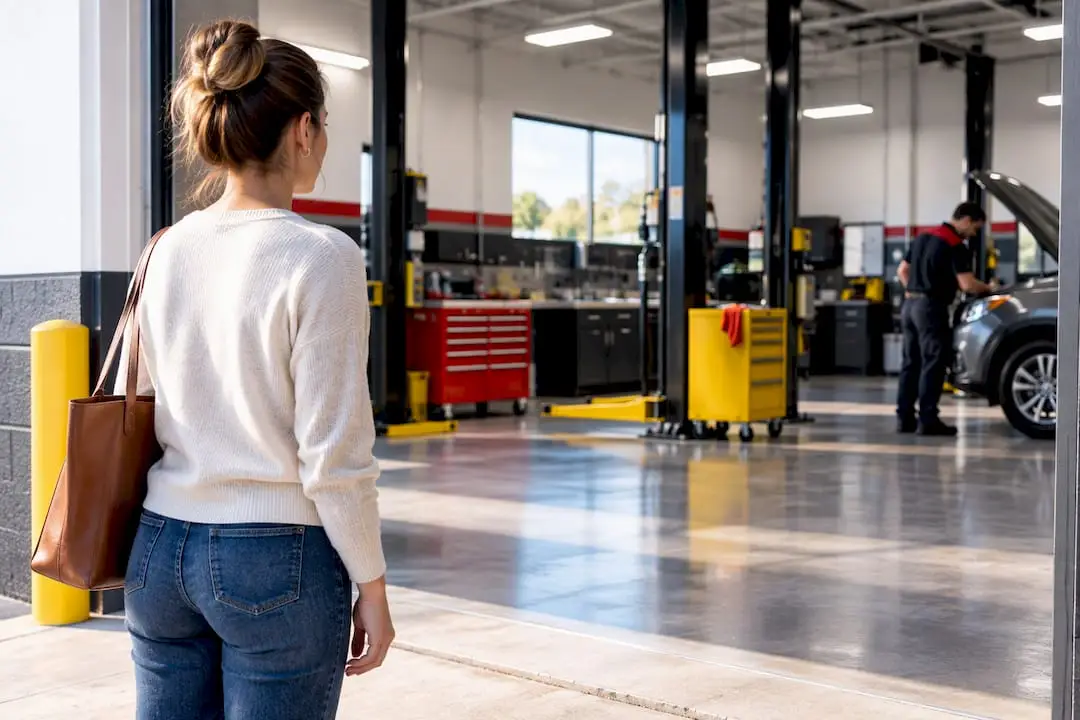
A short walk through the shop tells you more than any website. Look at how the bays are organized, whether diagnostic tools are visible and modern, and whether any posted certifications match what staff claim when you ask directly.
Pay attention to how the service advisor talks to you. A trustworthy shop explains a diagnosis in plain language, not vague warnings, and hands you something in writing before starting work rather than promising to “figure out the paperwork later.”
- Organized, clean bays with visible diagnostic equipment suggest a shop that invests in its work, a point Consumer Reports has raised when comparing shops that rely on tools and training versus those relying on polished waiting rooms alone.
- Staff who explain findings clearly and provide a written estimate without being pressed are a good sign.
- Photo evidence or a digital vehicle inspection report backs up the diagnosis instead of asking you to take their word for it.
- Evasive answers, pressure to sign immediately, no paperwork, or refusal to show you a worn part are all reasons to walk away.
None of these checks require mechanical knowledge. They just require you to pay attention for five minutes before you commit your car, or your money, to a stranger.
Try-before-you-trust: testing a shop with small jobs first
The lowest-risk way to evaluate a shop is to give it a small job first. An oil change, a routine inspection, or a minor service lets you compare the original estimate to the final bill without much at stake.
- Book a routine service and note whether the final invoice matches the written estimate you were given.
- Watch whether recommended follow-up repairs seem to repeat or escalate without clear documentation, a pattern Consumer Reports flags as worth questioning.
- If a second opinion feels necessary for a costly repair, get one calmly. A shop confident in its diagnosis will not take offense.
- Keep a simple record of every visit. It builds a service history that helps any shop diagnose problems faster down the road.
A shop that documents and justifies each recommendation, rather than piling on new problems every visit, is one worth sticking with.
When to choose a dealership, independent shop, or chain
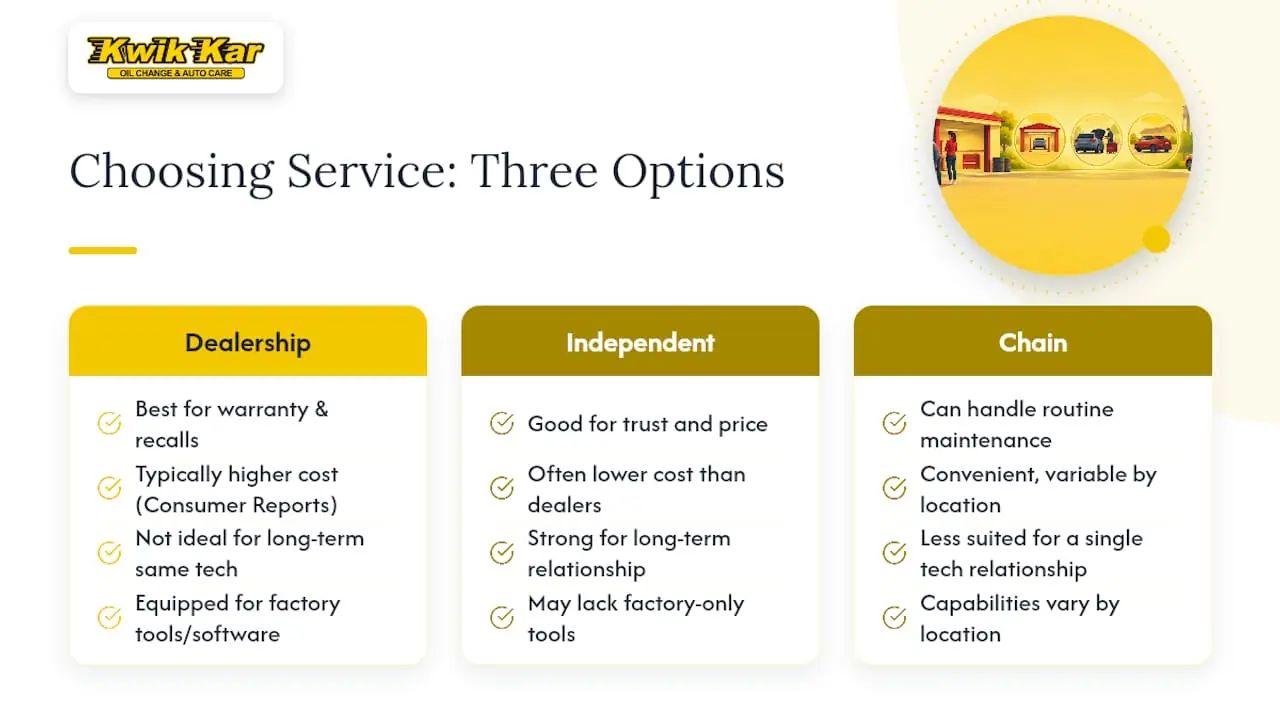
Dealerships make the most sense for warranty work, recalls, and diagnostics tied to factory software, though Consumer Reports survey data show they typically cost more than independents. If your vehicle is still under a manufacturer’s warranty for a specific repair, a dealer is often the safer route.
Independent shops frequently score well on trust and price, and they are a strong choice for building a long-term relationship where the same technician gets to know your vehicle over the years. Chains offer convenience for routine maintenance, though capabilities can vary by location, so the vetting steps above still apply.
If a repair needs factory-only tools, proprietary software, or specialized calibration such as certain ADAS or auto glass replacement work, lean toward a dealer or a specialist equipped for it.
Investigate the mechanic’s policy on handling disputes and customer complaints
Ask directly what happens if you disagree with a diagnosis or a bill. A shop with nothing to hide will explain its process clearly: how disputes get escalated, whether a manager reviews disagreements, and whether they will show you the failed part or photo evidence to support their case.
Reading how a shop has handled past complaints publicly is one of the fastest ways to judge this before you ever set foot inside. Shops that respond to negative reviews with specifics, not defensiveness, generally treat in-person disputes the same way. You can also check whether the shop has unresolved complaints filed with the Better Business Bureau or your state’s consumer protection office, both of which the FTC points to as reliable checkpoints before you commit to a repair.
If a shop refuses to discuss its dispute process, or gets defensive at a reasonable question about it, take that as useful information. A shop confident in its own documentation, written estimates, warranty terms, and photo evidence, usually welcomes the question because it rarely needs to use that process.
This is also where a documented paper trail from your earlier visits helps you. If you already have written estimates and inspection photos on file, a dispute becomes a quick comparison of records rather than a he-said-she-said argument. That is one more reason to keep every estimate and invoice, even for small jobs.
Evaluate the mechanic’s shop cleanliness and organization as an indicator of professionalism
A shop’s physical condition is not just cosmetic. Organized tool storage, clearly labeled bays, and a waiting area that is not cluttered with unresolved paperwork all point to a business that runs on process rather than guesswork.
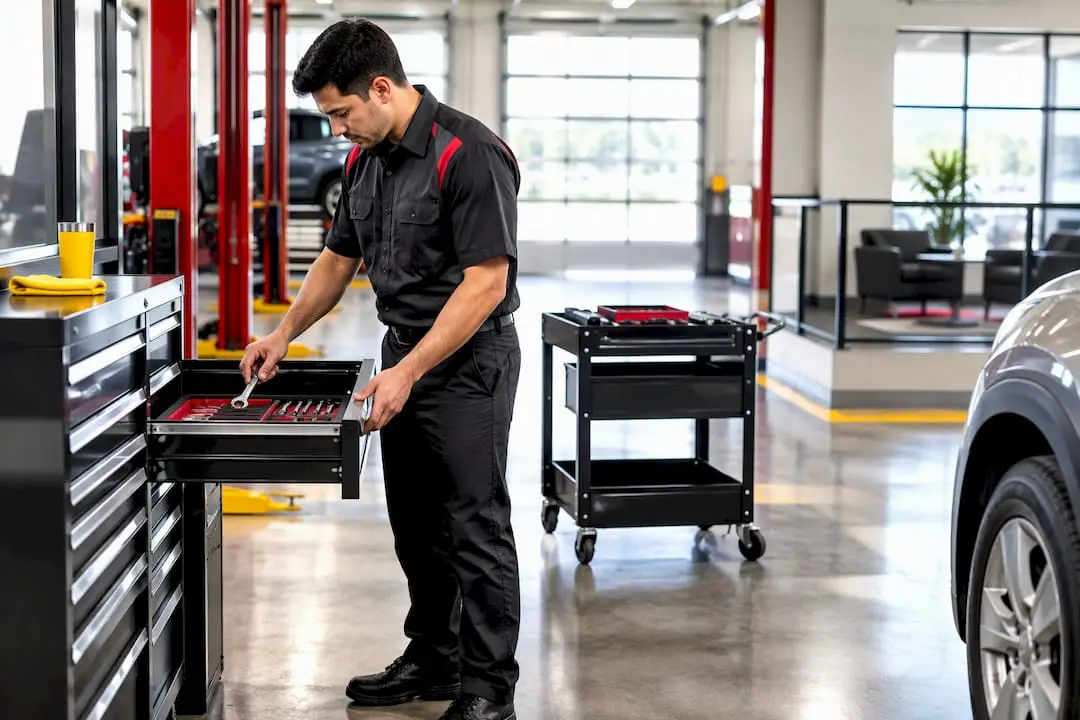
This does not mean a shop needs to look showroom-perfect. Working bays get dirty, and grease is part of the job. What matters is whether tools are put away, whether vehicles in progress are tagged or tracked, and whether the front desk can locate your paperwork quickly when you ask about it.
Disorganization at the counter often mirrors what happens in the bay. If a service advisor cannot find your service history or struggles to explain what stage your repair is at, that is a preview of how communication will go if something goes wrong later. A tidy, well-labeled shop suggests a team that tracks its own work carefully, which usually shows up in more accurate estimates and fewer repeat visits for the same problem.
Take a moment to notice this on your first walk-through rather than waiting until you have a complaint to compare it against. It costs nothing and takes less time than reading a single online review.
Check the mechanic’s licensing and business registration for legitimacy
Before trusting any shop with a repair, confirm it is a legitimate registered business, not an unlicensed operation working out of a garage with no accountability. Most states require auto repair facilities to register, and some require specific licensing for certain types of work, so a quick check protects you if something goes wrong later.
A legitimate shop should have no trouble showing a business license, proof of insurance, and its registered business name matching what appears on your invoice and any signage. If the name on your paperwork does not match the name on the building or the phone listing, ask why.
You can also check your state’s consumer protection or attorney general’s office, which the FTC points to as a resource for confirming a business is properly registered and checking for a history of unresolved complaints. This step takes a few minutes and matters most for unfamiliar shops or one-off repairs on the road, where you have less time to build trust through repeat visits.
Licensing alone does not guarantee good work, but its absence is a clear warning sign. Pair this check with the certification and review steps above rather than relying on it by itself.
Publisher perspective: what trust and transparency actually look like
Most shops claim to be transparent. Few show you what that means in practice. A digital vehicle inspection with photos is transparency you can see, not a promise you have to take on faith, and a written 2-year/24,000-mile warranty on repairs tells you a shop expects its own work to hold up. ASE-certified technicians, after-hours drop-off, and a free local ride matter less as amenities and more as evidence a shop has built its process around your time and your trust, not just your money.
— Kwik Kar
How to book a trial visit with Kwik Kar of Van Alstyne
If you want to see these trust signals in action rather than take our word for it, start small. An oil change or a factory scheduled maintenance visit is a low-risk way to judge how we communicate and document work before you commit to anything bigger. Every job at Kwik Kar of Van Alstyne is performed by ASE-certified technicians and backed by a 2-year/24,000-mile warranty on repairs, with a digital vehicle inspection and photos so you can see exactly what your vehicle needs.
- Bring any past service records so we can build an accurate history for your vehicle.
- Ask for a digital vehicle inspection with photos on your first visit, even for routine service.
- Consider starting with an oil change or a diagnostics check if your check-engine light is on.
Call us at (903) 712-5945 or request an appointment through Kwik Kar of Van Alstyne to get started.
Sources
A handful of outside resources can confirm what any shop tells you before you ever set foot inside.
- Auto repair basics — Federal Trade Commission
- ASE Blue Seal program — ASE
- What is a certified repair shop? — Consumer Reports
FAQ
How should you select a mechanic?
Prioritize ASE certification, a written estimate that separates parts and labor, and a warranty of at least 12 months or 12,000 miles, standards outlined by certified-shop programs. Confirm those three things first, then check reviews and referrals before booking anything beyond a small trial job.
How can you tell if a mechanic is good?
A good mechanic explains a diagnosis in plain language, provides a written estimate before starting work, and backs up findings with photos or a digital vehicle inspection. Consistent, specific responses to online reviews and a willingness to show you a worn part are also strong signs, according to Consumer Reports.
What are the three C’s in mechanics?
Definitions vary depending on the source, and no single standard “three C’s” framework is established across the industry. Focus instead on the verified criteria that matter most: certification, communication, and a clear written estimate.
What factors should you consider when choosing a mechanic?
Look at ASE certification, warranty length, written estimate practices, and whether the shop documents repairs with photos, all standards covered in FTC consumer guidance. Shop cleanliness, licensing, and how a business handles disputes are also worth checking before you commit.
How much does it cost to try a shop for the first time?
Costs vary by service and location, so ask for a written estimate before any work begins. Starting with a routine service like an oil change is a low-risk way to judge a shop’s pricing and communication before committing to a larger repair.