




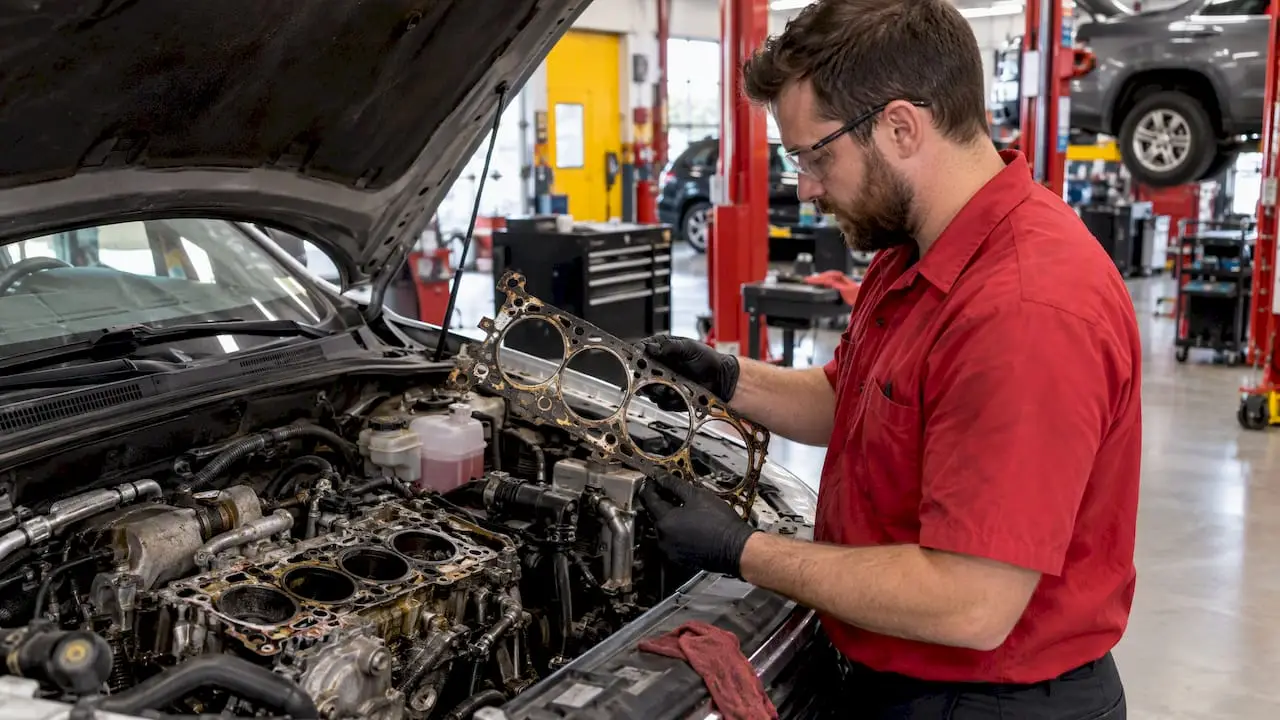
If your car is showing white, sweet-smelling exhaust smoke, milky oil on the dipstick, coolant that keeps disappearing, or bubbling in the radiator, these signs together point strongly toward head gasket failure. One symptom alone can mean something else, but two or more happening at once raises real concern. The safest move is to limit driving and get a professional diagnostic test before the damage spreads.
TL;DR:
- White, sweet-smelling exhaust smoke, milky oil, unexplained coolant loss, and bubbling in the radiator strongly indicate head gasket failure.
- These symptoms, especially when combined, require immediate professional testing like combustion gas or pressure tests for confirmation.
- Repeated overheating, misfires, or a rough idle can also reveal gasket issues, often worsened by improper installation or prolonged heat exposure.
- Proper repair involves replacing the gasket, inspecting for warpage or cracks, and addressing underlying causes like overheating to prevent future failure.
- Accurate diagnosis depends on documented tests, not just symptoms, to avoid misdiagnosis and ensure a long-lasting repair.
Table of Contents
- What a Head Gasket Actually Does
- Common Symptoms of Head Gasket Failure
- How Mechanics Diagnose Head Gasket Failure
- Causes and Contributing Factors
- Repair Options and Avoiding a Repeat Failure
- Why Professional Diagnostics Matter More Than Guesswork
- Get a Professional Diagnosis at Kwik Kar of Van Alstyne
- FAQ
- Sources
What a Head Gasket Actually Does
Your engine’s head gasket sits between the cylinder head and the engine block, and it has a tough job: keeping combustion gases, engine oil, and coolant completely separated from each other. Each of those systems runs through passages that pass right next to one another, and the gasket is the only thing standing between them.
When the gasket fails, it opens a path between systems that were never supposed to meet. Coolant can seep into a cylinder and get burned alongside fuel, which is why you’d see white, sweet-smelling smoke drifting from the tailpipe. Or coolant can leak into the oil passages instead, turning the oil on your dipstick a pale, frothy tan. Same root failure, different leak path, different symptom.
Common Symptoms of Head Gasket Failure
Not every symptom carries the same weight, and knowing which ones demand immediate attention can save your engine. Here’s what to watch for and how urgent each one really is.
White or sweet-smelling exhaust smoke is one of the more reliable signs that coolant has found its way into a combustion chamber. White exhaust smoke paired with a sweet odor is a hallmark symptom of head gasket failure, and it’s different from the thin, temporary vapor you’d see on a cold morning. If the smoke is thick, persistent once the engine warms up, and smells faintly sweet rather than oily or acrid, treat it as urgent.
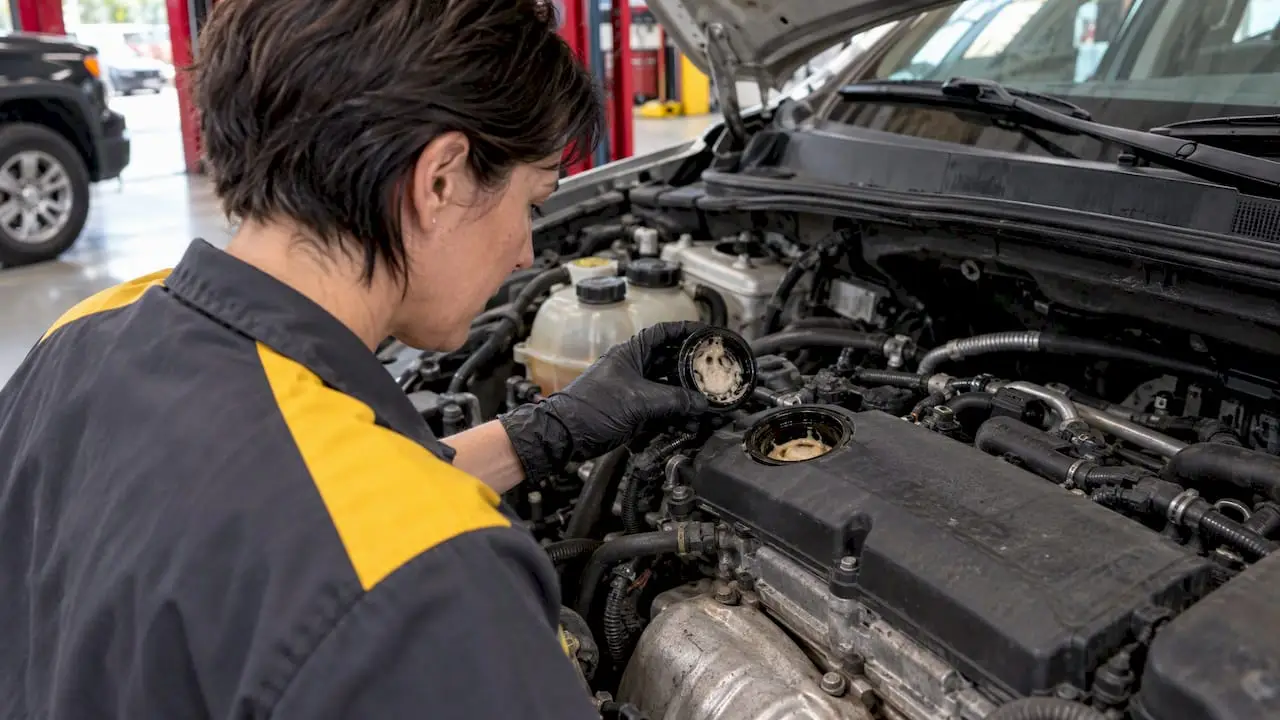
Milky or frothy oil on the dipstick, under the oil filler cap, or along the inside of the valve cover is another strong indicator. Milky oil under the oil cap or on the dipstick is a common, reliable sign that coolant is mixing with engine oil. It often looks like a chocolate milkshake, a texture you won’t mistake for normal oil.
Unexplained coolant loss with no puddles under the car, no visible hose leaks, and a heater that still blows warm points toward an internal leak rather than an external one.
Bubbling in the radiator or overflow tank while the engine runs, even at idle, usually means combustion gas is pressurizing the cooling system. Bubbling in the radiator or coolant reservoir, along with coolant loss with no external leak, are common signs that combustion gases are entering the cooling system.
Other signs worth noting:
- Repeated overheating that escalates quickly from a rising gauge to a full shutdown
- Misfires, rough idle, or a noticeable loss of power that seems tied to one cylinder
- Oil or coolant streaking near the seam where the head meets the block
Pro Tip: If you notice white smoke and a sweet smell together with rising temperatures, stop driving and have the car towed rather than risking a cracked head.
How Mechanics Diagnose Head Gasket Failure
A shop won’t guess based on symptoms alone. Diagnosing a suspected head gasket leak usually follows a sequence of tests designed to confirm exactly where the failure is and how bad it’s gotten.
- Cooling-system pressure test: technicians pressurize the system and watch for a steady drop, which points to an internal or external leak.
- Combustion gas (chemical) test: a detector placed above the radiator neck checks for exhaust gases dissolved in the coolant, confirming a breach between the combustion chamber and cooling system.
- Compression and leak-down tests: these measure how well each cylinder holds pressure and help pinpoint which cylinder has lost its seal.
- Oil and coolant inspection: checking the dipstick, oil cap, and radiator for contamination adds supporting evidence, though it’s rarely the only test relied on.
- Head removal and inspection: when tests confirm a leak, the head often comes off so technicians can check for warpage or cracks before any repair begins.
A positive combustion gas or pressure test is the main evidence shops use to confirm head gasket failure before recommending repair, since compression and leak-down tests identify which cylinder has lost sealing and help locate the problem. Our diagnostics team runs these tests in sequence rather than jumping straight to a repair quote.
Causes and Contributing Factors
Head gaskets rarely fail on their own. Something usually pushes them past their limit first.
- Prolonged or repeated overheating is the most common root cause, since it warps the head and reduces the clamping force holding the gasket in place, a pattern CRC Industries identifies as the leading cause of gasket failure.
- High combustion pressures, detonation, or poor ignition timing add stress the gasket wasn’t designed to absorb over time.
- Aging and corrosion of the gasket material or the mating surfaces it seals against weaken the seal gradually.
- Improper installation, including reused head bolts or a torque sequence that wasn’t followed correctly, sets up a failure long before symptoms appear.
- Shops also rule out other failures that mimic gasket symptoms, like a cracked head or block, a failing intake gasket, or a leaking EGR cooler, before confirming the diagnosis.
Repeated stop-and-go driving can push coolant temperatures higher than you’d expect, which is worth understanding if your car tends to run hot in traffic but not on the open road.
Repair Options and Avoiding a Repeat Failure
A proper head gasket repair involves more than swapping out the gasket itself. Correct repair typically requires removing the cylinder head, replacing the gasket and head bolts where the manufacturer specifies, inspecting the head and block for warpage or cracks, correcting whatever caused the overheating, and replacing contaminated oil and coolant.
That last step matters more than it sounds. A gasket replacement alone can fail again if the original cooling-system problem or a warped, cracked component is left unaddressed. Skipping the machining check or ignoring a worn thermostat is how a repair that should last years fails again within months.
Steps that help prevent a repeat:
- Keep coolant fresh and at the correct mixture rather than letting it age past its service life
- Address overheating episodes immediately instead of topping off coolant and hoping it holds
- Replace worn radiator hoses and thermostats before they fail outright
- Watch your temperature gauge and pull over the moment it climbs out of the normal range
Pro Tip: If your temperature gauge spikes suddenly, shut the engine off and call for a tow rather than driving a few more miles. A few extra minutes of driving on an overheated engine can turn a gasket repair into a full engine rebuild.
Why Professional Diagnostics Matter More Than Guesswork
We’ve seen how easy it is to misread a symptom or two and either panic over something minor or ignore something serious. That’s why our ASE-certified technicians run documented diagnostic tests and back up every finding with a Digital Vehicle Inspection, complete with photos, so you’re not making a repair decision based on a phone call or a guess. Those documented results help you decide between a gasket repair, head machining, or a bigger conversation about the block, with real evidence behind each recommendation. A description over the phone, however detailed, can’t replace eyes and tools on the actual vehicle.
— Kwik Kar
Get a Professional Diagnosis at Kwik Kar of Van Alstyne

If any of these symptoms sound familiar, we’d rather you find out now than after a tow truck ride. Our shop offers diagnostics, cooling system repair, and engine repair backed by ASE-certified technicians and a Digital Vehicle Inspection on every visit, so you see exactly what we find before any work begins. We stand behind our repairs to give you peace of mind. When you call to schedule, feel free to ask for a combustion gas test, cooling-system pressure test, or compression test by name. Reach us at (903) 712-5945 or book through our auto repair services page today.
FAQ
How do you know a head gasket has blown?
Look for white or sweet-smelling exhaust smoke, milky oil on the dipstick, unexplained coolant loss, or bubbling in the radiator. When two or more of these appear together, head gasket failure becomes the likely explanation, though a professional test is the only way to confirm it.
How do you know if you have a head gasket failure?
The clearest combination is persistent white exhaust smoke with a sweet smell alongside coolant that disappears without any visible leak. A shop confirms it with a combustion gas test or cooling-system pressure test rather than relying on symptoms alone.
How do you know if your head gasket has failed?
Beyond smoke and milky oil, watch for a rough idle or misfire tied to one cylinder, since compression and leak-down tests can identify which cylinder has lost its seal. Repeated overheating that gets worse quickly is another strong clue.
How do you know if your head gasket is going bad?
Early signs tend to be subtle: slightly lower coolant levels, an occasional faint sweet smell, or oil that looks a shade lighter than usual. These early warnings are easy to miss, which is why a diagnostic test matters even before symptoms become obvious.
Sources
- ASE G1 prep – Gaskets and leak diagnostics
- Signs of a Blown Head Gasket – Fel-Pro
- Spotting blown head gasket symptoms How to prevent or fix it – CRC Industries