





That musty smell coming from your vents almost always means mold, mildew, or bacteria are growing somewhere moisture collects in the system, usually the evaporator coil, drain pan, or ductwork. Ventilate the space, switch the blower to fan-only for a few minutes, and check your filter before doing anything else. If the odor is strong, comes with visible water, or you notice breathing symptoms, shut the system off and get it inspected.
TL;DR:
- A persistent musty smell often comes from mold, mildew, or bacteria on the evaporator coil, clogged drain line, or contaminated ductwork.
- Replacing the filter, running the fan alone, flushing the drain, and treating the coil with disinfectant can typically resolve the odor DIY within a budget of $200.
- When odors remain after DIY efforts, visible water or mold, weak airflow, or respiratory issues indicate professional inspection is necessary.
- A technician can thoroughly clean the coil, repair drainage, or seal ductwork to eliminate microbes that cause smells, with some treatments requiring partial dash removal in vehicles.
- Routine maintenance such as filter changes, drain flushing, and managing indoor humidity prevents the odor from returning, but recurring issues may need an annual coil inspection.
Table of Contents
- Why Does AC Smell Musty? The Causes Behind It
- How Do You Get Rid of a Musty AC Smell Fast?
- When Should You Call a Professional for AC Odor?
- Preventing Musty AC Odors From Coming Back
- How Kwik Kar of Van Alstyne inspects a musty car AC
- Get Your Car’s AC Smell Fixed at Kwik Kar of Van Alstyne
- Sources
- FAQ
Why Does AC Smell Musty? The Causes Behind It
Every air conditioner, whether it is cooling your living room or your commute, makes water as a byproduct. Warm, humid air passes over a cold evaporator coil and condensation forms, the same way a glass of ice water sweats on a summer table. That water is supposed to drain away cleanly. When it does not, you get a musty smell in the AC that keeps coming back no matter how many times you spray something citrus scented into the vents.
Evaporator coil biofilm is the most common culprit. Dust, pollen, and skin cells stick to the wet coil surface and, given a few warm days, turn into a thin layer of mold and bacteria. That biofilm is what actually produces the odor, and it is also why a car AC smells like mildew most intensely the first thirty seconds after you start the engine, before airflow dilutes the microbial compounds drifting off the coil.
A damp or contaminated evaporator commonly produces what drivers describe as a “dirty sock” smell, and it is a fitting description. Other contributors include:
- A clogged condensate drain line that lets water pool in the drain pan instead of draining outside, where algae and sludge build up within days in warm weather.
- A dirty or saturated air filter (home) or cabin filter (vehicle) that traps organic debris and holds moisture against it.
- Ductwork that has picked up contamination over time, or a home system pulling air through a damp attic or crawlspace.
- A car’s plenum intake, the vent slots at the base of your windshield, collecting leaves and grit that stay wet and feed mold growth.
Most musty HVAC odors in homes trace back to mold, mildew, or bacteria on the evaporator coil, a clogged condensate drain, or contaminated ductwork, which lines up with what shows up in vehicles too. The mechanism is nearly identical. Only the plumbing around it differs.
How Do You Get Rid of a Musty AC Smell Fast?
Start with the cheapest, easiest fix and work your way up. Most musty smell from vents problems respond to a short sequence of DIY steps, and you rarely need to jump straight to the expensive option.
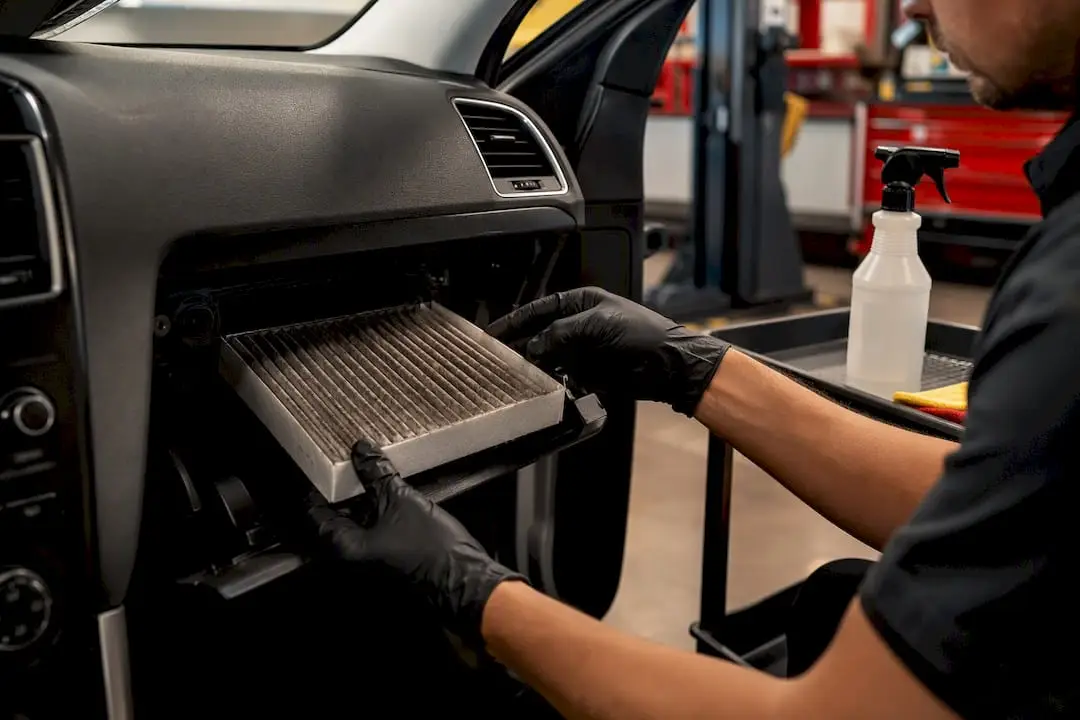
- Replace the filter. A clogged air or cabin filter holds moisture and debris right in the airflow path. Check the housing and the fresh-air intake for leaves or grit while you are in there.
- Run the fan alone for 5 to 15 minutes before you shut the system down. Letting the fan run after the compressor cycles off helps dry the evaporator and slows the buildup that causes the smell in the first place.
- Flush the condensate drain. A vinegar and water solution poured down the drain line loosens algae, or you can use a wet/dry vacuum at the exterior cleanout point. Compressed air can clear a blockage from inside, but point it away from your face and never exceed the pressure your line is rated for.
- Treat the evaporator with a labeled disinfectant, not a generic air freshener. In a car, that usually means removing the cabin filter first, then spraying an AC system cleaner into the plenum intake so it reaches the coil directly, following the product’s own directions.
Pro Tip: Air fresheners and vent-clip sprays mask the smell for a day or two at best, because they never touch the biofilm coating the coil. If the odor returns within a week of using one, that is your evaporator asking for an actual cleaning, not another scent.
DIY fixes like a new filter and a proper AC system cleaner often solve the problem for well under $200, but a smell that keeps returning after two or three attempts usually means the contamination has moved past what a spray can reach.
When Should You Call a Professional for AC Odor?
Some musty AC smells are a one-afternoon fix. Others are a sign the coil, drain, or ducts need hands-on attention that a can of cleaner cannot deliver. Watch for these signals:
- The odor persists after you have replaced the filter and flushed the drain more than once.
- Airflow feels weak alongside the smell, which often points to a clogged coil restricting the system.
- You see standing water, staining, or visible mold anywhere near the vents, drain pan, or ductwork.
- Anyone in the home or vehicle develops allergy symptoms or breathing irritation that improves when they leave the space.
Professional-grade coil cleaning reaches the biofilm that over-the-counter sprays leave behind, and that is really the whole difference. A technician can chemically clean the coil, repair or replace a failed condensate line, install a float switch to prevent future overflow, or clean and seal ductwork in a home. In vehicles, reaching the evaporator core sometimes requires partial dash removal, which explains why a shop visit accomplishes more than another can of spray ever could.
UV-C germicidal lights installed near the coil are worth asking about as a prevention step, but they slow recolonization rather than clean an already contaminated coil, and the bulbs need annual replacement. Install one after cleaning, not instead of it.
Preventing Musty AC Odors From Coming Back
A little routine maintenance keeps mold and mildew from getting a foothold again. The schedule is simple enough to actually stick to.
- Replace home air filters and vehicle cabin filters regularly, or more often if you have pets or allergies.
- Flush the condensate line monthly during heavy cooling season, especially in humid climates where algae grows fastest.
- Run a dehumidifier or improve ventilation if indoor humidity stays high, and check attic or crawlspace ductwork for condensation and leaks.
- In your car, run the blower fan for a couple of minutes before you shut the engine off, and clear leaves and debris from the plenum intake at the base of the windshield.
- Test your AC before summer heat hits, not after the first 100 degree day when every shop in town gets busy at once.
If odors keep recurring despite a clean filter and a flushed drain, an annual evaporator check is worth scheduling before the smell becomes a bigger repair. A quick pre-season look, detailed in our guide to getting your car’s AC ready for warm weather, catches most problems while they are still cheap to fix.
How Kwik Kar of Van Alstyne inspects a musty car AC
When a vehicle comes in with a persistent musty smell, our ASE-certified technicians do not guess. We inspect the evaporator, plenum, and condensate drain directly, and document what we find with a digital vehicle inspection that includes real photos, not just a verbal summary. You see exactly what is growing where before you approve any repair.
Some odor sources hide behind the dash or deep in the plenum housing, which is part of why an in-shop look catches things a spray bottle never will. For drivers juggling work and school pickups, after-hours drop-off and free local rides mean you are not stuck waiting around while we sort it out. You can also read more about how service frequency affects AC performance during colder months if your vehicle sits idle part of the year.
— Kwik Kar
Get Your Car’s AC Smell Fixed at Kwik Kar of Van Alstyne
If you have already changed the filter and flushed what you can reach and the smell is still there, the fix probably needs a technician with access to the evaporator itself. Kwik Kar of Van Alstyne handles AC diagnosis and repair, cabin filter replacement, and evaporator and condensate work for drivers throughout Van Alstyne, Anna, Howe, Melissa, and Gunter.

Every inspection includes a digital vehicle inspection with photos, so you know exactly what is causing the smell before you approve any work, and every repair carries our 2-year/24,000-mile warranty. Busy schedule? After-hours drop-off and free local rides are available so a musty AC does not have to cost you a whole afternoon. Since a real diagnosis needs eyes on the evaporator and plenum, not just a phone description, the fastest path forward is booking a vehicle AC inspection or calling us at (903) 712-5945 to get on the schedule.
Sources
Guidance in this article draws on Consumer Reports for evaporator moisture and professional coil cleaning, Motor1 for symptom patterns, AirFlow Solutions for home HVAC causes and UV light limitations, and AutoZone for DIY repair steps and typical costs.
- How to Get Rid of Musty Smell From a Car Air Conditioner – Consumer Reports
- Why my car AC smells bad – Motor1
- Why Does My HVAC Smell Musty? 8 Common Causes & Fixes – AirFlow Solutions
- How to Get Rid of a Musty Smell in Your AC – AutoZone
FAQ
Should I turn my AC off if it smells musty?
Turn it off if the smell is strong, paired with weak airflow, or accompanied by visible water or mold. A faint odor at startup that fades within a minute is common and usually does not require shutting the system down.
How do you deodorize an air conditioner?
Replace the filter, flush the condensate drain, and apply a labeled evaporator or coil disinfectant rather than a generic air freshener, since the odor comes from biofilm on the coil itself, not just trapped air.
How do you get rid of a musty smell in the air?
Improve ventilation, run the fan alone for several minutes to dry the coil, and manage indoor humidity with a dehumidifier if the space stays damp, since moisture is what feeds the mold and bacteria causing the smell.
Why does my car AC only smell musty when I first turn it on?
The odor is strongest at startup because condensation and microbial compounds build up on the evaporator while the system sits idle, then dilute quickly once airflow gets moving.
Can a dirty cabin air filter cause a musty smell?
Yes. A saturated cabin filter traps moisture and organic debris right in the airflow path, and replacing it is one of the fastest fixes before assuming the evaporator itself needs professional attention.
Recommended
- How to Get Your Car’s AC Ready for the Warm Weather
- How Often Should I Service My Car AC Even If I Don’t Use It Much in the Cold?
- Don’t Wait for the First 100° Day: Why Van Alstyne Drivers Should Test Their Car’s AC in May