



Most brake squeaking comes from something harmless: pad vibration, morning dew on the rotors, or grit that worked its way in overnight. Worn pads and loose hardware can cause it too, and those need attention before they become a bigger repair. If you hear grinding, feel a soft pedal, notice heavy vibration, or see a brake warning light, stop driving and get the car inspected right away. Otherwise, run the simple checks below, note when the noise happens, and schedule a look before it gets worse.
TL;DR:
- Squealing noise caused by moisture, debris, glazed pads, or loose hardware typically resolves with simple driving or cleaning, but persistent sounds require inspection.
- A continuous metallic squeal or signs like vibration, soft pedal, or warning lights indicate urgent issues such as pad wear or caliper problems needing immediate attention.
- Light, temporary squeaks usually occur during pad break-in, after rain, or due to surface rust, and rarely suggest critical damage if no other symptoms are present.
- Proper diagnosis depends on noting when the noise happens and recording symptoms, as no single fix eliminates all squeals given the complex interaction of friction, pressure, and temperature.
- Regular maintenance, hardware lubrication by professionals, and avoiding petroleum-based sprays are key to preventing the most common causes of brake squeaking.
Table of Contents
- What Causes Brake Squeaking?
- How Do You Diagnose the Cause of Brake Noise?
- When Is Brake Squeaking Dangerous?
- How Do You Fix Squeaky Brakes Yourself?
- What Happens During a Professional Brake Inspection?
- How Can You Prevent Brake Squeaking?
- Why Trust Kwik Kar of Van Alstyne With Brake Noise Diagnosis?
- Our Take: Don’t Let a Squeak Become a Guessing Game
- Get Your Brakes Checked at Kwik Kar of Van Alstyne
- Sources
- FAQ
What Causes Brake Squeaking?
Brake pads carry a small metal tab called a wear indicator. Once the friction material wears down close to the backing plate, that tab makes contact with the rotor when pads are worn and produces a sharp, continuous squeal by design. Honda’s owner guidance draws a clear line here: an occasional squeak on the first press of the pedal is often normal high-frequency vibration, but a steady metallic sound means the indicator is doing its job and the pads need replacing.
Several other causes show up just as often:
- Moisture and surface rust. Overnight dew, a car wash, or a rainy commute leaves a thin film of rust on the rotors. It usually clears itself after a few stops, according to AAA.
- Debris between pad and rotor. Sand, road grit, or small stones can wedge into the friction surface and squeal until they work loose.
- Glazed pads or scored rotors. Riding the brakes downhill or towing heavy loads can overheat the pad surface, leaving it hard and glassy, which often produces a higher-pitched squeal.
- Loose hardware or dry contact points. Missing shims, worn clips, or slide pins without lubricant let the pad vibrate against the caliper.
- New pad break-in noise. Fresh pads, especially semimetallic ones, can squeak for the first several hundred miles as the surfaces mate to the rotor. AAA notes this is common, though noise that lingers past break-in deserves a second look.
Brake squeal is also a genuinely complex vibration problem. Research published through SAE shows that friction material composition, contact pressure, and temperature all interact to produce noise, which is why no single fix eliminates every squeak on every vehicle.
How Do You Diagnose the Cause of Brake Noise?
When the sound happens tells you almost as much as what it sounds like. Work through this order before assuming the worst:
- Note whether the squeal happens only during light braking, continuously while driving, or stops the moment you press the pedal. A sound tied only to light stops is often harmless vibration, even on newer pads. A continuous metallic sound while the car is moving points toward a worn wear indicator.
- Check for related symptoms. Vibration in the pedal or steering wheel, the car pulling to one side, a pedal that feels soft or sinks lower than usual, or a brake warning light on the dash all raise the urgency.
- Run an after-wash test. If the squeal shows up right after rain or a car wash and fades within a mile or two, moisture is the likely culprit.
- Listen for a wheel-specific sound. Noise from one corner only suggests debris, uneven pad wear, or a sticking caliper on that side rather than a system-wide issue.
- Record it. A short video or voice memo capturing the exact sound, plus your mileage and any recent brake work, gives a technician a real head start on diagnosis.
Bring that information with you to the shop. Telling a technician “it squeals only on the first stop of the morning” is far more useful than “my brakes are squeaky.”
When Is Brake Squeaking Dangerous?
Some sounds mean stop the car; others mean schedule a visit this week. Knowing the difference matters more than diagnosing the exact cause yourself.
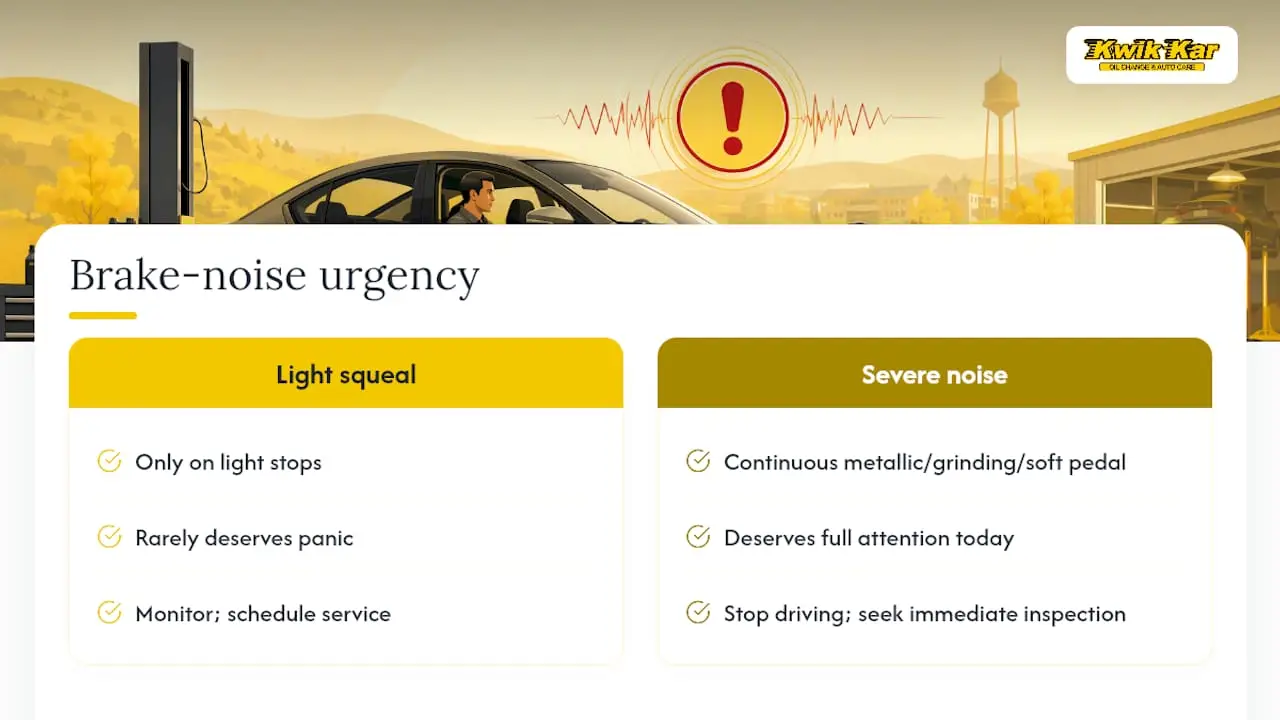
Stop driving and arrange an inspection or tow immediately if you notice:
- Grinding or a harsh metal-on-metal sound, which usually means the pad material is gone and metal is contacting metal
- Heavy vibration through the pedal or steering wheel when braking
- A soft, sinking, or spongy pedal
- A brake warning light on the dashboard
Ford’s service guidance lists continuous grinding, steering-wheel vibration under braking, and dashboard warning lights among the clearest signs that a vehicle needs immediate inspection, not a wait-and-see approach. AAA backs this up: a squeal paired with any of those symptoms calls for prompt professional diagnosis rather than continued driving. If you’re on the road when this happens, pull over safely, avoid hard stops, and call for a tow rather than risk driving on compromised brakes.
Squeaks that usually can wait a few days include a light chirp after rain, mild noise that fades within a mile of driving, or break-in squeal on pads installed in the last few hundred miles. Keep an ear on it and get it checked at your next convenient opportunity.
How Do You Fix Squeaky Brakes Yourself?
A few safe steps clear up the temporary causes before you assume the worst:
- Drive normally and make a few light stops. This is often enough to burn off surface rust or shake loose light debris, especially after rain or a car wash.
- Try a short trip after a wash. If the noise started right after cleaning the car, moisture is the likely cause and it should fade within a few miles.
- Press the pedal lightly a few times after driving through deep water. Manufacturer guidance for vehicles like the Honda Civic recommends this to help dry the rotors and clear rust film faster.
- Follow the break-in period on new pads. Avoid hard, repeated stops for the first several hundred miles so the friction surfaces mate properly.
- Leave hardware lubrication to someone experienced. Slide pins and backing plate contact points sometimes need a brake-specific lubricant, but pulling wheels and servicing calipers is a job for a trained hand, not a weekend project for most drivers.
Pro Tip: Never spray WD-40, penetrating oil, or any petroleum-based solvent on your pads or rotors to quiet a squeak. It contaminates the friction surface, can ruin the pads outright, and often makes stopping power worse, not better.
What Happens During a Professional Brake Inspection?
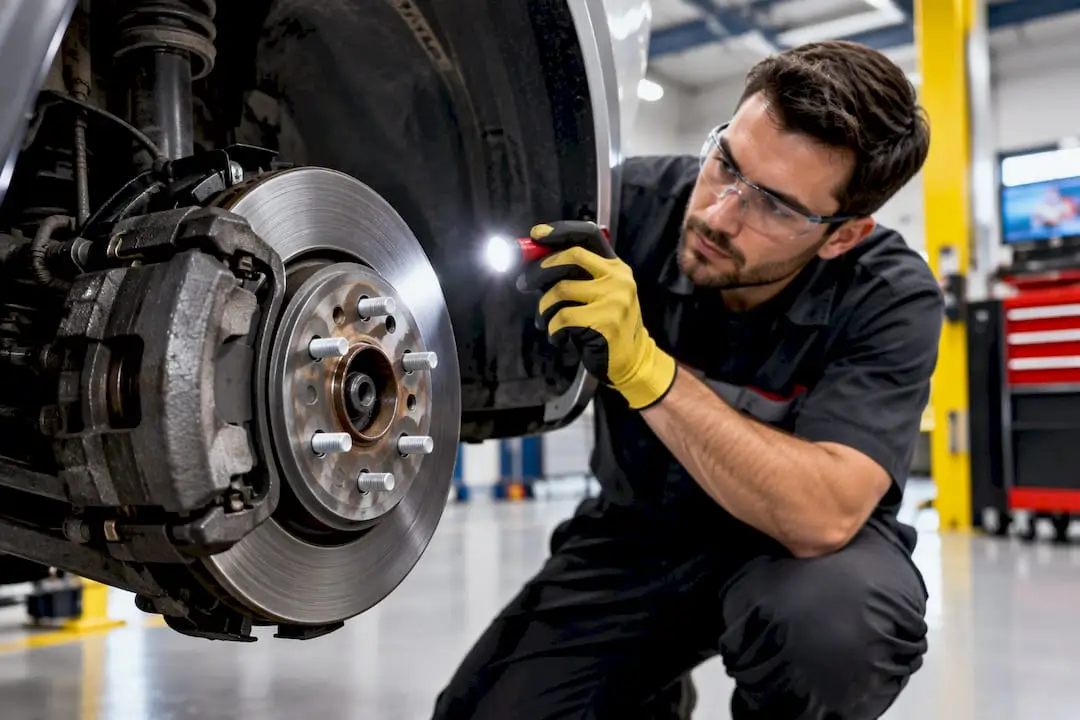
A proper inspection goes well beyond listening for noise. A technician checks pad thickness against the wear limit, measures rotor runout and looks for scoring or uneven wear, tests caliper movement to catch sticking or dragging, inspects hardware and shims, and checks brake fluid condition.
Common repairs that come out of that process include:
- Pad replacement when material has worn past the safe minimum
- Rotor resurfacing or replacement when scoring or thickness variation is beyond spec
- Hardware kit replacement for worn clips, shims, or slide pins
- Caliper service or lubrication where sticking hardware is causing uneven wear
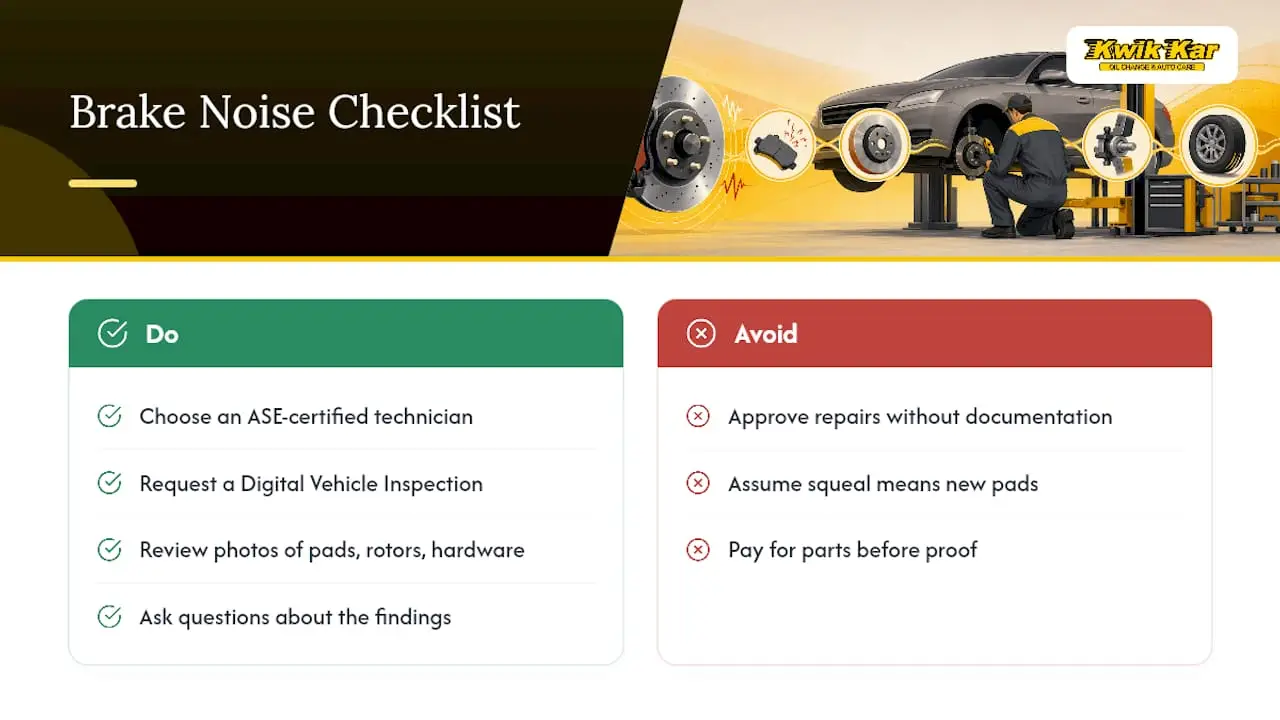
At Kwik Kar of Van Alstyne, findings get documented through a Digital Vehicle Inspection, which includes photos and notes so you can see exactly what the technician saw. Ask what’s a safety priority versus a cosmetic concern, and confirm what warranty applies to any parts replaced.
How Can You Prevent Brake Squeaking?
Consistent habits keep most squeaks from ever starting. Check your brakes at every routine maintenance visit and again after any long trip involving heavy braking, towing, or mountain driving.
- Semimetallic pads tend to run louder but often hold up well under heavy use and towing.
- Ceramic pads run quieter and produce less dust, a tradeoff Consumer Reports notes depends on your vehicle and how you drive.
- Keep oil and grease away from pads and rotors. Even a small amount of contamination can ruin friction material.
- Replace shims and slide pins whenever new pads go on rather than reusing worn hardware.
Why Trust Kwik Kar of Van Alstyne With Brake Noise Diagnosis?
Brake squeal has enough variables (friction material, temperature, contact pressure) that guessing from the driver’s seat only gets you so far. Every brake inspection at Kwik Kar of Van Alstyne is performed by an ASE-certified technician, and the findings come back to you as a Digital Vehicle Inspection with photos and plain-language notes, not just a verbal “you need pads.”
That documentation matters because it lets you see pad thickness, rotor condition, and hardware wear for yourself before deciding what to fix first. If the noise turns out to be harmless surface rust, you’ll know that too, and you won’t pay for parts you don’t need.
Our Take: Don’t Let a Squeak Become a Guessing Game
The research on brake noise all points to the same conclusion: timing and symptoms tell you more than the sound itself. A squeal that only shows up on light stops rarely deserves panic. A continuous metallic sound, grinding, or a soft pedal deserves your full attention today, not next week.
Where a lot of general advice falls short is treating every squeak the same way, either dismissing all of them as normal or telling every driver to rush to a shop. Neither extreme serves you well. The smarter approach is the one outlined here: listen for when it happens, watch for the symptoms that raise the stakes, and use that information instead of guessing.
If there’s one thing worth prioritizing, it’s this: don’t try to diagnose a persistent or worsening noise from memory alone. Pad wear, rotor scoring, and caliper problems all produce similar sounds but need different fixes, and only a hands-on inspection sorts out which one you’re dealing with.
— Kwik Kar
Get Your Brakes Checked at Kwik Kar of Van Alstyne
If you’ve run through the checks above and the noise hasn’t cleared, or if you’re dealing with grinding, vibration, or a soft pedal, it’s time to stop guessing and get eyes on the problem. Kwik Kar of Van Alstyne inspects pad thickness, rotor condition, and hardware wear, then documents everything with a Digital Vehicle Inspection so you see photos and notes before any work begins, not just a verbal estimate.
We offer after-hours drop-off and a local rides service for drivers in Van Alstyne, Anna, Howe, Melissa, and nearby communities who cannot wait around all day. Head to our brake repair page to see what’s included, or call (903) 712-5945 to describe what you’re hearing and get on the schedule. If you’d rather book online, visit our appointments page and let us take a look before that squeak turns into something bigger.
Sources
- 2021 Honda Civic brakes (owner guidance)
- The most common reasons for squeaky brakes | AAA Club Alliance
- Signs that your brake pads need attention | AAA Club Alliance
- When should I have my Ford brakes inspected? | Ford
- Brake pads: what to look for | Consumer Reports
FAQ
How Do I Get My Brakes to Stop Squeaking?
Start by driving normally and making a few light stops, which often clears moisture or light debris within a mile or two. If the noise continues past that, or you hear it consistently, AAA recommends a professional inspection to check pad thickness and hardware.
Is It Okay to Drive With Squeaky Brakes?
A light, occasional squeak that clears up after a few stops is usually fine to drive on. But AAA warns that a squeal paired with vibration, pulling, a soft pedal, or a warning light means you should stop driving and get it inspected right away.
Why Do My Brakes Squeak but My Pads Are Good?
Squealing with healthy pad thickness usually points to moisture, surface rust, trapped debris, or glazed pad surfaces from heat, not wear. It can also happen during the break-in period on recently installed pads, which AAA notes is common and usually temporary.
Can I Spray WD-40 on My Brake Pads to Stop Squeaking?
No. Spraying WD-40 or any petroleum-based product on pads or rotors contaminates the friction surface, can damage the pads, and often reduces stopping power instead of quieting the noise. If hardware needs lubrication, that job calls for a brake-specific lubricant applied to slide pins and contact points, not the friction surfaces themselves.
What Does Kwik Kar of Van Alstyne Check During a Brake Inspection?
Technicians check pad thickness, rotor condition, caliper operation, hardware wear, and brake fluid, then document findings with photos and notes through a Digital Vehicle Inspection. Current pricing for brake service is available on the brake repair page or by calling (903) 712-5945.