




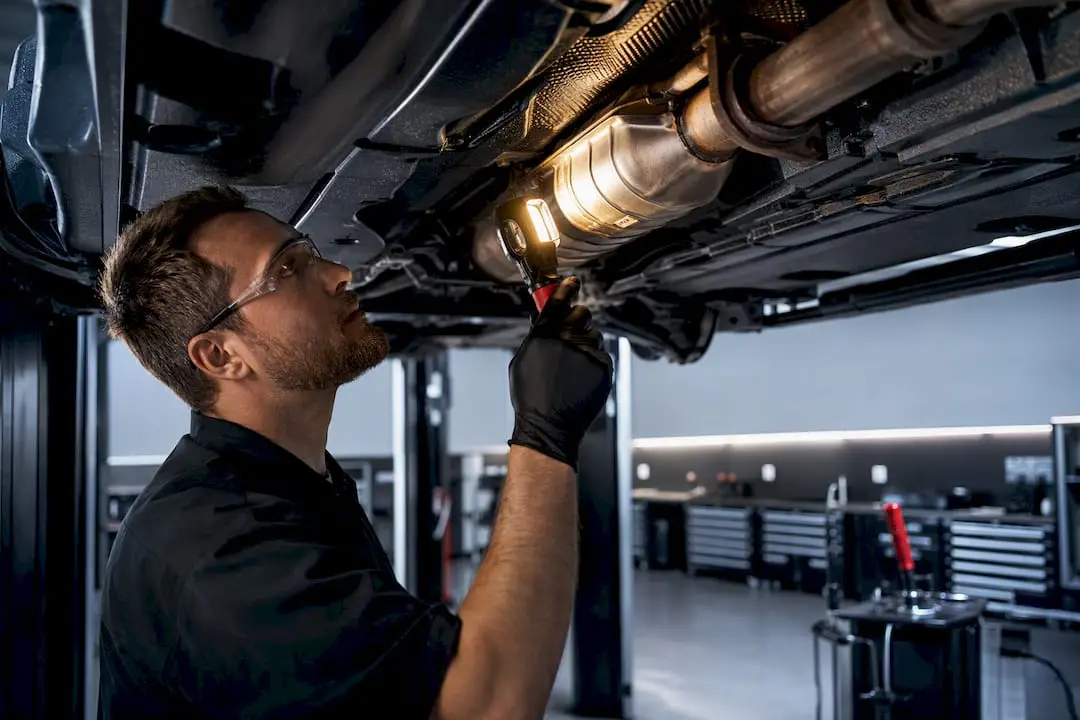
A flashing check engine light means stop driving or limp home immediately to avoid catalytic converter damage. A steady light means the issue can usually wait a few days, but you should get the code read soon. Either way, check your other gauges first, then get a scan before anything gets replaced.
TL;DR:
- A flashing check engine light indicates a severe misfire that can quickly damage the catalytic converter, requiring immediate action or towing.
- The most common causes include a loose gas cap, failing oxygen sensor, ignition misfire, or catalytic converter issues, which vary in repair cost and urgency.
- Reading the diagnostic trouble code before repairs is essential, as a code points to a system, not necessarily the exact component needing replacement.
- Steady lights generally allow a few days to schedule a scan, while flashing lights demand immediate stopping and diagnosis to prevent costly repairs.
- Proper diagnosis and targeted repairs, rather than random part replacements, help avoid unnecessary expenses and prevent small issues from escalating.
Table of Contents
- What Does It Mean When the Check Engine Light Is On?
- Most Common Causes of a Check Engine Light
- What Should You Do Right Now?
- How Do Mechanics Diagnose a Check Engine Light?
- How Much Do Check Engine Light Repairs Cost?
- How Can You Prevent Future Check Engine Lights?
- How We Diagnose Check Engine Lights at Kwik Kar of Van Alstyne
- A Neighborhood Mechanic’s Take on Dashboard Panic
- Get Your Check Engine Light Diagnosed the Right Way
- Sources
- FAQ
What Does It Mean When the Check Engine Light Is On?
The check engine light, formally called the malfunction indicator lamp (MIL), turns on when your car’s onboard computer detects a problem through the OBD-II system. Every vehicle built since 1996 uses OBD-II to monitor engine performance, emissions, and sensor data, and when something falls outside normal range, the computer stores a diagnostic trouble code (DTC) and lights up the dash.
How the light behaves tells you almost everything about urgency. A steady check engine light usually points to something in the emissions or sensor family, like a failing oxygen sensor or a loose gas cap. You typically have a safe window to keep driving and get it checked in the next several days.
A flashing check engine light is a different animal. It signals an active engine misfire severe enough to send unburned fuel into the exhaust system, and that raw fuel can overheat and destroy your catalytic converter within minutes of continued driving. Consumer Reports confirms this distinction: flashing demands immediate action, steady allows for a scheduled visit.
Most Common Causes of a Check Engine Light
Most check engine light triggers fall into a handful of repeat offenders, and some are far cheaper to fix than others.
- Loose or damaged gas cap. This is the classic false alarm. Tighten the cap until it clicks three times, then drive through two or three normal trip cycles. If the light resets on its own, that was likely the culprit.
- Oxygen sensor failure. A worn O2 sensor throws off your fuel mixture readings, which can hurt gas mileage and eventually damage the catalytic converter if ignored.
- Catalytic converter trouble. Often a downstream effect of another problem rather than the original cause, this one triggers code P0420 and tends to come with reduced power or a sulfur smell.
- Ignition misfires. Worn spark plugs or failing ignition coils generate misfire codes in the P030x range (P0301, P0302, and so on, depending on which cylinder is affected). Our guide on signs your car’s spark plugs need replacement covers the warning signs in more detail.
- Mass airflow (MAF) sensor and vacuum leaks. A dirty or failing MAF sensor, or a cracked vacuum hose, throws off the air-fuel ratio and can cause rough idling or hesitation.
- EVAP system leaks. Beyond a loose cap, a cracked purge valve or evaporative line can trigger a code without any noticeable drivability change.
These causes compound quickly. A minor misfire that goes unaddressed for weeks can dump enough unburned fuel into the exhaust to cook a catalytic converter, turning a spark plug job into a much bigger repair bill.
What Should You Do Right Now?
Before anything else, glance at your other gauges. A check engine light paired with a hot temperature gauge or an oil pressure warning changes the calculus entirely, since those signal immediate mechanical risk regardless of what the MIL is doing.
- Check your gauges and other warning lights first. Rule out overheating or low oil pressure before deciding your next move.
- If the light is flashing: ease off the accelerator, reduce speed, and get to a safe spot to pull over. If you notice smoke, a fuel smell, or heavy vibration, call for a tow rather than continuing.
- If the light is steady: tighten the gas cap, note when the light came on and what you were doing, and schedule a scan within the next few days.
- Avoid highway speeds and heavy loads until you know what triggered the light, especially if you suspect a misfire.
Pro Tip: A tow often costs less than a new catalytic converter. If you’re unsure whether a flashing light justifies a tow, treat it like it does. Converters run several hundred dollars or more, and driving even a few extra miles on an active misfire can turn a sensor replacement into a full exhaust repair.
How Do Mechanics Diagnose a Check Engine Light?
Every OBD-II vehicle has a diagnostic port, usually located under the dashboard near the steering column, that accepts a code reader. Plugging one in pulls stored DTCs, which point toward a system or component, not necessarily a confirmed root cause.
That distinction matters more than most drivers realize. A code like P0420 (catalyst system efficiency below threshold) or P0171 (system too lean) tells a technician where to look, not automatically which part to replace. Retail parts stores like O’Reilly Auto Parts commonly offer free in-store scans, and that’s a reasonable first step to get a starting code.
- Free scans give you a code and a general category, which is useful triage.
- Professional diagnostics go further, using live data, fuel trim readings, and freeze-frame data captured at the moment the fault occurred.
- Freeze-frame data shows engine conditions, like RPM and temperature, when the code triggered, which helps confirm the real cause instead of guessing.
- Clearing a code before diagnosing wipes out that freeze-frame data, which is why technical guidance advises against resetting the light before a proper diagnosis.
For diagnostic scan cost and a closer look at how the process works at our shop, visit our diagnostics page.
How Much Do Check Engine Light Repairs Cost?
Costs vary widely depending on what’s actually wrong, and that’s exactly why an accurate diagnosis matters before any parts get ordered.
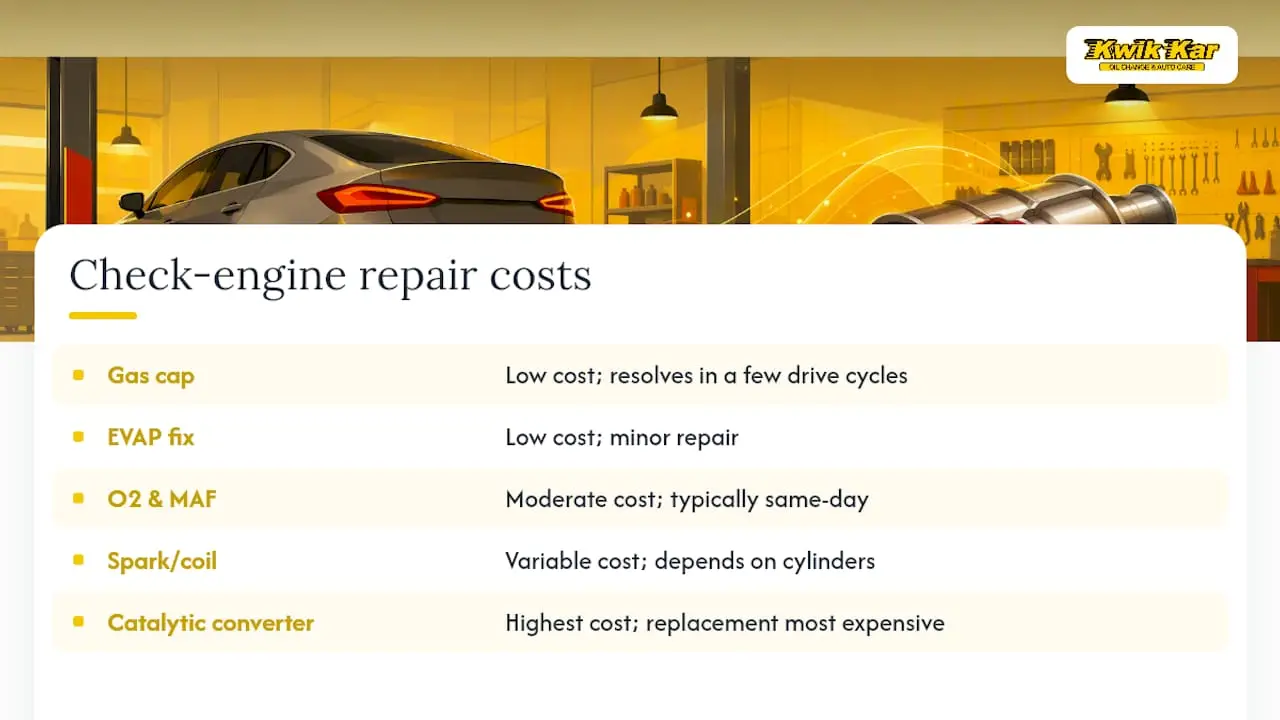
A loose gas cap or minor EVAP fix costs little and often resolves within a couple of drive cycles. Oxygen sensor and MAF sensor replacements run moderate and are typically same-day jobs. Spark plug and ignition coil work depends on how many cylinders are affected. Catalytic converter replacement sits at the top of the cost range, which is exactly why catching a misfire early is worth the effort. Forbes reporting on repair data shows aging vehicles, averaging nearly 13 years old, generate more frequent check engine events tied to worn catalytic converters and oxygen sensors. For a broader look at repair categories, see our services page.
How Can You Prevent Future Check Engine Lights?
Most repeat check engine light triggers trace back to deferred maintenance, not bad luck.
- Stick to your manufacturer’s spark plug and ignition service schedule instead of waiting for a misfire code to force the issue.
- Replace air filters on schedule to protect the MAF sensor from unnecessary wear.
- Address small vacuum leaks or sensor warnings early, before they cascade into converter damage.
- Use quality fuel and make sure the gas cap clicks fully closed every time you refuel.
Our spring maintenance checklist covers seasonal habits that catch small issues before they become dash lights.
How We Diagnose Check Engine Lights at Kwik Kar of Van Alstyne
Technicians start with a code read, then move to live data and targeted tests rather than swapping parts on a guess. That sequence matters because a code points to a system, not always the exact failed component, and confirming it first avoids paying for parts you didn’t need.
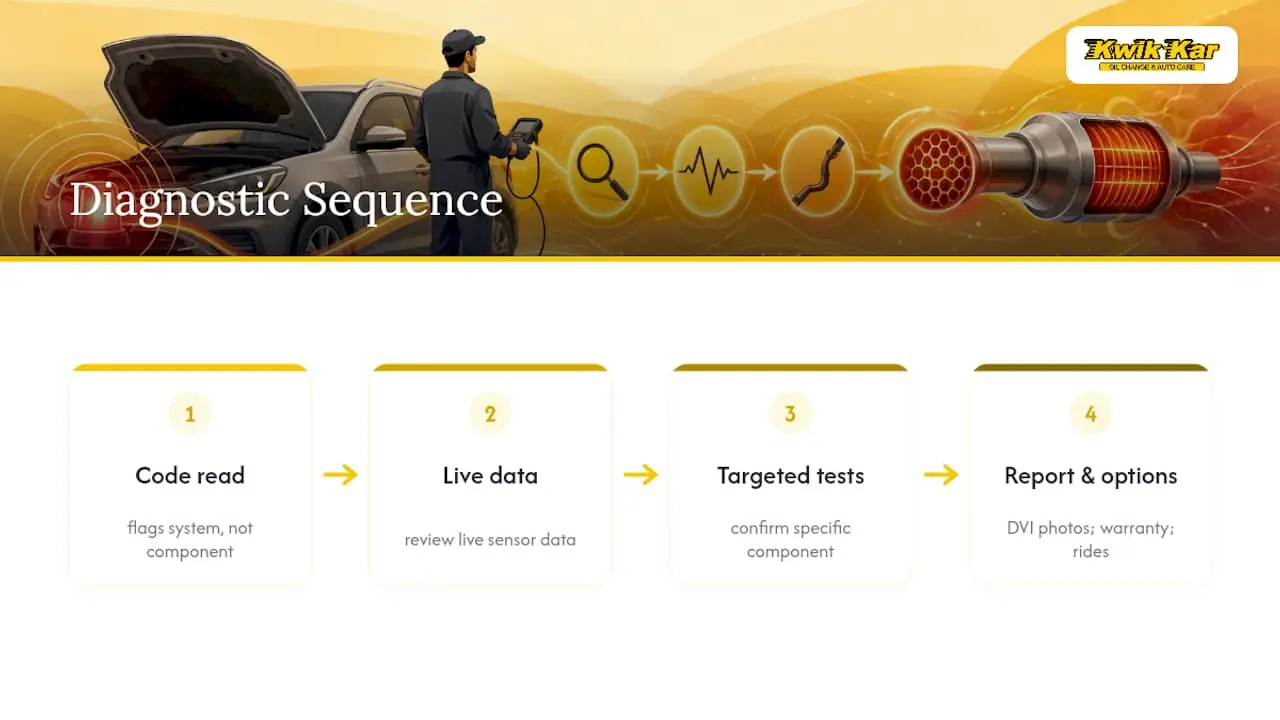
Every visit includes a Digital Vehicle Inspection with real-time photos, so customers see exactly what was found before recommendations. After-hours drop-off and free local rides may be available. Repairs carry a warranty, and if you’re weighing shop-style diagnostics against a DIY approach, this overview of what a proper inspection should tell you is a useful reference point.
A Neighborhood Mechanic’s Take on Dashboard Panic
Most drivers either ignore the light or panic and replace parts blindly. Neither works. Read the code first, respect a flashing light immediately, and choose a shop willing to show you what it actually found before recommending a repair.
— Kwik Kar
Get Your Check Engine Light Diagnosed the Right Way
The shop provides thorough diagnosis beyond just a code reader, using live data and Digital Vehicle Inspections with photos to guide repairs and avoid unnecessary part replacements.

Whether your light is flashing right now or has been steady for a week, get it looked at before a small sensor issue turns into a catalytic converter replacement. Visit our diagnostics page to see what’s included, or call us at (903) 712-5945 to schedule an appointment. After-hours drop-off is available if your schedule doesn’t allow a daytime visit, and our team in Van Alstyne is ready to give you a straight answer, not a guess.
Sources
- Study reveals the most common check-engine issues and repair costs (Forbes)
- Flashing check engine light: what to do now (OBDGuides)
- What does the check engine light mean? (Consumer Reports)
- What to do when your check engine light comes on (O’Reilly Auto Parts)
FAQ
What Is the Most Common Cause of a Check Engine Light?
A loose or damaged gas cap is one of the most frequent triggers, along with failing oxygen sensors and ignition misfires. Tightening the cap and driving a few cycles often resolves a false alarm without any repair needed.
Is It Okay to Drive When the Check Engine Light Is On?
It depends on whether the light is steady or flashing. A steady light usually allows limited driving to get it scanned within a few days, but a flashing light signals an active misfire that can damage your catalytic converter, so you should reduce speed and get off the road as soon as it’s safe.
How Do You Fix a Check Engine Light?
The fix depends entirely on what code triggered it, which is why reading the code before replacing anything is essential. Once diagnosed, repairs range from tightening a gas cap to replacing spark plugs, sensors, or, in more serious cases, the catalytic converter, and our diagnostics service confirms the root cause before recommending work.
Will a Parts Store Check My Engine Light for Free?
Many retail parts stores offer free in-store code scans that give you a starting diagnostic trouble code. That’s useful for initial triage, but confirming the actual root cause typically requires professional diagnostics with live data, which a code reader alone can’t provide.
Can I Just Reset the Check Engine Light Myself?
Clearing the code without fixing the underlying issue rarely solves the problem, and the light will likely return once the fault reoccurs. Resetting it also erases freeze-frame data that helps a technician pinpoint the real cause, so it’s worth reading and recording the code before clearing anything.