




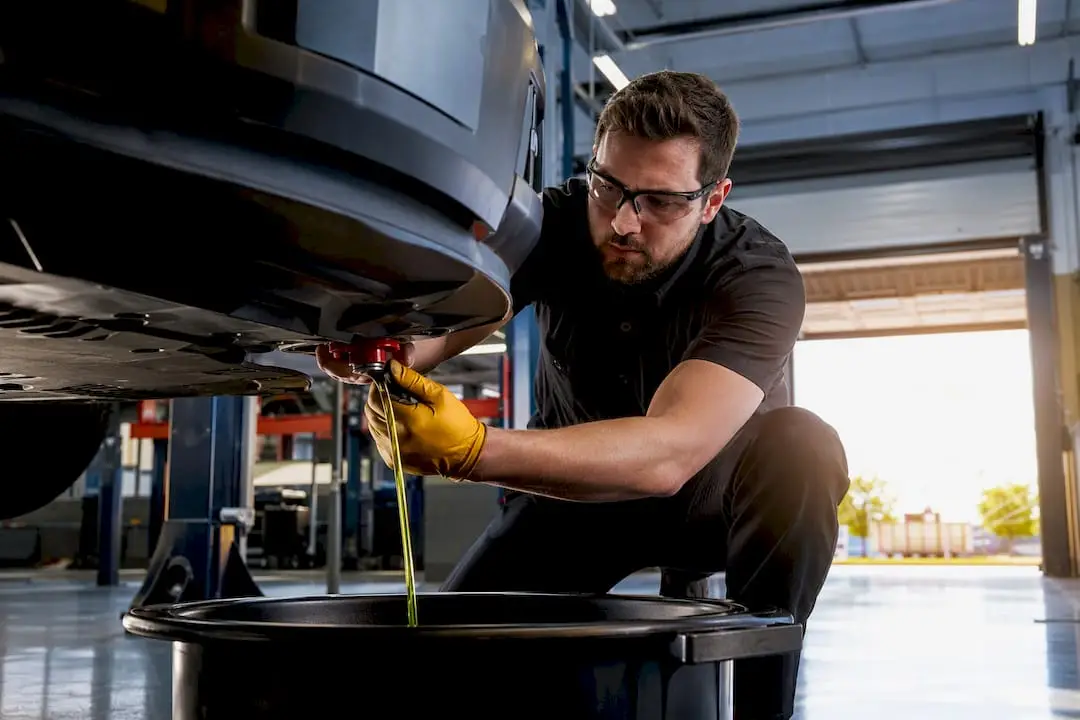
A drain-and-fill is the right call for most newer, well-maintained cars with clean coolant and a documented service history. A full flush earns its higher cost when the coolant is contaminated, discolored, mixed with an incompatible type, or the vehicle has unknown service history or has been in use for several years. If you’re not sure which camp your car falls into, a quick visual check or a technician’s inspection settles it fast.
TL;DR:
- A drain-and-fill removes about half the coolant and is suitable for regular preventative maintenance in well-maintained, newer vehicles.
- A full flush uses pressurized equipment to replace nearly 100 percent of the coolant, which is more effective for contaminated or older systems with debris or scale.
- Flushing costs more due to the use of chemicals and specialized machinery, and it takes longer—typically 60 to 120 minutes—compared to a quick drain-and-fill.
- Old or discolored coolant, unclear service history, or signs of overheating should prompt a full flush rather than a simple drain-and-fill.
- Proper disposal of used coolant is essential, and factory maintenance guidelines, including coolant type and interval, must be followed to preserve warranty coverage.
Table of Contents
- Coolant Flush vs Drain and Fill: The Key Differences
- How a Drain-and-Fill Actually Works
- How Does a Professional Coolant Flush Work?
- Should I Flush the Coolant or Just Drain and Fill?
- What Symptoms Mean You Need a Coolant Service?
- What Does a Coolant Flush or Drain-and-Fill Cost?
- DIY vs Professional: Safety and Disposal
- Does a Coolant Service Affect Your Warranty?
- Kwik Kar of Van Alstyne’s Approach: Inspect First
- Get Your Cooling System Checked at Kwik Kar of Van Alstyne
- Sources
- FAQ
Coolant Flush vs Drain and Fill: The Key Differences
A drain-and-fill and a full flush both replace old coolant, but they don’t do it in the same way, and that gap is the whole reason the two services cost differently.
A drain-and-fill only removes about 40 to 50 percent of the fluid in the system, since gravity draining leaves coolant trapped in the engine block, heater core, and low points of the radiator. A machine-powered flush pushes fresh fluid and cleaner through the entire loop under pressure, displacing close to 100 percent of what was there before.
That difference in thoroughness shows up directly in price and time.
| Factor | Drain-and-Fill | Full Coolant Flush |
|---|---|---|
| Fluid replaced | Roughly 40 to 50 percent | Up to nearly 100 percent |
| Time required | Quick, often 30 to 60 minutes | Longer, often 60 to 120 minutes or more |
| Equipment needed | Drain pan, basic hand tools | Flush machine, cleaning chemicals, conditioner |
| Best suited for | Newer, well-maintained systems | Contaminated, mixed, or unknown-history systems |
The extra time and machinery in a flush aren’t just for show. Flushes cost more because they use more fluid, cleaning chemicals, and specialized equipment, and that labor adds up compared to a simple drain and refill.
- A drain-and-fill works well as routine preventive maintenance on a system already in good shape.
- A flush is closer to corrective maintenance, restoring a system that has scale, rust, or degraded protection built up inside it.
How a Drain-and-Fill Actually Works
A basic drain-and-fill is straightforward enough that many comfortable DIYers handle it in a driveway or garage, provided the car is cool and level first.
- Let the engine cool completely, then place a catch pan under the radiator’s drain petcock or the lower radiator hose.
- Open the petcock (or loosen the hose clamp) and let the old coolant drain fully into the pan.
- Close the drain, refill the radiator with coolant mixed to the manufacturer’s spec, usually a 50/50 blend with distilled water.
- Run the engine with the heater on full to bleed trapped air pockets and circulate fresh fluid through the heater core.
- Check the level once cooled and top off as needed.
Because gravity draining can’t reach fluid sitting in the engine block or the heater core loop, a portion of the old coolant always stays behind, even after a careful drain. That’s the tradeoff for a faster, cheaper job.
Pro Tip: Never open a radiator cap or petcock on a hot engine. Pressurized coolant can spray out well above boiling temperature and cause serious burns.
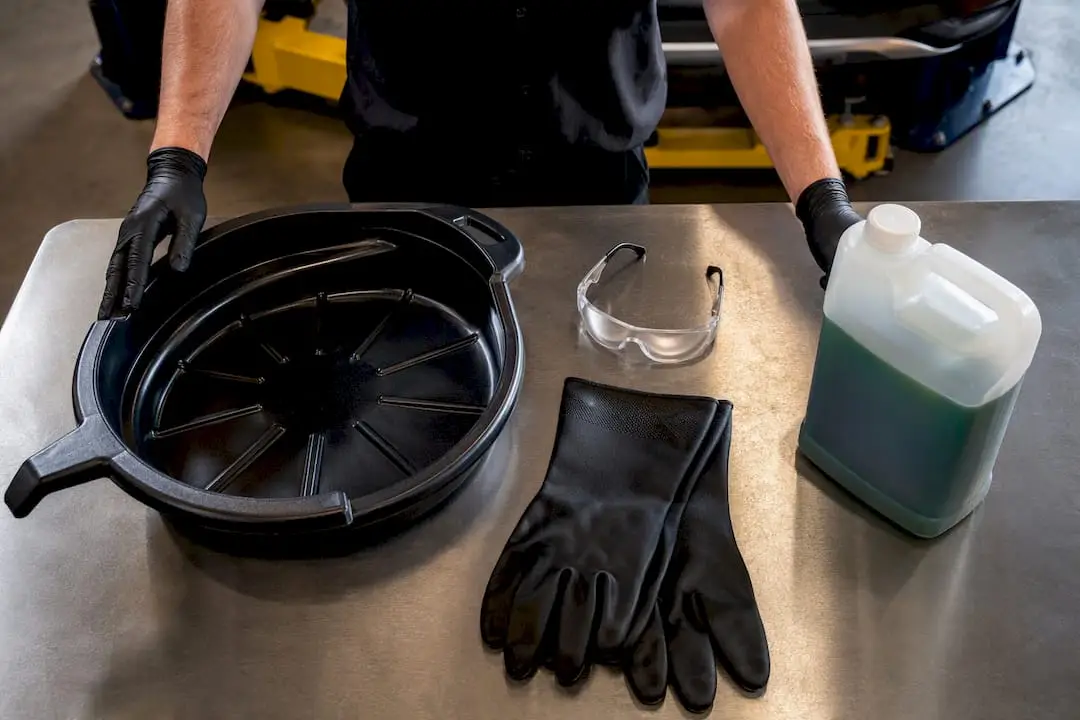
You’ll need a drain pan, gloves, eye protection, and a sealed container for the used coolant, since ethylene glycol is toxic and must go to a proper recycling center rather than a storm drain. If you’d rather skip the mess, Kwik Kar of Van Alstyne offers a cooling system service that handles the whole process, disposal included.
How Does a Professional Coolant Flush Work?
A shop-grade flush uses a machine that connects to the cooling system and forces fluid through under controlled pressure, reaching every corner a gravity drain misses.
- A cleaning solution circulates through the radiator, block, and heater core to loosen scale, rust flakes, and sludge.
- A conditioner or fresh coolant follows, chasing out the cleaner and any loosened debris before final fill.
- The closed-loop process keeps air out of the system, which usually means less manual bleeding afterward.
Topping off coolant doesn’t address chemical breakdown or built-up deposits; a proper flush clears degraded corrosion inhibitors and particulates that would otherwise wear on the water pump over time. That’s the real value behind the extra labor.
There’s a catch worth knowing before you book one, though. A flush can dislodge sediment that was quietly plugging a small leak, which means a pinhole in an old radiator seam or hose can suddenly start weeping once the debris clears. Gates recommends flushing before replacing a water pump, not after, so loosened particulate doesn’t chew on fresh seals.
Pro Tip: If your coolant looks rusty or has visible debris, ask your technician to inspect hoses and the radiator seams before the flush, not after.
Should I Flush the Coolant or Just Drain and Fill?
The honest answer depends on three things: what your owner’s manual says, how the coolant actually looks, and how much history you know about the car.
Manufacturer guidance always comes first. Service intervals vary from every 2 to 3 years or 30,000 miles for older coolant formulas up to 5 years or 100,000 miles for modern extended-life coolant, so check your manual before assuming either service is overdue. Independent shops sometimes recommend service sooner than the manual states, especially on vehicles with unclear history, and that’s not automatically a red flag.
Vehicles older than roughly five years, or with unknown maintenance records, generally get more value from a full flush than a simple drain, since old coolant that’s already breaking down will immediately start eating into fresh inhibitors left behind by a partial drain.
Run through this quick checklist:
- Coolant looks clear, matches the correct color for your vehicle, and was serviced on schedule: drain-and-fill is likely enough.
- Coolant looks brown, rusty, oily, or has visible particles: flush territory.
- You bought the car used with no service records: lean toward a flush.
- The car is overheating or you smell something sweet under the hood: stop and get it inspected before choosing either service.
| Situation | Recommended Service |
|---|---|
| Newer car, documented history, clear coolant | Drain-and-fill |
| Coolant looks discolored or has sediment | Flush |
| Unknown service history or used purchase | Flush |
| Vehicle over 5 years or with unknown maintenance records | Flush |
| Routine maintenance on a healthy system | Drain-and-fill |
What Symptoms Mean You Need a Coolant Service?
Your nose and eyes catch most cooling system problems before the temperature gauge ever moves. A sweet, syrup-like smell, gurgling noises under the hood, an overheating gauge, or coolant that’s turned brown or cloudy are the classic warning signs worth acting on.
Before booking a flush, it helps to gather a little evidence yourself:
- Pop the hood when the engine is cold and check the coolant reservoir for color and clarity.
- A pH or coolant condition test strip can tell you whether the corrosion inhibitors are still doing their job.
- A pressure or leak test rules out a bigger issue, since a persistent leak or head gasket problem needs its own repair, not just a fluid service.
Flushing a system that’s actually losing coolant to a leak or a failing head gasket wastes money and delays the real fix. Identifying the root cause first is what separates a useful diagnosis from a guess.
What Does a Coolant Flush or Drain-and-Fill Cost?
Budgeting for either service comes down to a few variables: how much coolant your system holds, what type it requires, and whether a flush turns up something that needs separate repair.
- A drain-and-fill generally costs less and takes less shop time, often finishing within about half an hour to an hour.
- A full flush runs longer, often 60 to 120 minutes or more once you factor in bleeding air and verifying temperature after the refill.
- Flush pricing runs higher because of the cleaning chemicals, machine time, and extra coolant volume involved, requiring more resources than a standard drain and fill., on top of standard labor.
One detail worth knowing: the 50 percent contamination rule means a drain leaves roughly half the old fluid behind, and if that leftover fluid is already acidic or degraded, it can immediately start consuming the protection in your fresh coolant. That’s the hidden cost of choosing the cheaper option on a system that didn’t qualify for it.
Exact pricing depends on your vehicle and coolant type, so confirm current rates directly with your shop.
DIY vs Professional: Safety and Disposal
A drain-and-fill is a reasonable DIY project if you’re comfortable working under the car, have a way to safely capture the old fluid, and know your local disposal rules.
- Ethylene glycol coolant is toxic to people and especially dangerous to pets, who are drawn to its sweet smell, so keep it capped and out of reach at every step.
- Store used coolant in a sealed container and take it to a recycling center or auto parts store that accepts it. Never pour it down a drain or onto the ground.
- If you spot oil in the coolant, milky residue on the dipstick, or suspect a head gasket issue, that’s a shop job. The same goes for machine-flush equipment you don’t have at home.
Pro Tip: Mixing coolant types can cause real damage. Gates recommends sticking with the manufacturer-specified coolant and using distilled or deionized water, since different chemistries can react and cause precipitation or corrosion inside the system.
Does a Coolant Service Affect Your Warranty?
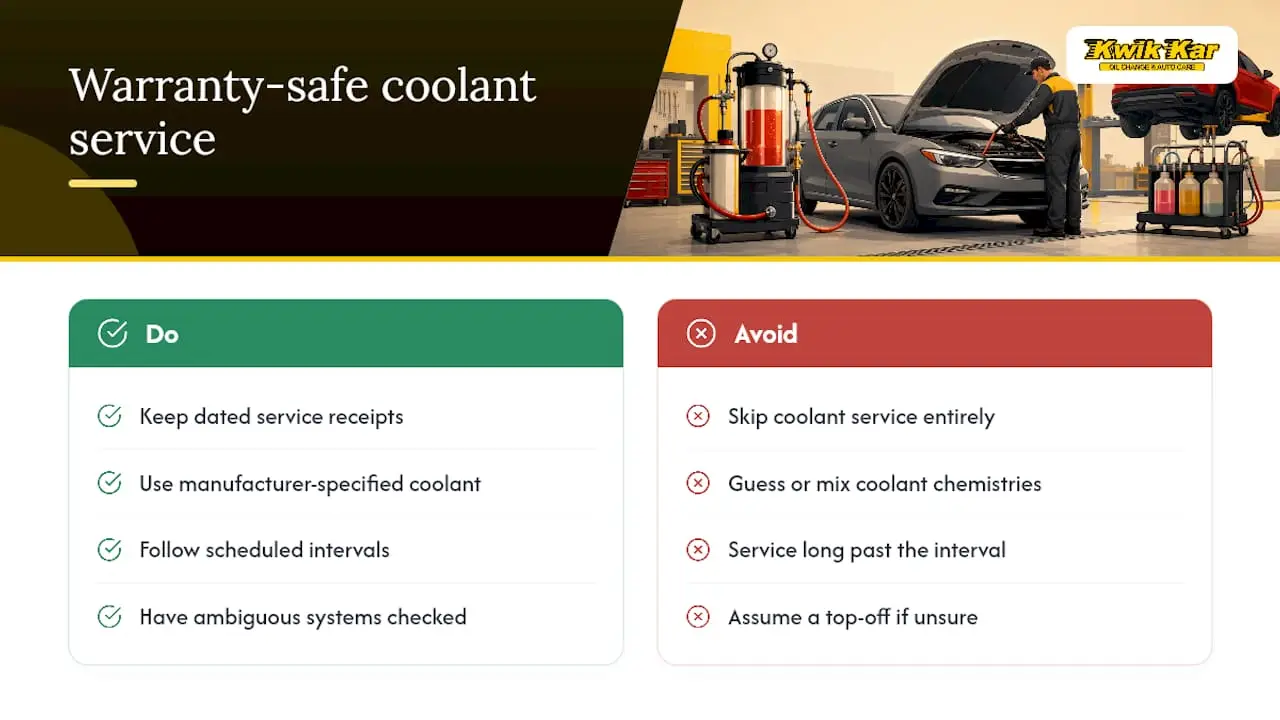
Most factory powertrain and emissions warranties don’t require you to use the dealership for routine fluid services, but they do require the service to happen on schedule and to be documented. Skipping coolant service entirely, or using the wrong coolant type in a system that calls for a specific formula, can give a manufacturer grounds to deny a related claim if a component like the water pump or radiator fails.
That’s where keeping records matters more than most owners realize. A dated receipt showing what type of coolant went in, how much, and when, protects you if a cooling-system claim ever comes up. It also protects your resale value: a documented maintenance history reassures the next buyer, or a mechanic doing diagnostics later, that the system wasn’t neglected.
Neither a drain-and-fill nor a flush voids a warranty on its own, as long as the correct coolant and interval are used. The risk comes from improvising, guessing at coolant type, mixing chemistries, or skipping service far past the interval your manual specifies. Keep the paperwork, use the coolant your manufacturer calls for, and you’re covered either way. If you’re ever unsure what a past shop put in your system, that uncertainty is itself a good reason to have it checked before assuming a simple top-off will do.
Kwik Kar of Van Alstyne’s Approach: Inspect First
We check the coolant’s condition and pull a Digital Vehicle Inspection with real photos before recommending anything. If it’s clean and on schedule, we say so. If it’s contaminated or the history’s unclear, our ASE-certified technicians will tell you why a flush makes sense. Call when you’re ready to find out which one your car actually needs.
— Kwik Kar
Get Your Cooling System Checked at Kwik Kar of Van Alstyne
Kwik Kar of Van Alstyne gives you a real answer instead of a guess: our Digital Vehicle Inspection shows you the actual condition of your coolant, with photos, before we recommend a drain-and-fill or a full flush. No upsell, no surprise charges tacked on after you’ve already said yes.

Our cooling system repair services cover everything from a straightforward drain-and-fill to a full machine flush, and we’ll walk you through exactly what your vehicle needs and why. Drivers throughout Van Alstyne, Anna, Howe, Melissa, and Gunter also count on us for after-hours drop-off, free local rides, and a comfortable waiting area with WiFi while the work gets done. Every repair carries a 2 year, 24,000-mile warranty.
If your coolant looks off or you’re just due for service, visit our auto repair page to see the full range of maintenance we offer, or call us at (903) 712-5945 to book an inspection. We’ll check the fluid, show you what we find, and recommend exactly what your car needs, nothing more.
Sources
- Coolant drain vs flush – RepairPal
- Do I need a coolant system flush? – KBB
- Topping off your coolant isn’t enough — 5 reasons you need a flush – HowToGeek
- Tech Tip TT002-13 Cooling System Flushing – Gates
FAQ
Is a Coolant Flush a Rip-Off?
No, but it’s not always necessary either. A flush earns its cost on contaminated, mixed-chemistry, or unknown-history systems; on a clean, well-maintained system, a simpler drain-and-fill does the job for less.
At What Mileage Should I Get a Coolant Flush?
There’s no single mileage number, since it depends on coolant type and your owner’s manual. Older coolant formulas often need service every 30,000 miles, while extended-life coolant can go up to 100,000 miles, so check your manual first.
What’s the Cost Difference Between a Flush and a Drain-and-Fill?
A flush generally costs more than a drain-and-fill because it uses more fluid, specialized cleaning chemicals, and machine time that a simple gravity drain doesn’t require. Exact pricing varies by vehicle and shop, so ask for a quote based on your specific car.
How Long Does a Full Coolant Flush Take?
A full flush typically takes 60 to 120 minutes or more, depending on how long it takes to bleed air and verify the system is holding the correct temperature afterward. A basic drain-and-fill is usually quicker, often 30 to 60 minutes.
Can I Do a Drain-and-Fill Myself?
Yes, if you’re comfortable working under the car and can dispose of the used coolant safely and legally. If the coolant looks contaminated or you suspect a leak or head gasket issue, that calls for a shop inspection rather than a home fix.