




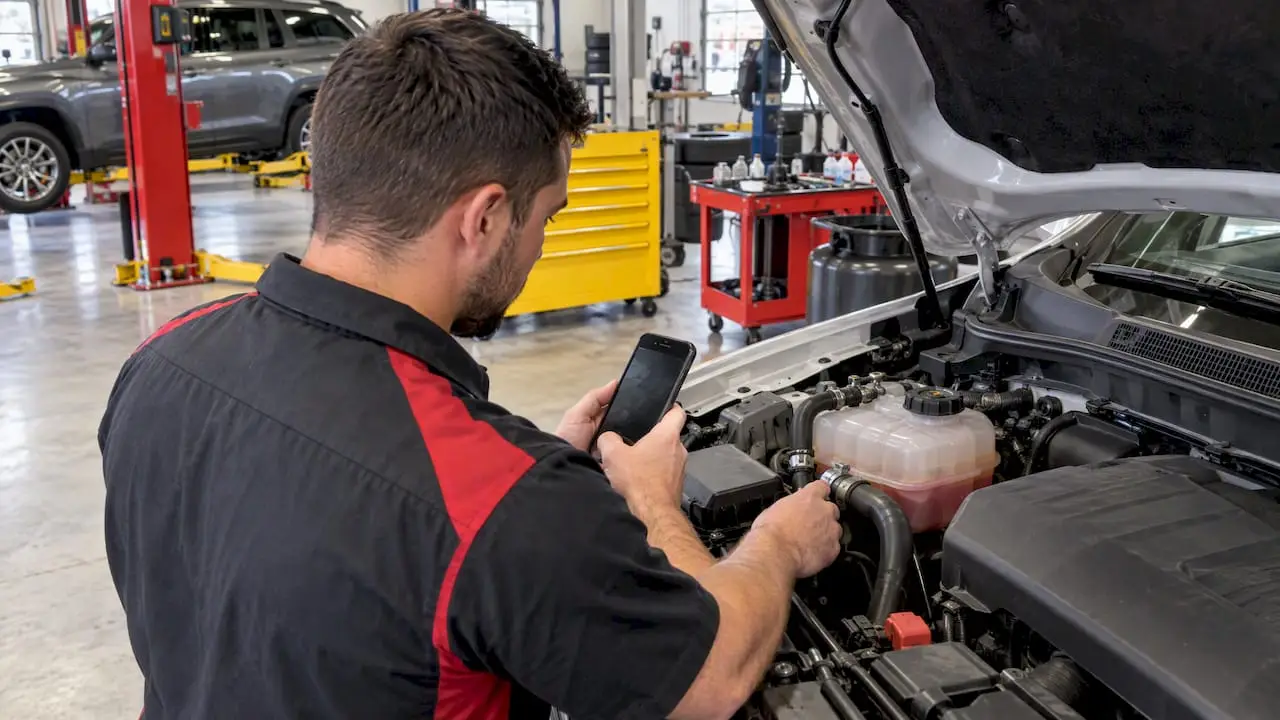
If your temperature gauge is climbing or steam is coming from under the hood, pull over and shut off the engine right away. If the car isn’t actively overheating but you’ve noticed warning signs, schedule a cooling system inspection with a qualified ASE-certified shop like Kwik Kar of Van Alstyne before small problems turn into big ones. Never open a hot radiator cap.
TL;DR:
- Common causes include coolant leaks, failed thermostats, worn pumps, radiator damage, broken fans, or belts; technicians use pressure and system tests rather than symptoms alone.
- A coolant top off only helps when no active leak exists; repeated overheating calls for a pressure test before approving repairs.
- Inspections take 30 to 90 minutes; thermostat or hose work takes 1 to 3 hours, while pump or radiator jobs take 3 to 6 hours.
- Check coolant at every oil change and replace it roughly every two years, while consulting the owner’s manual for your vehicle’s specific interval.
Table of Contents
- Recognizing overheating: what the warning signs mean
- Most likely causes and how technicians diagnose them
- Repair options: from a coolant top-off to head gasket work
- How long repairs take and what drives the cost
- Preventing overheating with routine maintenance
- How Kwik Kar of Van Alstyne approaches cooling system repair
- What we see most often, and what we’d tell a friend
- Ready to schedule your cooling system inspection
- FAQ
- Sources
Recognizing overheating: what the warning signs mean
A rising temperature gauge is your car’s first warning, and it’s one worth taking seriously. Steam or smoke from under the hood, a sweet coolant smell inside the cabin, dashboard warning lights, and a heater that suddenly stops producing warm air all point to a cooling system problem in progress.
If any of these show up while you’re driving, here’s what to do:
- Pull over safely and shut off the engine as soon as you can.
- Let the engine cool for at least 30 minutes before touching anything under the hood.
- Never remove the radiator cap while the engine is hot, since pressurized coolant can cause serious burns.
- Call for a tow if the temperature gauge stays high or warning lights remain on after cooling down.
A single overheating event often signals underlying damage rather than just hot weather, and professionals recommend a full inspection afterward to catch component failures before they spread, according to AAA guidance on overheating. Waiting too long to act can lead to warped cylinder heads or a blown head gasket, turning a modest repair into an expensive one.
Most likely causes and how technicians diagnose them
Overheating rarely comes from one single thing going wrong. AAA identifies several common culprits, and most of them show up again and again in daily driving:
- Low coolant level, usually from a leak somewhere in the system.
- A stuck or failed thermostat that blocks normal coolant flow.
- A worn water pump, which typically lasts tens of thousands of miles before needing replacement, as explained in detail in what is engine coolant and why your car needs it.
- Radiator damage, including clogged fins or cracked seams.
- A broken cooling fan or fan clutch.
- A failing serpentine belt that drives the water pump and fan.
- A blown head gasket, often the result of prolonged overheating.
A technician narrows down the cause with a handful of standard tests: a visual check of hoses, belts, and the radiator; a pressure test to find leaks; a coolant chemistry test to check for contamination; a thermostat function test; and a scan for stored engine codes. Guessing at the cause from symptoms alone rarely gets it right the first time, which is why a proper diagnostic workflow matters more than trial and error.
Repair options: from a coolant top-off to head gasket work
Not every cooling problem needs the same fix, and the right one depends entirely on what the diagnosis turns up.
- A coolant top-off only helps when there’s no active leak, since it’s a temporary measure, not a repair.
- A full coolant flush clears out old or contaminated fluid and restores proper heat transfer.
- Hose repairs or replacements address cracked, bulging, or leaking rubber lines.
- Thermostat replacement is usually a straightforward fix when the part has stuck closed or open.
- Water pump or radiator replacement becomes necessary when either component is physically damaged or worn out.
- Head gasket repair is a larger job, typically considered when overheating has already caused internal engine damage.
Pro Tip: If your car has overheated more than once, ask for a pressure test before agreeing to any repair. A repeat overheating event almost always points to a leak that a simple top-off won’t solve.
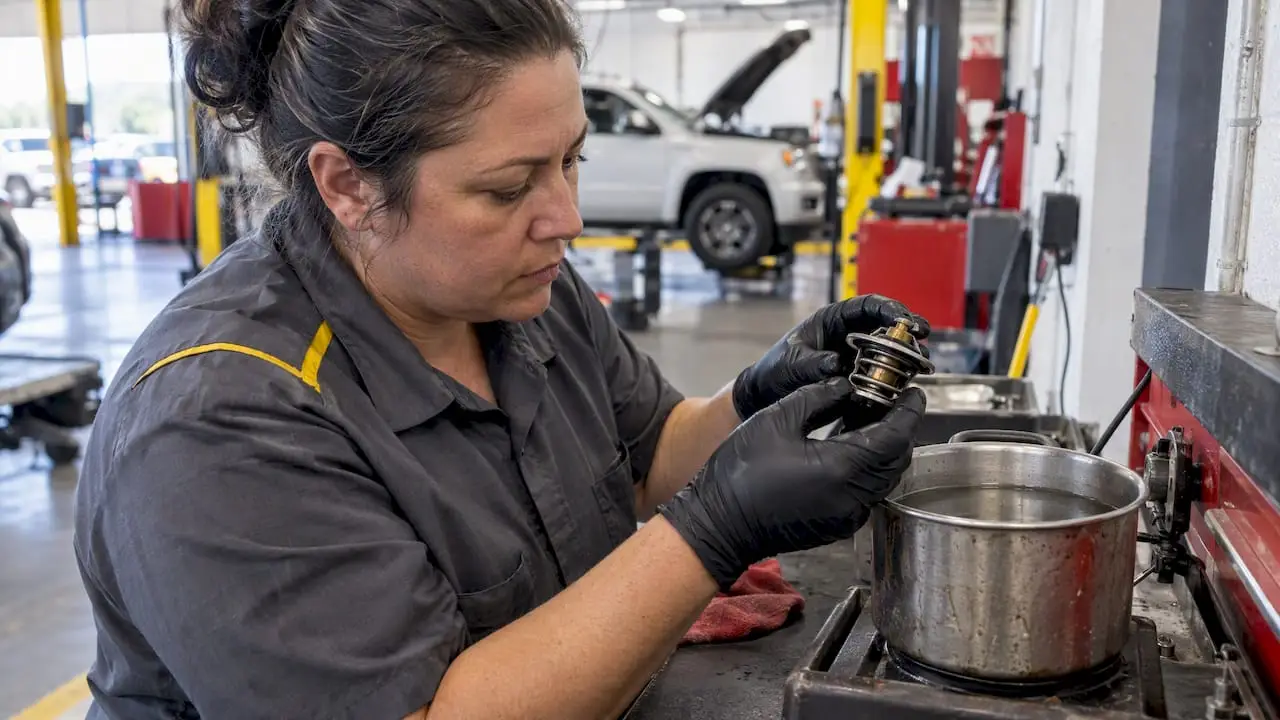
Thermostats can also stick or fail after an overheating event even if they weren’t the original cause, which is why many shops retest them before closing out the repair.
How long repairs take and what drives the cost
Most cooling system inspections take 30 to 90 minutes, giving a technician enough time to pressure test the system, check the thermostat, and look over hoses and belts. From there, repair timelines vary by what’s actually wrong.
- A thermostat or hose replacement typically takes 1 to 3 hours.
- Water pump or radiator replacement usually runs 3 to 6 hours or more, depending on accessibility.
- Head gasket repairs can stretch across multiple days because of the labor involved in removing and resealing the engine.
Cost and time are also shaped by your vehicle’s make and model, parts availability, and whether overheating caused any collateral damage to the engine. A shop that uses a Digital Vehicle Inspection gives you real-time photos and an itemized estimate before any work begins, so you’re not left guessing what you’re paying for. A warranty covering completed repairs adds a layer of protection once the work is done.
Preventing overheating with routine maintenance
Most cooling system failures give some warning before they strand you. Catching those signs early keeps repairs smaller and cheaper.
- Check coolant level and condition at every oil change or fluid service.
- Inspect hoses and belts for cracks, bulges, or brittleness, since wear here can affect other systems too, according to the Car Care Council’s vehicle systems overview.
- Flush and replace coolant roughly every two years, a general guideline from the Car Care Council.
- Have the cooling system checked before summer heat or a long road trip.
- Watch for a weak heater or slow-to-warm cabin, which can signal early thermostat trouble.
Pro Tip: Keep a simple log of when your coolant was last flushed. It takes the guesswork out of knowing whether your system is due for service.
How Kwik Kar of Van Alstyne approaches cooling system repair
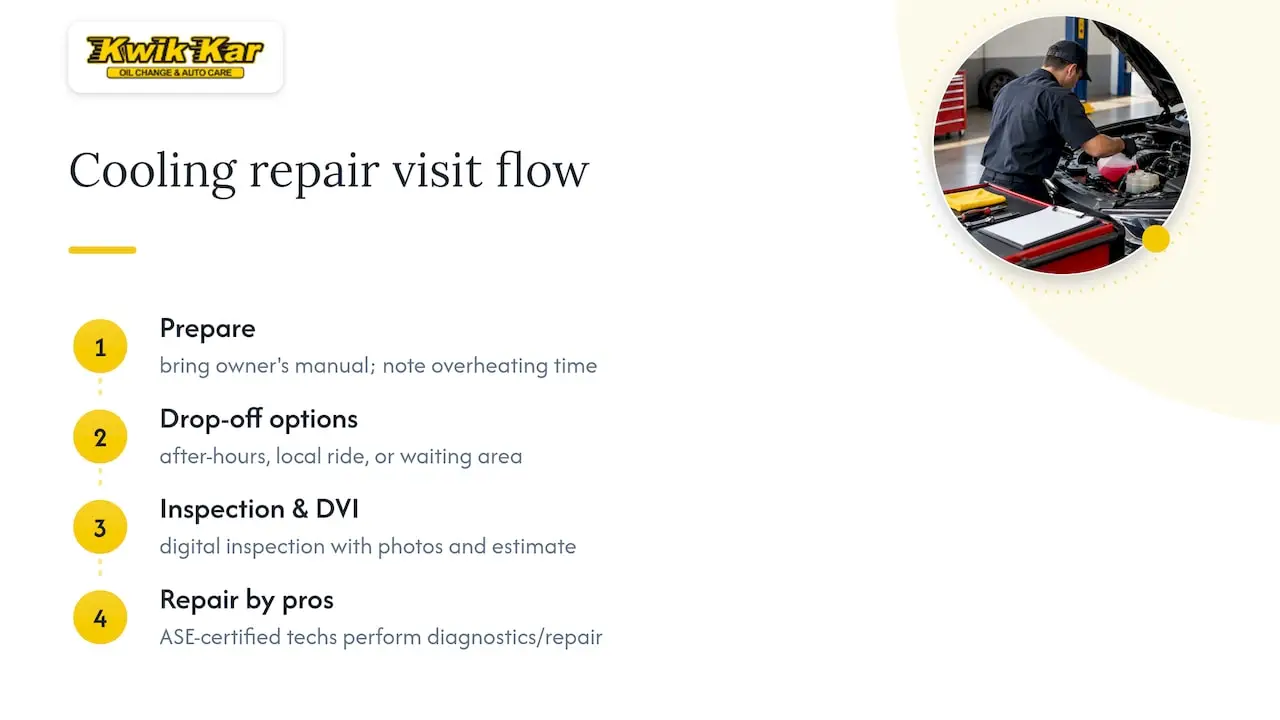
We handle cooling system repair alongside diagnostics, AC repair, and the rest of our auto repair services, and every job is performed by ASE-certified technicians. When you bring your vehicle in for a cooling system inspection, we run it through our Digital Vehicle Inspection process, which includes real-time photos and a transparent, upfront estimate before any work starts.
A few things that can make the visit easier include after-hours drop-off, local rides, and a comfortable waiting area.
Bring your owner’s manual if you have it, and jot down when the overheating happened and what you noticed. It helps our team get to the right diagnosis faster.
What we see most often, and what we’d tell a friend
We see the same pattern a lot: drivers top off coolant for weeks without asking why it keeps disappearing, then end up stranded when the leak finally catches up with them. An inspection at the first sign of trouble almost always costs less than the breakdown that follows. If your gauge creeps up, call us before you drive another mile on a hot engine.
— Kwik Kar
Ready to schedule your cooling system inspection
We make it simple to get your cooling system checked before a small issue becomes a roadside emergency. Book an appointment online or call us at (903) 712-5945, and bring your owner’s manual along with notes on when the symptoms started.
Visits include a Digital Vehicle Inspection with real-time photos, so you’ll see what is found before any work begins. Repairs come with a warranty, and after-hours drop-off and local rides are offered if needed.
FAQ
What should I do if my car starts overheating while driving?
Pull over as soon as it’s safe, shut off the engine, and let it cool before checking anything under the hood. Never open the radiator cap while the engine is hot, and call for a tow if the temperature gauge or warning lights don’t settle down once the engine cools, following AAA’s overheating guidance.
How often should I flush my car’s coolant?
A general guideline from the Car Care Council recommends flushing and replacing coolant every couple of years. Your owner’s manual may give a more specific interval for your particular vehicle.
What are the most common causes of a car overheating?
Low coolant from a leak, a failed thermostat, a worn water pump, radiator damage, a broken fan, or a failing serpentine belt are the most frequent causes, according to AAA’s list of common overheating causes. A blown head gasket is usually the result of overheating rather than the original cause.
How long does a cooling system inspection take?
Most inspections take 30 to 90 minutes, which gives a technician time to pressure test the system, check the thermostat, and inspect hoses and belts. Actual repair time afterward depends on what the inspection finds.
Does Kwik Kar of Van Alstyne offer a warranty on cooling system repairs?
Yes, completed cooling system repairs are backed by our 2-year warranty. You can review our cooling system services or call (903) 712-5945 for details on your specific vehicle.
Sources
- Car Overheating: 8 causes and solutions | AAA Automotive
- What to do if Your Car is Overheating | Via (AAA)