




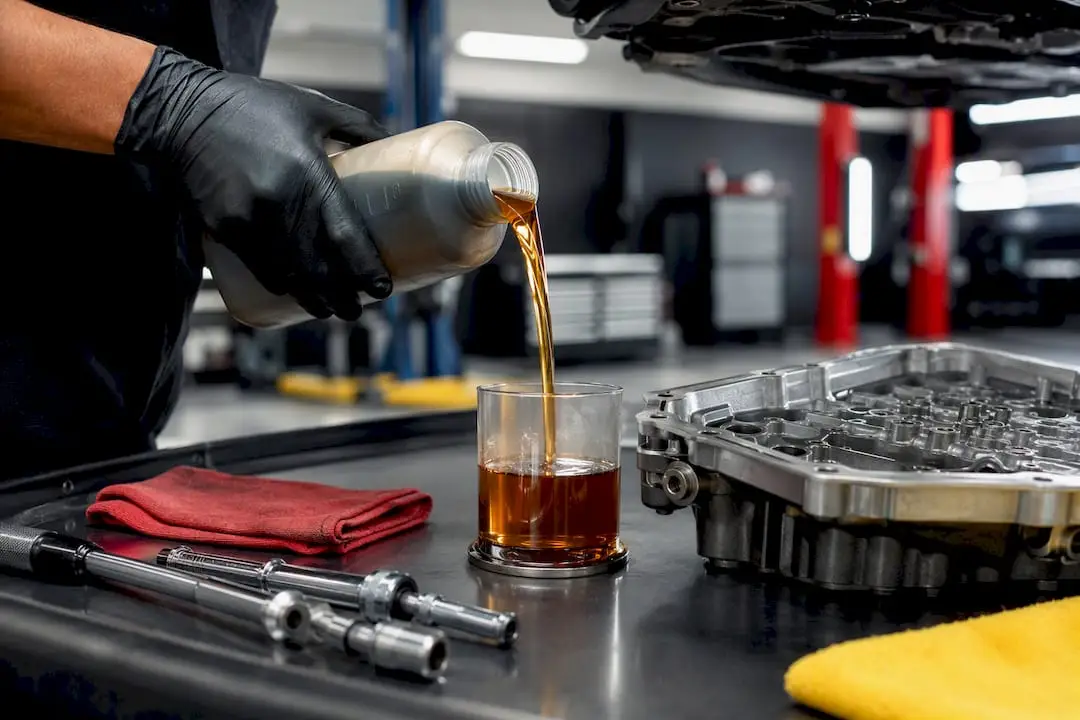
The single most effective way to protect a CVT is regular service with the correct OEM-specified fluid, typically a drain-and-fill every 30,000 to 60,000 miles depending on how the vehicle is driven. Skip that, or use the wrong fluid, and you risk belt or pulley damage that usually can’t be undone. If you don’t know your vehicle’s service history, a shop visit to check fluid condition and pull codes is the smart next move.
TL;DR:
- Regular CVT fluid changes every 30,000 miles under severe conditions can prevent belt or pulley damage caused by fluid breakdown.
- Using the correct OEM-specified fluid is critical, as incompatible or degraded fluid can cause immediate belt slip and irreversible internal damage.
- Drain-and-fill is the safest and most effective service method; avoid full flushes on high-mileage units to prevent debris dislodgement and seal damage.
- Early warning signs include shudder, whining, RPM hunting, delayed engagement, and burning smells, which require prompt professional diagnosis.
- Maintaining proper driving habits, documenting service history, and addressing issues early extend CVT lifespan and reduce repair costs.
Table of Contents
- Why CVT Fluid Is the Backbone of CVT Transmission Maintenance
- How Often Should CVT Fluid Be Changed?
- Drain-and-Fill, Partial Exchange, or Flush: What’s Actually Safe?
- How Do You Check CVT Fluid Level and Condition?
- Warning Signs That Mean More Than a Simple Fluid Change
- Is CVT Service Cheaper Than a Replacement?
- A Practical Checklist to Extend CVT Transmission Lifespan
- How Kwik Kar of Van Alstyne Approaches CVT Transmission Maintenance
- What About Long-Term Storage for CVT Vehicles?
- Can You Catch CVT Wear Before Symptoms Show Up?
- A Shop’s Honest Take on CVT Longevity
- Schedule CVT Transmission Maintenance With Kwik Kar of Van Alstyne
- Sources
- FAQ
Why CVT Fluid Is the Backbone of CVT Transmission Maintenance
A CVT doesn’t shift gears the way a conventional automatic does. Instead, a steel belt or chain rides between two variable pulleys, and hydraulic pressure squeezes those pulleys together to change the effective gear ratio smoothly. That clamping force depends entirely on fluid pressure and the friction modifiers blended into the fluid. When those additives break down, the belt starts to slip under load instead of gripping cleanly.
Fluid in a CVT does three jobs at once: it builds the hydraulic pressure that clamps the pulleys, it cools the internal components, and it protects metal surfaces from friction wear. Degraded fluid reduces hydraulic pressure and causes belt slip, localized heat buildup, and pulley scoring, and that scoring doesn’t heal. Once the pulley surfaces are grooved or the belt has stretched from repeated slipping, no fluid change fixes it.
- Belt-style CVTs (common in many midsize sedans and crossovers) tend to be more sensitive to fluid viscosity changes than chain-style units.
- Chain-driven CVTs generally tolerate slightly higher torque loads but still depend on precise fluid friction properties.
- Either design fails the same way eventually: heat plus friction breakdown equals slippage, and slippage equals wear that compounds fast.
Manufacturers design belt and chain CVTs differently for durability and cost reasons, but neither survives long on neglected fluid.
How Often Should CVT Fluid Be Changed?
Manufacturer intervals vary widely, and that’s part of what confuses owners. Some automakers list fluid as good for the life of the vehicle. Others recommend fluid changes at longer intervals under normal conditions. Many independent transmission specialists recommend a more conservative 30,000 mile interval for vehicles driven under severe conditions, and that guidance holds up well against real-world failure patterns.
Severe driving isn’t just towing. It includes:
- Frequent stop-and-go traffic, especially in heat
- Short trips that never let the transmission fully warm up
- Mountain or hilly terrain that keeps the CVT working hard
- Sustained highway speeds in hot climates like North Texas summers
- Any towing, even occasional
If you bought a used vehicle with no service records, treat the CVT as if it’s on the severe schedule until you know otherwise. That means budgeting for a fluid check and likely change around 30,000 miles from whenever you took ownership, not from the odometer reading alone.
Brand-specific examples illustrate the range. Nissan CVTs have historically used NS-2 or NS-3 fluid with intervals that shift based on model year. Subaru, Toyota, and Honda each spec their own proprietary CVT fluids with different recommended windows. None of these are interchangeable with each other or with standard automatic transmission fluid, which is exactly why the next section matters so much.
Drain-and-Fill, Partial Exchange, or Flush: What’s Actually Safe?
CVT fluid is not interchangeable with standard automatic transmission fluid, and using the wrong spec can cause belt slippage almost immediately. That single fact should guide every conversation you have with a shop about CVT transmission maintenance.
A proper drain-and-fill service typically follows these steps:
- The vehicle is raised, and the drain plug or pan is removed to release old fluid.
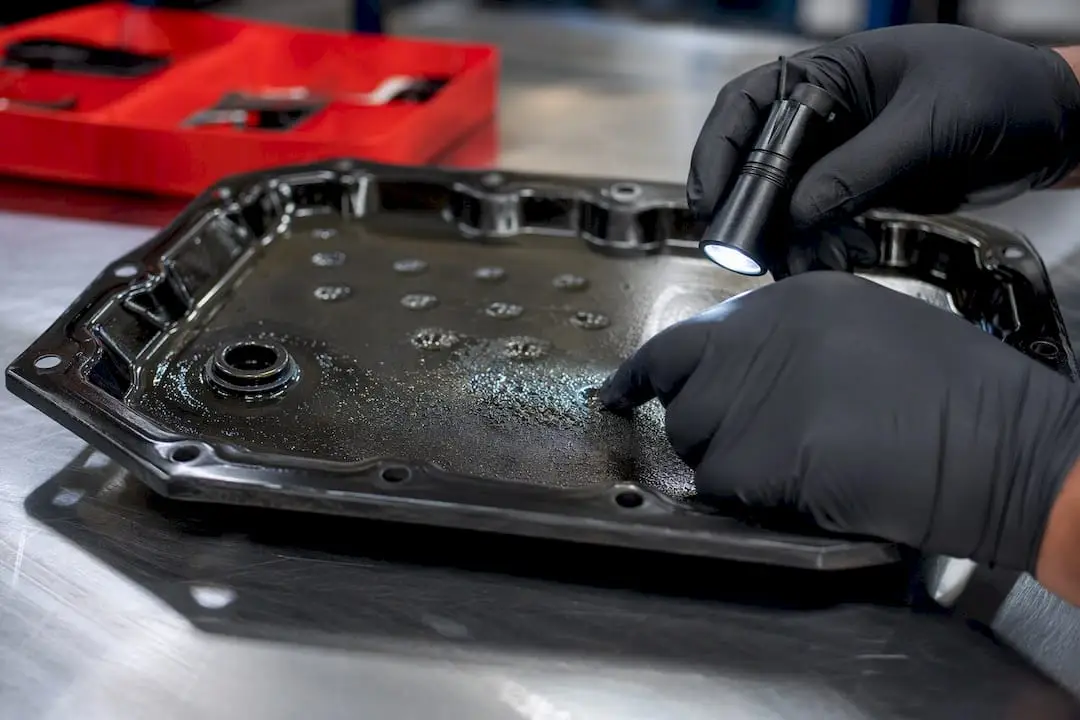
- The pan is inspected for metal debris (a small amount of fine metal is often normal at early services, though heavier debris signals wear).
- A filter or screen is cleaned or replaced if the design allows access.
- New OEM-spec fluid is added to the exact capacity specified for that transmission.
- The technician checks fluid level and condition at the correct operating temperature before signing off.
A partial fluid exchange, where a percentage of old fluid is drained and replaced, is common and generally low-risk. A full-force flush is a different story. Conservative shop guidance favors drain-and-fill over aggressive flushing on higher-mileage units, because a flush can dislodge accumulated debris and expose seals or leaks that had otherwise stayed quiet. A flush might make sense on a lower-mileage vehicle with clean service history, but that call belongs to a technician who’s inspected the unit, not a service menu upsell.
Pro Tip: Before you approve any CVT service, ask the shop three questions: what exact fluid spec they’re using, whether the filter or screen is being addressed, and how they’re setting fluid level and temperature. A shop that answers all three without hesitation knows CVTs.
How Do You Check CVT Fluid Level and Condition?
Checking a CVT properly is trickier than checking a conventional automatic, and that’s by design, not carelessness. Fluid level on most CVTs must be read at a specific operating temperature, often verified with a scan tool reading transmission temperature in real time rather than just eyeballing a dipstick cold.
There’s still plenty an owner can check without special tools:
- Fresh CVT fluid is typically clear to light amber; dark, cloudy, or burnt-smelling fluid signals it’s overdue.
- A visible metallic sheen or grit felt between your fingers on the dipstick means internal wear has already started.
- Any burning smell from under the hood after normal driving is a reason to stop driving soon and get it inspected, not a reason to wait for the next oil change.
Technicians go further with high-PSI pressure gauges to test line pressure and scan tools that pull live temperature and code data, along with a magnet check in the pan to catch fine metal particles that a visual scan misses. If your dipstick check looks off, that’s a cue to schedule a professional look, not a DIY fix.
Warning Signs That Mean More Than a Simple Fluid Change
Catching problems early is the difference between a routine service and a transmission replacement. Common CVT warning signs include shudder on takeoff, a whining or humming noise, RPM hunting under acceleration, hesitation before the vehicle engages, and a burnt smell.
A shudder that shows up specifically between 30 and 45 mph, often mistaken for a rough patch of road, is one of the more commonly reported early symptoms. Whining that changes pitch with engine speed rather than road speed points toward internal wear rather than a wheel bearing or road noise issue.
- Shudder or vibration during light acceleration, especially at low-to-moderate speeds
- A rising or falling whine that tracks with RPM, not road conditions
- The engine revving without a matching increase in road speed (RPM hunting)
- Delayed engagement when shifting from park into drive
- A burning smell after normal driving, not just after towing
Diagnosis at this stage means scanning for stored codes, pressure testing the hydraulic circuit, inspecting the valve body, and checking the pan magnet for metal content. If a technician finds heavy metal contamination or pulley scoring already underway, a fluid change alone won’t reverse it. That’s the point where the conversation shifts from maintenance to repair options, and it’s also the point where you should stop driving the vehicle hard until it’s been looked at.
Is CVT Service Cheaper Than a Replacement?
Yes, by a wide margin, and the arithmetic isn’t close. A CVT drain-and-fill at most shops runs roughly $150 to $300, though exact pricing varies by region, fluid type, and whether a filter replacement is included. A CVT replacement can run several thousand dollars, commonly cited in the $4,000 to $8,000 range depending on the vehicle.
Run the math over the life of a vehicle: even ten fluid services at the higher end of that cost range still land well under the low end of a single replacement. Preventive maintenance wins every time.
- Get a written estimate before any transmission service, including the exact fluid spec being used.
- Ask the shop to note the fluid brand, spec, and mileage in your records. That documentation pays off at resale and speeds up diagnosis if problems appear later.
- If a shop can’t tell you which fluid they’re using, get a second opinion before they touch the transmission.
A Practical Checklist to Extend CVT Transmission Lifespan
Driving habits matter as much as fluid changes. A CVT under constant abuse will burn through even fresh fluid faster than one driven gently.
- Avoid hard launches from a stop; CVTs handle gradual acceleration far better than aggressive takeoffs.
- Don’t hold the vehicle on a hill using throttle modulation against the transmission; use the brake instead.
- Respect the manufacturer’s towing limit exactly, since CVTs generally tolerate less abuse than traditional automatics under load.
- Consider an auxiliary transmission cooler if you tow regularly or drive in sustained heat, and keep the cooling system in good shape, since transmission heat and engine cooling are more connected than most owners realize.
- Never mix fluid specs or substitute a “universal” CVT fluid without confirming compatibility with your exact model.
Pro Tip: Keep a simple log with the date, mileage, and exact fluid spec every time your CVT is serviced. It sounds like overkill until you’re trying to sell the car or troubleshoot a new noise two years later.
How Kwik Kar of Van Alstyne Approaches CVT Transmission Maintenance
When you bring a CVT-equipped vehicle to Kwik Kar of Van Alstyne, ASE-certified technicians handle the fluid check and service using the procedures CVTs actually require, including temperature-specific level readings rather than a quick cold dipstick glance. Every visit includes a Digital Vehicle Inspection with real-time photos, so you can see fluid condition and any pan debris yourself instead of taking someone’s word for it.
The process is straightforward: drop off your vehicle (after-hours drop-off is available for busy schedules), get a documented diagnostic and estimate before any work starts, and review photos and findings before approving service. Technicians record the exact fluid spec used and can help you set a realistic interval going forward based on how you actually drive, not just a generic mileage sticker. Repairs carry a warranty, so you’re not left guessing about what happens if something needs a second look.
What About Long-Term Storage for CVT Vehicles?
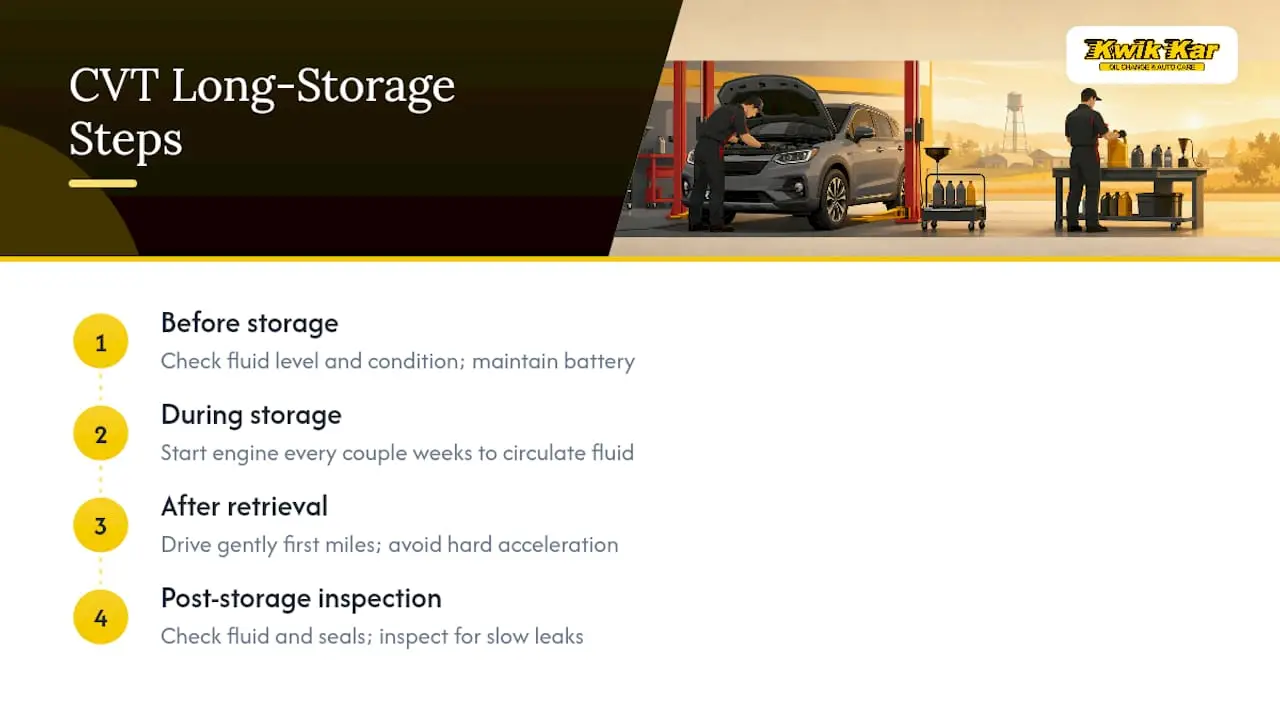
Parking a CVT-equipped vehicle for weeks or months, whether it’s a seasonal car, a fleet backup, or a vehicle waiting for a new owner, creates its own set of risks that many owners overlook.
Fluid can settle unevenly during long idle periods, and seals that stay static for months are more prone to slow leaks when the vehicle finally moves again. If you’re storing a CVT vehicle for more than 30 days, start the engine periodically (every couple of weeks, if possible) and let it run long enough to circulate fluid through the system, not just idle in the driveway.
Before storage, check that fluid is at the correct level and in good condition. Stored fluid doesn’t magically age faster than fluid in daily use, but starting storage with degraded fluid means you’re parking a problem instead of solving it. Battery maintenance matters too, since a dead battery during storage often leads to jump-starts that can spike voltage through electronic transmission controls.
When you pull the vehicle out of storage, don’t just drive it normally. Take it easy for the first several miles, avoid hard acceleration, and get the fluid level and condition checked if it’s been sitting more than a few months. A quick inspection before the vehicle goes back into regular rotation catches a slow leak or a seal issue while it’s still a minor fix, not a transmission removed from the car.
Can You Catch CVT Wear Before Symptoms Show Up?
Most CVT failures don’t happen without warning. They happen without anyone paying attention to warnings that were already there.
The most reliable way to catch wear early is comparing fluid samples over time rather than waiting for a single bad reading. A technician who’s serviced your vehicle before has a baseline for what your fluid should look and smell like at a given mileage. Fluid that’s noticeably darker or grittier than it was at the last service, even without any dashboard warning light, is worth flagging.
Subtle driving feel changes matter too. A CVT that used to feel perfectly smooth through moderate acceleration but now has an occasional, barely-there hesitation is often showing you the earliest stage of wear, long before it becomes a full shudder. Most drivers write this off as “the car just feels different” rather than recognizing it as a diagnostic clue.
Pan debris analysis during routine service is probably the single best early-warning tool available. Fine metallic sheen is common and expected at some services, but an increase in the amount or size of metal particles between services signals accelerating wear before it shows up as a symptom you’d notice from the driver’s seat. This is exactly why keeping a consistent service relationship with one shop, rather than bouncing between different providers, pays off: someone is actually tracking the trend, not just looking at a single snapshot.
A Shop’s Honest Take on CVT Longevity
Most CVT horror stories trace back to one decision: skipping fluid service because the sticker said “lifetime” or because the transmission still felt fine. It usually does feel fine right up until it doesn’t. The fix isn’t complicated. Stick to OEM-spec fluid, shorten your interval if your driving leans toward severe, and get a professional look whenever your service history has a gap.
— Kwik Kar
Schedule CVT Transmission Maintenance With Kwik Kar of Van Alstyne
Kwik Kar of Van Alstyne is the straightforward alternative to guessing at your CVT’s condition and hoping for the best. A CVT service here includes a proper drain-and-fill with the correct OEM-spec fluid, filter inspection or replacement where the design allows it, a temperature-verified level check, and Digital Vehicle Inspection photos so you see exactly what your fluid and pan look like before any work is approved.

If it’s been a while since your last transmission service, or you’re not sure what fluid your CVT was last filled with, bring whatever records you have and let the diagnostic process fill in the gaps. Serving drivers in Van Alstyne, Anna, Howe, Melissa, and Gunter, the shop handles everything from a routine transmission service to broader factory-scheduled maintenance that keeps your fluid intervals aligned with what your manufacturer actually specifies. Call (903) 712-5945 or request an appointment online to get your CVT checked before a small issue turns into a transmission replacement.
Sources
- How to Maintain a CVT
- CVT maintenance basics – Transmission Digest
- CVT Reliability Guide: What Kills a Continuously Variable Transmission (and How to Make Yours Last 200,000 Miles)
FAQ
Is a CVT High Maintenance?
A CVT isn’t inherently high maintenance, but it’s less forgiving of neglect than a conventional automatic. Fluid degradation is the leading cause of CVT failure, so staying on schedule with OEM-spec fluid changes keeps maintenance needs modest and predictable.
What Is the Average Cost to Service a CVT Transmission?
A typical drain-and-fill service runs roughly $150 to $300 at most shops, though pricing varies by region and vehicle. Kwik Kar of Van Alstyne can provide an exact estimate once your vehicle and fluid spec are confirmed through the transmission service page.
How Often Should CVT Transmission Fluid Be Changed?
Many specialists recommend around every 30,000 miles under severe driving conditions, while manufacturer intervals for normal use can run longer, sometimes 60,000 miles or more depending on the brand. If you tow, drive in heavy stop-and-go traffic, or don’t know your vehicle’s service history, plan for the shorter interval.
How Late Is Too Late to Change CVT Fluid?
There’s no exact mileage where it becomes too late, but once you notice shudder, whining, or a burning smell, fluid alone may not reverse existing pulley or belt wear. Get the vehicle inspected as soon as symptoms appear rather than waiting for the next scheduled service.