




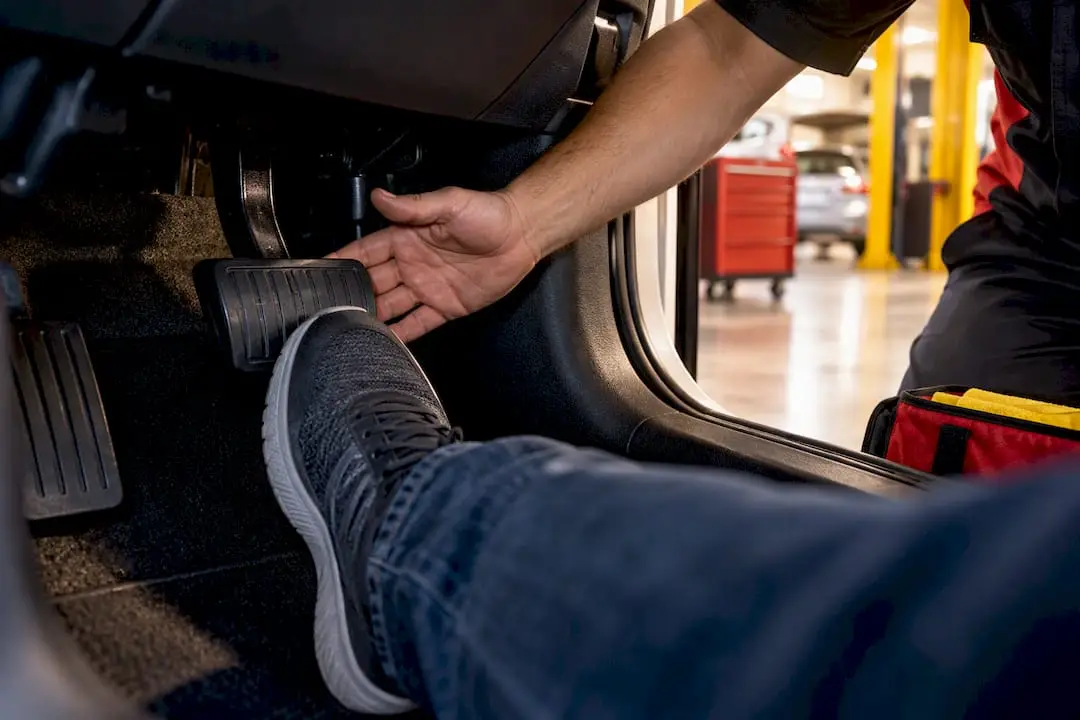
A soft or spongy brake pedal almost always means air has gotten into the hydraulic system or brake fluid is leaking somewhere it shouldn’t be, though a failing master cylinder or brake booster can cause the same feeling. If the pedal sinks toward the floor or braking feels inconsistent, stop driving and get the vehicle inspected before you get back on the road. This is not a symptom to wait out.
TL;DR:
- Trapped air from recent brake work or leaks from worn components are the most common causes of a soft pedal, requiring prompt inspection.
- A pedal that sinks slowly with steady pressure indicates a potential internal master cylinder leak, which usually needs replacement over resealing.
- Brake fluid that appears dark or cloudy, combined with low levels, points to contaminated fluid or leaks, both of which need immediate attention.
- Checking pedal firmness when the engine is off versus on helps identify if a brake booster or vacuum system fault is contributing to the soft feel.
- Most repairs involve bleeding the system for air, replacing leaking hoses or cylinders, or replacing the master cylinder and worn mechanical parts for full restoration.
Table of Contents
- Common causes of a soft or spongy brake pedal
- How to figure out what’s causing a soft pedal
- Repair options and what a shop will typically do
- Is it safe to drive with a soft brake pedal?
- Preventing a soft pedal before it starts
- Why a professional diagnostic catches what a driveway check can’t
- A safety-first approach to brake diagnostics
- Get your brake pedal checked at Kwik Kar of Van Alstyne
- Sources
- FAQ
Common causes of a soft or spongy brake pedal
Your brakes work off hydraulic pressure, and that system only works when it’s completely sealed and full of clean fluid. A soft or spongy pedal usually signals trapped air in the hydraulic system or a fluid leak, and pinning down which one is happening in your car narrows the repair fast.
- Air in the brake lines: Air compresses under pressure while fluid doesn’t, so trapped air turns firm pedal pressure into a soft, sinking feeling. It usually gets in through a recent brake job, a loose fitting, or a line that’s been opened.
- External fluid leaks: Look for wet spots near the master cylinder reservoir, along brake lines, or around calipers and wheel cylinders. Fluid loss anywhere in the system reduces the pressure your pedal can build.
- Contaminated or old brake fluid: Brake fluid absorbs moisture over time, and that moisture lowers its boiling point and can affect how the pedal responds under hard use.
- Master cylinder seal failure: A pedal that sinks slowly to the floor under steady pressure, with no puddle anywhere, often points to a leaking seal inside the master cylinder itself.
- Brake booster or check valve faults: Vacuum-assist problems change how much effort the pedal takes and how it feels when you press it.
- Collapsed rubber hoses: A hose that’s swollen or collapsing inside absorbs pressure instead of transferring it, producing a spongy feel even when everything else checks out.
- Worn pads, warped rotors, or sticking calipers: These mechanical issues change pedal response too, even when the hydraulic system itself is sound.
Technical guidance from brake component manufacturers lists this same set of causes, and notes that a pedal firming up after a bleed but softening again soon after points more toward an internal master cylinder leak than trapped air.
How to figure out what’s causing a soft pedal
Some checks are safe for any owner to do in a driveway. Others need a lift, a scan tool, and training. Here’s the order that makes sense.
- Check for dash warning lights and make sure nothing is jammed under the pedal, like a stuck floor mat.
- Compare pedal feel with the engine off versus running. A pedal that firms up noticeably with the engine off but goes soft once it’s running points toward the brake booster.
- Open the hood and check the fluid reservoir. Note the level and whether the fluid looks clear or dark and cloudy.
- Look underneath the car and around each wheel for wet spots, drips, or fluid residue on the inside of a tire, which usually means a leaking wheel cylinder or caliper.
- Do a pedal hold test: press and hold steady pressure for 30 seconds. A pedal that slowly sinks under constant pressure suggests an internal master cylinder leak rather than air.
- Note whether bleeding the brakes firms the pedal permanently or only temporarily, since a pedal that reverts to soft after bleeding is a strong sign of a failing master cylinder.
Pro Tip: Never just top off the fluid reservoir and call it fixed. Low fluid almost always means a leak or significantly worn pads somewhere in the system, and topping off without finding the cause just delays a repair that’s going to get more expensive.
A shop takes this further with bench-bleeding the master cylinder off the vehicle, pressure and flow testing the hydraulic circuit, checking vacuum supply to the booster, and inspecting the ABS valve block for internal issues that a driveway check can’t reveal.
Repair options and what a shop will typically do
The fix depends entirely on what the diagnosis turns up, and the good news is most causes have a clear, well-established repair path.
- A full system bleed or fluid flush resolves the problem when trapped air or contaminated fluid is the root cause, and it’s often the first thing a technician tries once a leak has been ruled out.
- Hose, line, caliper, or wheel cylinder replacement addresses external leaks at the source rather than just topping off fluid.
- Master cylinder replacement is the fix when internal seals have failed, since that component can’t be resealed in most cases.
- Brake booster repair or vacuum line replacement addresses check valve failures or vacuum leaks that change pedal effort and feel.
- Rotor resurfacing or replacement, along with freeing or replacing sticking calipers, restores normal mechanical response when worn components are contributing to the soft feel.
A typical shop workflow moves through inspection, pressure and bench tests to confirm the source, parts replacement where needed, a full bleed of the system, and a road test to confirm the pedal holds firm under real driving conditions. Skipping any of those steps risks a repair that feels fine in the parking lot and fails again on the road.
Is it safe to drive with a soft brake pedal?
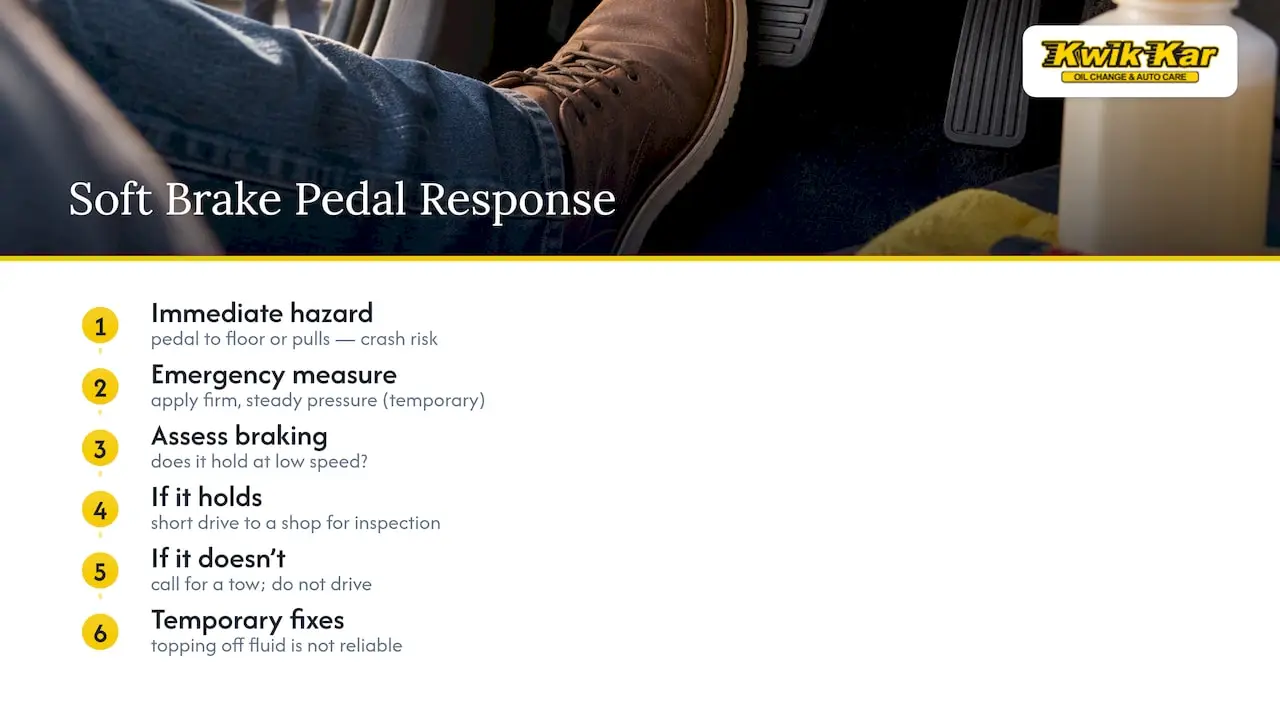
A pedal that goes to the floor, stops inconsistently, or pulls the car to one side is an immediate hazard, and driving on it risks a crash. If it happens while you’re behind the wheel, AAA’s Car Doctor guidance points to applying firm, steady pressure on the pedal as an emergency measure, not a permanent fix. If the brakes hold enough to get you somewhere safe at low speed, a short drive to a shop may be reasonable; if they don’t, call for a tow instead. Topping off fluid is never a reliable stopgap.
Preventing a soft pedal before it starts
Most soft-pedal problems trace back to fluid that’s overdue for a change or a small leak that went unnoticed. AAA’s brake maintenance guidance lists soft or spongy pedal feel among the warning signs worth acting on, and recommends replacing brake fluid on the schedule in your owner’s manual, commonly every 2 to 3 years. Federal standards under FMVSS/CFR §571.116 set performance requirements for brake fluid specifically because contaminated or improper fluid contributes to brake failures.
- Follow your manual’s fluid change interval rather than waiting for symptoms to show up.
- Check fluid level and color every few months as part of routine hood-up maintenance.
- Get leaks and worn pads fixed promptly instead of letting them progress into a hydraulic problem.
- Mention any recent brake work to your technician, since it helps them narrow down where air or contamination might have entered.
Our brake maintenance guidance covers seasonal timing in more detail, and our brake fluid flush guide walks through the signs that a flush is overdue.
Why a professional diagnostic catches what a driveway check can’t
Pinning down the exact cause of a soft pedal takes more than a visual check. It takes pressure testing the hydraulic circuit, bench-bleeding a master cylinder off the car, and checking vacuum supply to the booster with the right tools on a lift.
- Qualified technicians perform every diagnostic and repair step, from bleeding methods to booster checks.
- Vehicle inspections with real-time photos show you exactly what a technician found, whether that’s a leaking wheel cylinder or fluid that’s turned dark.
- A warranty covers the repair once it’s done.
- After-hours drop-off and local ride services mean the diagnostic doesn’t have to wait for a day off.
Seeing the actual photo of a leaking seal or a swollen hose, rather than just being told about it, makes it easier to trust that the repair being recommended is the one your car actually needs.
A safety-first approach to brake diagnostics
A soft pedal deserves a documented answer, not a guess. Photos and inspection notes let you see exactly what’s wrong before any repair happens, which is why we build every brake diagnosis around the evidence, not assumptions.
— Kwik Kar
Get your brake pedal checked at Kwik Kar of Van Alstyne
A soft pedal is not something to live with until it gets worse. Our brake repair services cover the full diagnostic path, from checking fluid and hoses to pressure testing the master cylinder, all performed by ASE-certified technicians and backed by a 2-year/24,000-mile warranty. Every finding comes with a Digital Vehicle Inspection so you can see the actual leak or worn part before agreeing to any repair.

Drop your car off after hours, take advantage of a local ride while we look it over, or wait in a comfortable spot with WiFi and coffee. Call us at (903) 712-5945 or book an appointment through our auto repair services page to get your brake pedal inspected before it turns into a bigger repair.
Sources
- Diagnose a soft or spongy pedal (PowerStop resources)
- AAA Car Doctor overview (AAA Northeast)
- How to know if your brakes are going bad (AAA)
- CFR §571.116 Standard No. 116; Motor vehicle brake fluids
FAQ
How do you fix a soft brake pedal?
The fix depends on the cause: bleeding removes trapped air, while leaking hoses, calipers, wheel cylinders, or a failing master cylinder need to be replaced. A technician confirms the cause first with pressure testing and a visual inspection before recommending a repair.
What does it mean if the brake pedal is soft?
A soft or spongy brake pedal usually means air has gotten into the hydraulic system or fluid is leaking somewhere, though a failing master cylinder or brake booster can feel similar. It should always be treated as a sign to get the brakes inspected, not something to wait out.
Is it safe to drive with a soft brake pedal?
It depends on how severe it is. A pedal that still holds pressure reliably may allow a short, careful drive to a shop, but a pedal that sinks to the floor or stops inconsistently means you should stop driving and arrange a tow or on-site inspection instead.
How much does it cost to fix a soft brake pedal?
The cost depends on the cause, since a fluid flush costs far less than replacing a master cylinder or brake booster. Kwik Kar of Van Alstyne provides a diagnosis and clear pricing before any repair begins, so call (903) 712-5945 or request an appointment through our auto repair page for a quote specific to your vehicle.