




If your temperature gauge never climbs past the low third of the dial and the heater blows lukewarm no matter how long you drive, your thermostat is likely stuck open. It is not usually an emergency the way a stuck-closed thermostat is, but it steadily costs you fuel economy and puts extra wear on your engine. Plan on getting it checked within a few days, not a few months.
TL;DR:
- A thermostat stuck open causes engine coolant to stay below normal temperature, leading to weak cabin heat and a 10% to 25% drop in fuel economy.
- Symptoms include a low, flat temperature gauge, a Check Engine code P0128, and hoses that warm up too quickly, often within minutes of startup.
- Confirming the issue requires tools like an OBD-II scanner, infrared thermometer, and hose timing tests to distinguish a faulty thermostat from electrical or sensor problems.
- Replacing a failed thermostat is a straightforward repair, but proper diagnosis prevents unnecessary parts replacement and long-term engine wear.
- Preventative measures include following coolant change intervals, inspecting hoses, using OEM parts, and testing heater output annually before cold weather.
Table of Contents
- What Are the Signs of a Thermostat Stuck Open?
- Why an Open Thermostat Hurts More Than Your Gas Mileage
- How Do You Confirm a Stuck-Open Thermostat?
- What Else Causes These Symptoms Besides a Bad Thermostat?
- What Happens When You Bring It in for Repair?
- How Do You Prevent Thermostat Problems Down the Road?
- Why We Test Before We Replace
- Get Your Cooling System Checked at Kwik Kar of Van Alstyne
- Sources
- FAQ
What Are the Signs of a Thermostat Stuck Open?
The clearest thermostat stuck open symptoms show up on your dashboard before they show up anywhere else. Your temperature gauge sits low and flat, often stabilizing in the bottom third of the range instead of climbing to its normal midpoint even after a long highway drive. That pattern is the opposite of a stuck-closed failure, which spikes the needle into the danger zone within 5 to 15 minutes.
Weak cabin heat is the second giveaway. Since your heater core pulls warmth from hot engine coolant, a stuck-open thermostat that never lets the engine reach full temperature leaves you with air that stays lukewarm even after 10 to 20 minutes on the road. Drivers in mild weather sometimes miss this clue entirely, since they only notice the heater struggling when it is already cold outside or when the engine is under heavy acceleration.
A Check Engine light with code P0128 is often what finally gets attention. This code means the engine coolant is not reaching its regulating temperature within the expected drive cycle, and it is one of the more reliable computer-flagged thermostat failure symptoms out there.
You will likely notice these together:
- Fuel economy that drops noticeably, since the engine control computer keeps running a richer fuel mixture while it thinks the engine is still warming up
- Rough idle or slight hesitation on cold mornings that lingers longer than usual
- A radiator upper hose that warms up almost immediately after startup instead of staying cool until the engine reaches temperature
A stuck-open thermostat can cause a noticeable temperature shortfall below normal operating temperature, and drivers commonly report a 10% to 25% drop in fuel economy while the fault goes unaddressed. That is a real hit to your wallet every time you fill the tank.
Why an Open Thermostat Hurts More Than Your Gas Mileage
A thermostat stuck open forces your engine’s computer into a fuel strategy it was never designed to run long term. When the coolant temperature sensor reports a cold engine, the ECU keeps injecting extra fuel, the same open-loop enrichment normally reserved for the first minute or two after startup. Stretch that condition out over an entire commute, and you are burning more gas while sending unburned fuel toward a catalytic converter that was built to handle warmed-up exhaust, not a steady diet of rich mixture.
There is a slower cost too. An engine that never reaches full operating temperature does not get the thermal expansion it needs for pistons, rings, and bearings to seat with proper clearances, and oil that stays cooler than intended does not shed moisture and fuel dilution the way it should. None of this breaks your engine in a week. It wears it down over months of driving on a chronically cold-running system.
A stuck-open thermostat rarely turns into a roadside emergency, but it quietly taxes your fuel economy, your catalytic converter, and your engine’s internals every single mile you put off the fix.
Compare that to a stuck-closed thermostat, which traps coolant in the block and can push your engine into overheating territory within minutes. Stuck-closed is the “pull over now” scenario. Stuck-open is the “get it looked at this week” scenario, especially once cold weather makes a weak heater a genuine comfort and safety concern during a Van Alstyne winter morning.
Pro Tip: If your heater only blows warm during hard acceleration and goes cool again at idle, that inconsistency is a strong clue coolant is circulating before the engine is actually up to temperature, which points straight at the thermostat.
How Do You Confirm a Stuck-Open Thermostat?
Guessing from the dashboard alone is not reliable enough to justify swapping parts. Technicians and confident do-it-yourselfers combine at least two of the checks below before pointing a finger at the thermostat.
- Pull live ECT data with an OBD-II scanner. Watch the engine coolant temperature reading during a cold start and compare it against how long the engine has been running. If the ECT stays well below the thermostat’s rated opening temperature past the point it should have climbed, and the scanner shows a stored P0128 code, that is strong evidence pointing at the thermostat or the sensor itself.
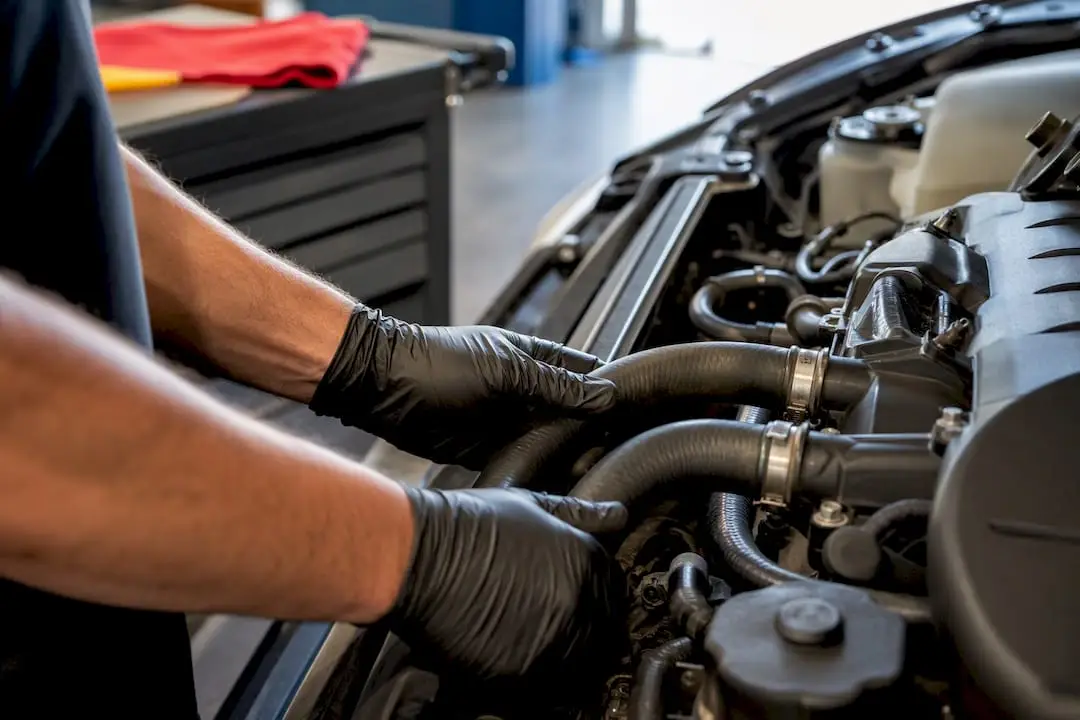
- Time the upper and lower radiator hoses. On a healthy system, the lower hose warms first while the upper hose stays cool until the thermostat opens, usually several minutes into warm-up. If both hoses warm up almost simultaneously right after startup, coolant is flowing before it should be.
- Use an infrared thermometer for a harder number. Aim it at the upper radiator hose near the thermostat housing during warm-up. A gap greater than 20°F between what the ECT sensor reports and what the hose is actually reading is a dependable red flag that coolant is circulating too early.
- Rule out a fan stuck on. A cooling fan running constantly from a stuck relay or a confused PCM signal can mimic an engine that never gets warm, since it keeps pulling heat away from the radiator regardless of actual coolant temperature. Listen for the fan right after a cold start; it should not be spinning yet.
- Check for a bad coolant temperature sensor as a copycat. A failing sensor can report an artificially low reading even when the thermostat and cooling system are working correctly, which is exactly why the hose test and the scanner data need to agree before you commit to a repair.
| Diagnostic check | Tool needed | What confirms a stuck-open thermostat |
|---|---|---|
| ECT live data + code scan | OBD-II scanner | Coolant temp stays low; P0128 stored |
| Hose warm-up timing | Hands or thermometer | Upper and lower hoses warm together |
| Infrared spot check | Infrared thermometer | Greater than 20°F gap vs. ECT reading |
| Fan behavior at cold start | Ears/eyes | Fan running when engine is still cold |
If any of these tests point to something electrical rather than mechanical, or if you are not comfortable working near a running engine and hot coolant, that is the moment to hand it off to a shop rather than keep testing on your own.
What Else Causes These Symptoms Besides a Bad Thermostat?
A worn-out thermostat that has physically failed in the open position is the most common culprit, but it is not the only one. A wrong-temperature-rated thermostat installed during a previous repair, or one installed backwards, can produce the exact same flat, low gauge reading and lukewarm heat.
Electrical gremlins get blamed less often but cause real confusion:
- A faulty coolant temperature sensor can report a false low reading even with a perfectly good thermostat doing its job
- A cooling fan stuck running pulls heat out of the system constantly and mimics the never-warms-up pattern
- Air pockets left in the cooling system after a previous coolant service can cause erratic gauge behavior that looks like a thermostat problem
- Diluted or incorrect coolant mix from a prior top-off changes how efficiently heat transfers, sometimes muddying the diagnosis further
Before anyone replaces a $25 to $80 part, it is worth confirming with the scanner and hose tests above. Swapping a thermostat that was never the problem just delays fixing whatever actually caused the symptoms.
What Happens When You Bring It in for Repair?
Thermostat replacement is the standard fix once testing confirms the part itself has failed. It is usually a straightforward job, roughly an hour of labor on most vehicles depending on how accessible the housing is, and parts typically run $25 to $80 before labor.
Here is the general sequence you can expect:
- Confirmation testing using a scanner for stored codes and live ECT data, plus a hose-warming check to verify the thermostat is the actual cause.
- Sensor and fan verification if the initial data is ambiguous, since replacing the thermostat when a fan relay or sensor is the real problem wastes your money and does not fix the symptom.
- Thermostat replacement, including a full coolant flush and refill to the manufacturer’s specified mixture.
- Post-repair verification, watching the gauge and rechecking ECT data on a test drive to confirm the engine now reaches and holds normal operating temperature.
For driving in the meantime, short, cautious trips at moderate speed are generally considered acceptable while you get to a shop, but avoid long highway runs and keep an eye on the gauge the whole way. Most shops can turn a confirmed thermostat replacement around same day once the vehicle is on the lift, though scheduling around a full diagnostic workup may mean booking ahead.
How Do You Prevent Thermostat Problems Down the Road?
Thermostat failures are rarely random. They tend to follow neglected coolant service or a cheap replacement part installed the wrong way.
- Follow your owner’s manual’s coolant change interval and always use the manufacturer-specified coolant mixture rather than whatever is on sale
- Inspect hoses, clamps, and the thermostat housing for cracking, weeping, or corrosion during routine cooling system service
- Insist on a correctly rated OEM-spec thermostat rather than a generic aftermarket part, and have the installed part’s rating noted in your service record
- Test your heater’s output before cold weather arrives so a weak thermostat does not surprise you on the first freezing morning; seasonal heating system checks catch this early
Why We Test Before We Replace
Dashboard gauges lie sometimes, and that is exactly why guesswork gets expensive. Technicians pair OBD-II scan data with hands-on hose timing checks before recommending a thermostat swap, because a fan relay or a flaky coolant temperature sensor can produce identical symptoms. Digital Vehicle Inspection documents each test with photos, so you see exactly what pointed to the thermostat instead of taking a verbal word for it. When the data is ambiguous, that is when a shop visit stops being optional and starts being the fastest path to an honest answer.
— Kwik Kar
Get Your Cooling System Checked at Kwik Kar of Van Alstyne
You do not have to keep guessing at a low gauge and a cold heater. Kwik Kar of Van Alstyne runs the same scanner and hose-timing checks covered above, backed by a Digital Vehicle Inspection with photos so you see exactly what our technicians found before you approve any work.

Every repair, thermostat included, is covered by our 2-year/24,000-mile warranty, and our ASE-certified technicians handle everything from a quick diagnostic scan to full cooling system repair. If you are dealing with a weak heater or a gauge that will not climb, limit your driving to short, cautious trips and get it looked at soon. Call us at (903) 712-5945 or book your auto repair appointment online, and drivers in Van Alstyne, Anna, Howe, Melissa, and Gunter can count on straight answers before any part gets replaced.
Sources
- Can You Safely Drive With Bad Thermostat Symptoms? 7 Warning Signs & Risk Guidelines For Car Owners
- What Happens If a Thermostat is Stuck Open? The Costly Truth
- Thermostat Stuck Open: Symptoms & Fixes 2026 | AmpAuto
FAQ
What Will Happen If My Thermostat Is Stuck Open?
Your engine will run cooler than designed, causing weak heater output, reduced fuel economy, and gradual internal wear if left unaddressed, though it is not usually an immediate danger to the engine.
How Long Can I Drive With a Stuck-Open Thermostat?
Cautious short trips to a repair shop are generally considered acceptable, but sustained highway driving should be avoided until the thermostat is checked.
What Triggers a Thermostat to Open?
A thermostat contains a wax pellet that expands as coolant heats up, mechanically pushing the valve open once the coolant reaches its rated temperature, which varies depending on the vehicle.
How Do You Unstick a Stuck Thermostat?
A stuck thermostat is not something you free up. It has to be replaced, since the wax pellet or spring mechanism inside has physically failed and will not reliably reopen or reclose.
Can a Bad Sensor Mimic a Stuck-Open Thermostat?
Yes. A faulty coolant temperature sensor or a cooling fan stuck running can both produce the same low-gauge, weak-heat symptoms, which is why scanner data and hose testing should confirm the thermostat before it gets replaced.