


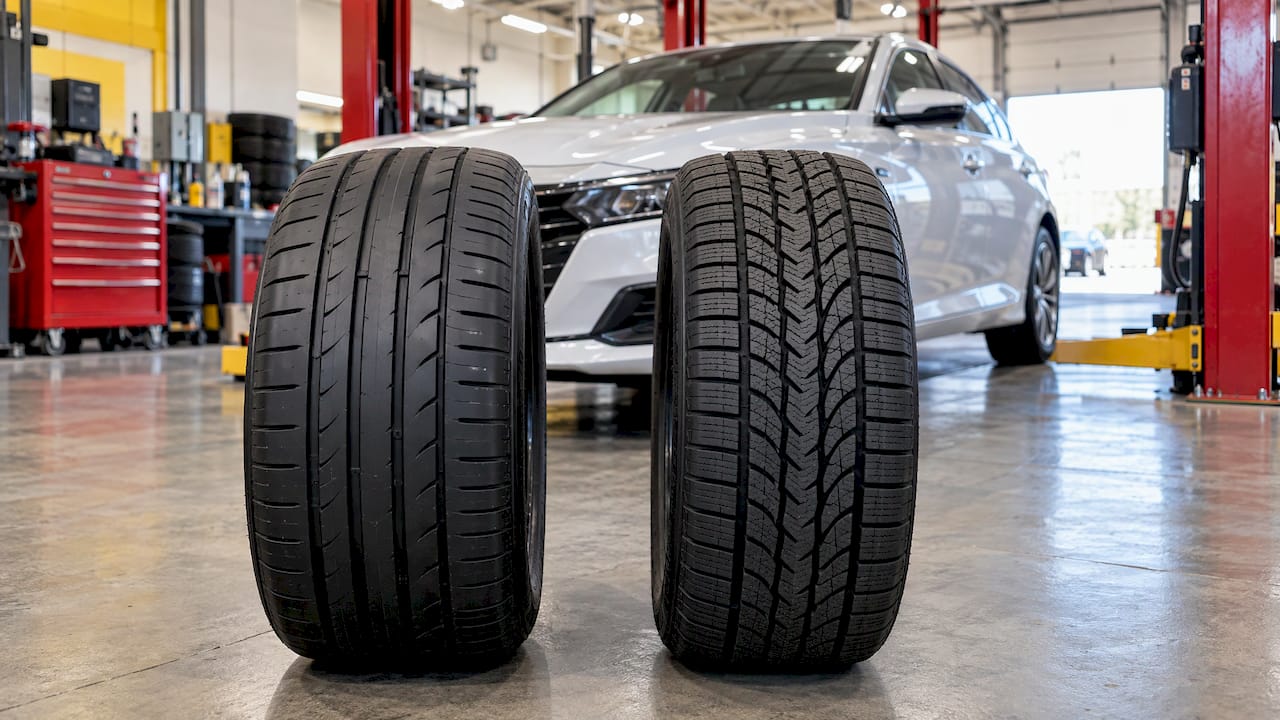
For most drivers in Van Alstyne, all-season tires are the safer everyday choice. They grip in rain, handle cool mornings and cope with the occasional light freeze. Summer tires give sharper handling and braking in warm weather, but they are not designed for below-freezing temperatures, snow or ice. If your car came with performance tires and you drive it hard on dry roads, summer tires can make sense. If it’s your daily driver, the school-run vehicle or the commuter, all-season is usually the better fit.
Below, we explain how the two types differ, where touring, performance and all-weather tires fit in, and how to choose for your car and your routes.
TL;DR
- Summer tires give the most grip and the shortest stops in warm weather. They stiffen in the cold and are unsafe on snow and ice.
- All-season tires trade a little sharpness for year-round usability, longer tread life and a quieter, more comfortable ride.
- All-weather tires are a subset of all-season tires that carry the Three-Peak Mountain Snowflake symbol and handle real winter better.
- Whatever you choose, check your owner’s manual or door-jamb label for the right size and pressure, and put the same type on all four wheels.
- Not sure what your tires need? We can look at them during a Digital Vehicle Inspection and show you photos.
Table of Contents
- The Short Version: What Each Tire Is Built For
- How They Compare in the Conditions You Actually Drive In
- Touring vs. Performance Tires
- All-Weather vs. All-Season: Not the Same Thing
- How to Choose for Van Alstyne, Anna, Howe, Melissa and Gunter
- Keeping Any Tire Safe and Lasting Longer
- Our Perspective
- Get Your Tires Checked in Van Alstyne
- Before the First Freeze
- FAQ
- Sources
The Short Version: What Each Tire Is Built For
A tire is a compromise between rubber compound, tread pattern and construction. Change one and you give something up somewhere else.
Summer tires use specialized tread patterns and rubber compounds that put more rubber in contact with the road. The result is more precise steering, cornering and braking, especially on high-performance vehicles. Michelin says they deliver excellent cornering and braking above 45°F, and that the rubber hardens in cold temperatures.
All-season tires balance wet and dry performance with light-winter traction. Bridgestone notes they generally last longer and ride more comfortably than summer tires across a wide range of vehicles.
| Summer tires | All-season tires | |
|---|---|---|
| Best temperature range | Warm weather, above about 45°F | Moderate climates, roughly year-round |
| Dry grip and handling | Sharpest | Good, a bit softer response |
| Wet roads | Strong in warm rain | Strong, built to balance wet and dry |
| Light snow | Not designed for it | Acceptable |
| Ice and heavy snow | Unsafe | Limited |
| Tread life | Typically shorter | Typically longer |
| Ride comfort | Firmer | Comfortable |
How They Compare in the Conditions You Actually Drive In
Hot, dry days
This is where summer tires earn their keep. Softer compounds and larger contact area mean more dry traction. Kumho explains that high-performance tires generally use wider treads, larger blocks and softer compounds, and that those gains generally come with faster tread wear.
A good all-season tire is still perfectly capable in a Texas summer. You give up some of the sharpness you would feel on a winding road or an emergency stop, and for most commuting you will never notice it.
Rain
Both types are built to move water. Summer tires are designed for warm, wet roads, and all-season tires are engineered to perform well in rain. What matters more than the category is the condition of the tread. A worn tire of either type will push water instead of clearing it, which is how hydroplaning starts. Spring storms in North Texas make this worth checking, and our seasonal maintenance guide for North Texas covers heat, hail and other season-specific checks.
Cool mornings and cold snaps
This is the weak point for summer tires. As temperatures fall, the rubber firms up and grip drops. Michelin lists summer tires as unsafe on snow and ice because of that hardening. A morning that hovers near freezing, with frost on the bridges around town, is exactly when you want a tire that stays pliable.
All-season tires are formulated to stay workable across a wider temperature range, which is a big reason they are the default for daily drivers.
Light snow and ice
All-season tires have some mud-and-snow capability, and NHTSA says they handle varied conditions. Tire Rack adds that they can handle light to moderate snow reasonably well but are not substitutes for dedicated winter tires if you drive in winter conditions regularly.
North Texas gets occasional ice and snow rather than months of it. That is a point in favor of all-season tires: you get a tire that works every day and gives you reasonable traction on the few bad mornings.
Touring vs. Performance Tires
The second big question is not about the season at all. It’s how the tire is tuned.
Touring tires bridge the gap between all-season and performance designs. Kumho describes them as combining good tread wear with handling and grip, plus very good noise and ride comfort. Performance tread designs improve wet and dry handling but usually bring more noise and shorter tread life.
Tire Rack breaks the all-season family into three steps:
- Standard touring: emphasizes tread life and ride comfort.
- Grand touring: adds quieter refinement and better wet and dry grip.
- Ultra-high-performance all-season: sharpens steering response and cornering limits.
Michelin says performance tires prioritize handling precision, grip and high-speed stability, with wider footprints, stiffer sidewalls and softer compounds. The trade-offs are a firmer ride, more noise and faster wear than touring or all-season tires.
Performance all-season: the middle road
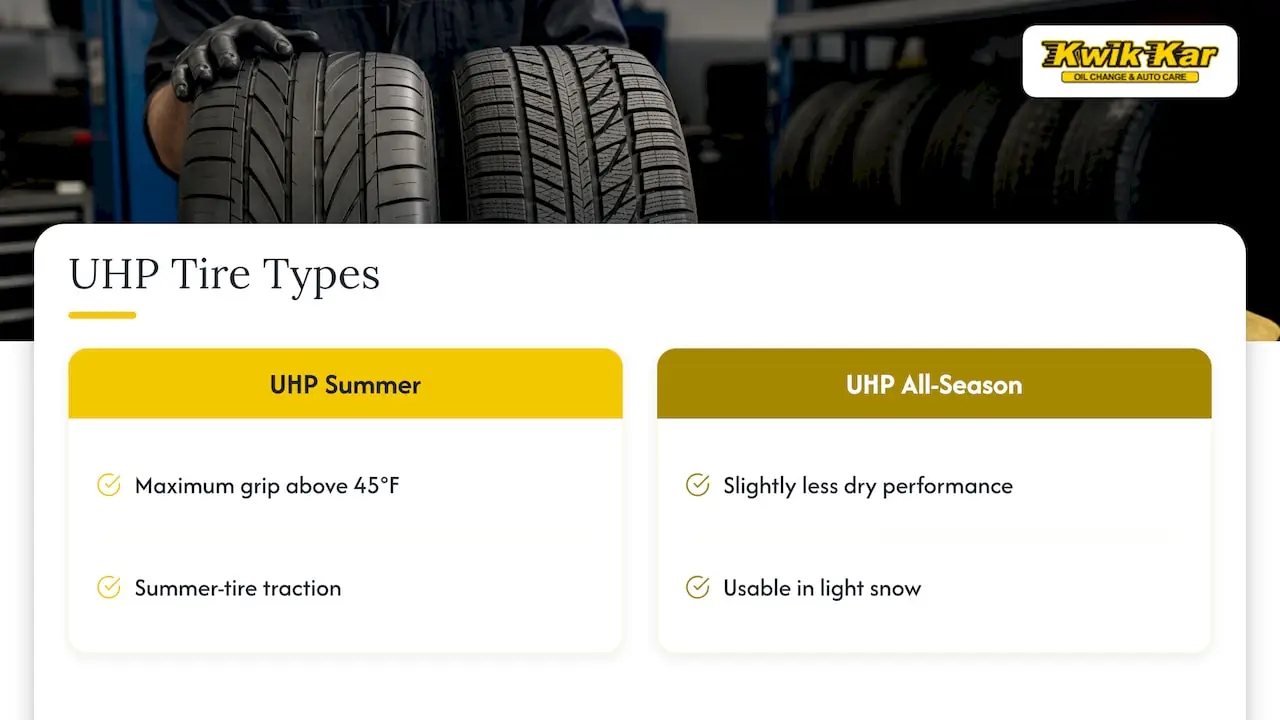
If you want sharper handling but need a tire you can drive in January, performance all-season tires are the middle road. Consumer Reports says performance all-season tires add grip, and ultra-high-performance all-season tires offer greater warm-weather traction, but those have limited treadwear and compromised winter grip.
Michelin puts the same idea another way: ultra-high-performance summer tires give maximum grip above 45°F, while the all-season versions sacrifice a small amount of dry performance to stay usable across a wider range, including light snow.
Models within a category vary a lot. Consumer Reports’ testing found wide performance variation among performance all-season models, so the specific tire matters as much as the label on the category.
All-Weather vs. All-Season: Not the Same Thing
The names sound interchangeable, but the difference is measurable.
All-weather tires carry the Three-Peak Mountain Snowflake (3PMSF) symbol. Michelin says they are designed to stay effective in genuine winter conditions without a seasonal swap. Consumer Reports describes them as a subset of all-season tires that perform a little better in snow without the accelerated wear of some winter tires.
What the sidewall markings mean
- M+S (mud and snow): based on tread geometry rather than a performance test, per Michelin. The Tire Manufacturers Association says it indicates limited mud-and-snow service.
- 3PMSF (mountain with snowflake): requires passing a standardized severe-snow traction test. Car and Driver reports the North American test requires at least 110% of the traction of a reference all-season tire on packed snow.
All-weather tires can run year-round, but they are a compromise. Dedicated winter tires remain the stronger choice for severe cold and ice. For North Texas, where hard winter is occasional, an all-weather tire is a reasonable step up if ice worries you.
How to Choose for Van Alstyne, Anna, Howe, Melissa and Gunter
NHTSA says to choose tires based on where you live and typical driving weather. Yokohama’s guidance says most U.S. drivers can meet general requirements with all-season tires, Sunbelt drivers may prefer summer tires, and snowbelt drivers who regularly face snow and ice should consider winter or 3PMSF-rated tires.
North Texas sits between those two cases. Summers are hot, but we do get freezing mornings and the occasional ice event. That is the situation a summer tire handles worst. Here is a simple way to sort yourself:
- You commute, run kids to practice and drive year-round. All-season, ideally a touring or grand touring model for tread life and a quiet ride.
- You drive a performance car and enjoy it. A summer tire is a real option, but plan on a second set of tires or on parking the car when it freezes. Never drive summer tires on snow or ice.
- You want sharper handling but one set of tires. A performance all-season tire, knowing tread life is shorter and winter grip is reduced.
- Ice is your main worry (you travel north in winter, or have an early commute on rural roads). Look at 3PMSF-rated all-weather tires.
- Your vehicle is a European model with specific tire requirements. Follow the manufacturer’s spec; our European auto repair team can help you match it.
Check what your car requires first
NHTSA says to check the owner’s manual or the Tire and Loading Information Label for the correct tire size. Don’t guess from what is on the car now, because a previous owner may have changed it.
Also look at the speed rating. The Tire Manufacturers Association lists symbols such as S at 112 mph, T at 118 mph, H at 130 mph and V at 149 mph, and warns that ratings don’t make top-speed driving safe in bad weather or with underinflated, overloaded, worn or damaged tires.
Match all four wheels
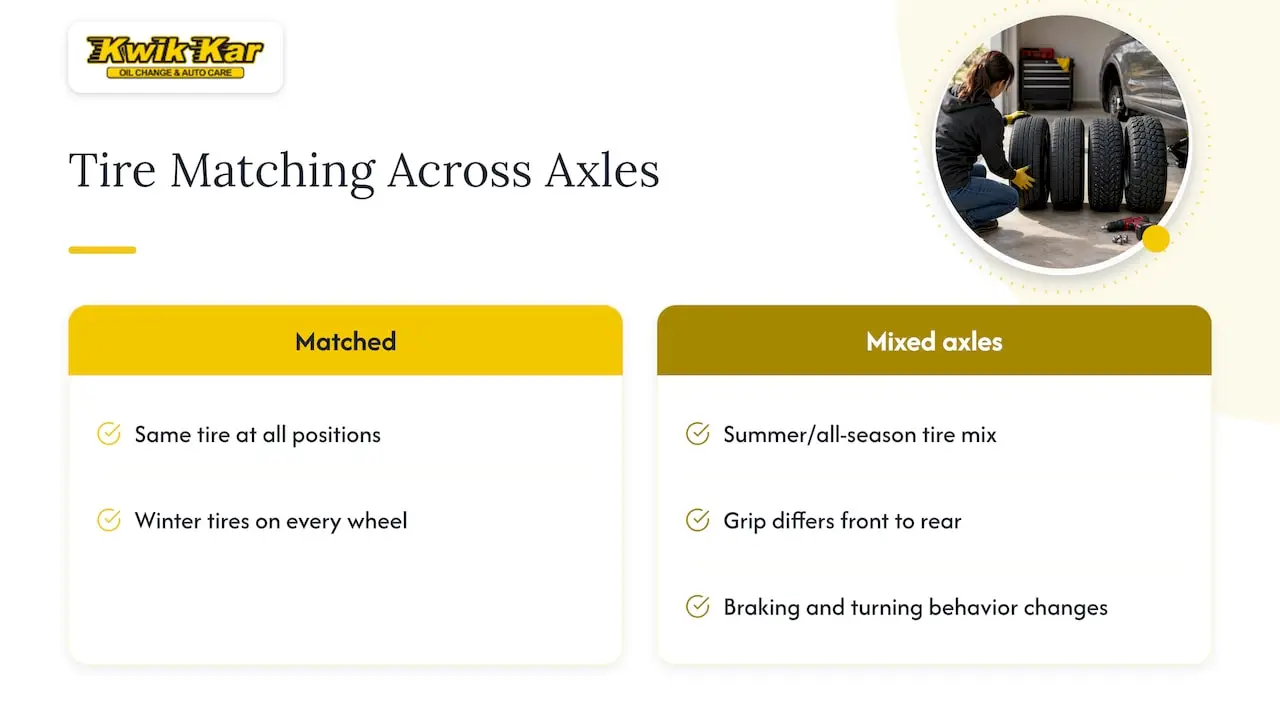
Yokohama notes that winter tires should be installed on every wheel position, because using them on only one axle can produce unpredictable handling. The same logic applies to mixing summer and all-season tires: different grip levels front and rear change how the car reacts when you brake or turn.
Keeping Any Tire Safe and Lasting Longer
The best tire choice loses its value if the tire is underinflated or worn.
- Pressure: the tire placard, certification label or owner’s manual gives the recommended inflation pressure. The Tire Manufacturers Association warns that underinflation creates excess heat and possible structural damage. Texas heat makes this more relevant, not less.
- Load: don’t exceed the vehicle’s load limits when towing or packing for a trip to Lake Texoma.
- Tread depth: shallow tread is the first thing that hurts wet-road grip. If your tires are getting low, replace them before the rainy season.
- Vibration: a shimmy at highway speed can come from balance or tire issues. Our page on road force balancing explains when it’s worth doing, which is especially common with wider, stiffer performance tires.
- Alignment and suspension: uneven wear on the edges of a tire points to alignment or suspension problems. Fix the cause before buying new tires, or the new set wears the same way.
- Don’t lower pressure for snow traction. Yokohama says this isn’t safe or effective.
Our Perspective
Most of the tire questions we hear at the shop aren’t really about summer versus all-season. They are about a family car that has to start, stop and turn the same way on a hot August afternoon and an icy January morning.
That’s why we usually steer everyday drivers toward all-season tires that match what the manufacturer specifies. It’s one set of tires, a comfortable ride and dependable wet-road grip. If you drive something that came with performance tires, we’ll tell you what that means for winter, in plain words.
What we care about most is that you see the real condition of your tires before you decide. Our Digital Vehicle Inspections include real-time updates and photos, so you can look at tread wear and sidewall condition yourself and decide what needs doing, without surprise costs. Our ASE-certified technicians handle tire sales and service, alignment, and the suspension and brake work that tires depend on.
We don’t push a tire you don’t need. We’d rather you leave confident that the set on your car fits your driving.
Kwik Kar
Get Your Tires Checked in Van Alstyne
If you are weighing all-season against summer tires, or wondering whether your current set will get you through winter, we can help. We offer tire sales and service along with wheel alignment, and our auto repair services cover the steering, suspension and brakes your tires rely on. Repairs come with a 2-year/24,000-mile warranty.

We have after-hours drop-off and free local rides, so a tire check doesn’t have to wreck your schedule. Our Digital Vehicle Inspection shows you what we see, with photos, and we never diagnose a problem without looking at the vehicle first. Call us at (903) 712-5945 or stop by.
Before the First Freeze
Tires are one piece of cold-weather readiness. Brakes matter just as much when traction is reduced, and we explain why in our article on brake maintenance before winter driving. For the full list of checks, see our winter car prep checklist. Good tires on worn brakes still lengthen your stopping distance, so check both together.
FAQ
Are all-season tires good enough for North Texas?
For most drivers, yes. All-season tires work across a wide temperature range, handle rain well and have some light-snow capability, according to NHTSA. If you regularly drive on ice or in heavy snow, look at 3PMSF-rated tires or dedicated winter tires.
Can I use summer tires year-round?
Not safely where it freezes. Summer tires are not designed for below-freezing temperatures, snow or ice, and the rubber hardens in the cold. If you own them, plan on a second set for winter or avoid driving the car in freezing conditions.
What is the difference between all-weather and all-season tires?
All-weather tires are a subset of all-season tires that carry the Three-Peak Mountain Snowflake symbol, meaning they passed a standardized severe-snow traction test. Standard all-season tires may only carry an M+S marking, which is based on tread geometry. All-weather tires give better winter traction while still working in summer.
Are touring tires or performance tires better for daily driving?
Touring tires usually suit daily driving better. They emphasize tread life, quietness and comfort, while performance tires prioritize grip and handling at the cost of a firmer ride, more noise and faster wear. If you want a bit more handling, a performance all-season tire is a compromise.
How do I know which tire size and pressure my car needs?
Check the owner’s manual or the Tire and Loading Information Label, usually on the driver’s door jamb. It lists the correct size and recommended inflation pressure. We can confirm both when you bring your vehicle in.
Sources
- Tire Safety Ratings and Awareness, NHTSA
- Summer vs. Winter vs. All-Season Tires, Michelin USA
- Learn Differences in Types of Seasonal Car Tires, Michelin USA
- What Are Performance Tire Characteristics, Michelin USA
- Summer Tires vs. All Season Tires, Bridgestone
- All-Season Tires: A Complete Buyer’s Guide, Tire Rack
- Choose the Right Tires for Your Car, SUV, or Truck, Consumer Reports
- Performance Should Be Key Factor When Tire Shopping, Consumer Reports
- Tire Ratings and Selection Guide, Kumho Tire USA
- Selecting the Right Tire, Yokohama Tire
- Tire Care & Safety Guide, U.S. Tire Manufacturers Association
- All-Weather Tires Explained, Car and Driver