




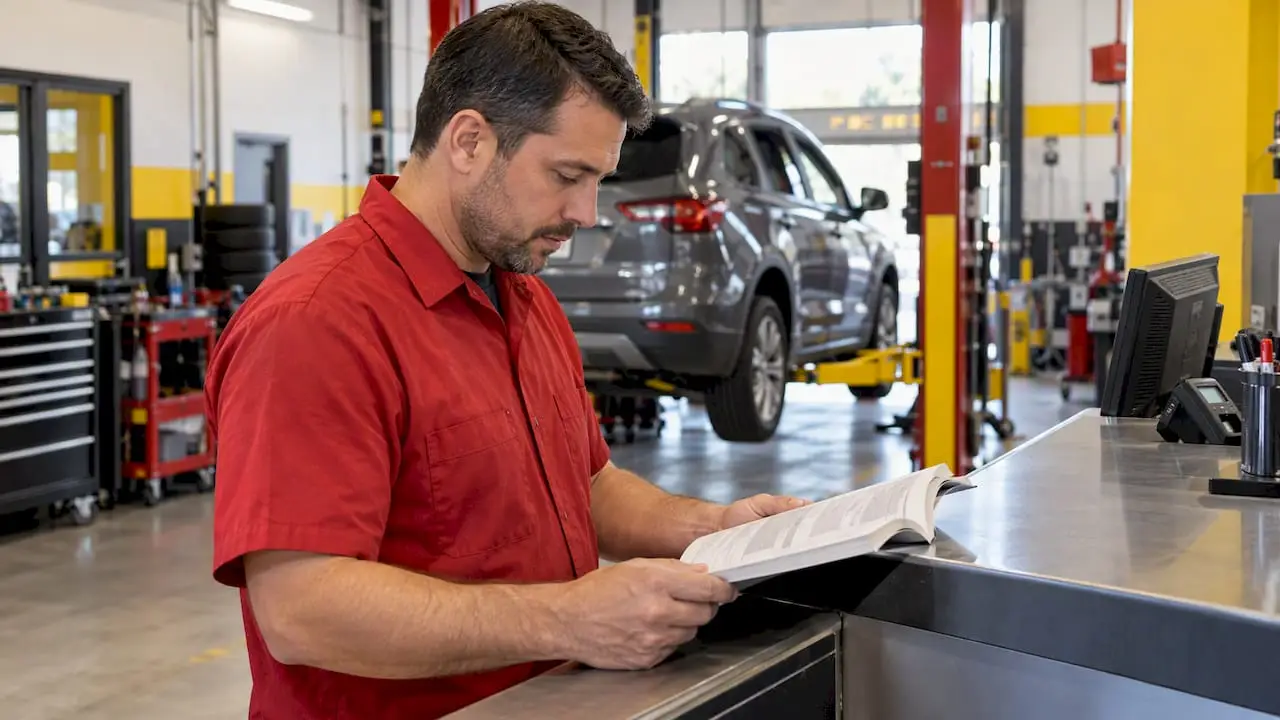
Factory scheduled maintenance is the set of manufacturer-recommended services performed at specific mileage or time intervals, and that exact work can be performed to your vehicle’s factory specifications. Before you book, grab your VIN or owner’s manual so we can confirm the correct schedule for your make and model. From there, a quick call or appointment gets you on the calendar.
TL;DR:
- Use the manual or VIN to confirm your schedule; service follows mileage or time, whichever comes first, and 5,000 miles or six months is common.
- Short trips, towing, dusty roads, frequent idling, or extreme temperatures can count as severe driving and call for shorter oil intervals and more brake inspections.
- Many manufacturers schedule broader service at 30,000, 60,000, and 90,000 miles, including checks of belts, hoses, and other wear items that vary by model.
- A dashboard service reminder can cover several scheduled inspections, not just an oil change, so inspect the vehicle before resetting the light.
Table of Contents
- What Factory Scheduled Maintenance Is and Why It Matters
- Common Services Included in Factory Scheduled Maintenance
- Maintenance Intervals, Dashboard Reminders, and What the Codes Mean
- How Your Driving Habits Change the Schedule
- How to Get Factory Scheduled Maintenance in Van Alstyne
- Why Trust an ASE-Certified Local Shop for Factory Scheduled Maintenance
- A Local Shop’s View on Records and Follow-Up Care
- How Kwik Kar of Van Alstyne Handles Your Factory Scheduled Maintenance
- FAQ
- Sources
What Factory Scheduled Maintenance Is and Why It Matters
Factory scheduled maintenance refers to the exact services your vehicle’s manufacturer lists for specific mileage and time milestones, not a generic once-over. It covers things like oil changes, fluid checks, and inspections timed to keep your engine, transmission, and emissions systems working the way they were designed to.
Following that schedule matters for more than smooth driving; it aligns with expert maintenance and car care advice to keep your vehicle in top shape. Reading your owner’s manual is the single most important step in caring for your vehicle, since it lays out the exact service intervals your manufacturer requires to keep your warranty valid and your emissions systems compliant. Skipping listed services can also affect how emission control systems perform over time.
Every vehicle is different. A sedan and a pickup truck rarely share the same intervals, so the owner’s manual (or a VIN lookup if that manual is long gone) stays the final word on what your specific car needs.
Common Services Included in Factory Scheduled Maintenance
Most factory maintenance visits combine a handful of routine items with occasional bigger jobs tied to higher mileage marks. At a typical interval, we check and address:
- Oil and filter change to keep the engine properly lubricated
- Tire rotation to even out tread wear
- Multi-point inspection covering belts, hoses, and suspension components
- Brake inspection to check pad thickness and rotor condition
- Fluid top-offs or changes, including coolant, transmission, and brake fluid
- Air and cabin filter replacement for engine performance and cabin air quality
As mileage climbs, your schedule may call for larger jobs like timing-belt replacement, a full coolant service, or transmission service. Whether and when those apply depends entirely on your make and model, which is exactly why the owner’s manual stays the reference point for every visit. If your filters and fluids need attention sooner than expected, our oil change services page covers what we check each time.
Maintenance Intervals, Dashboard Reminders, and What the Codes Mean
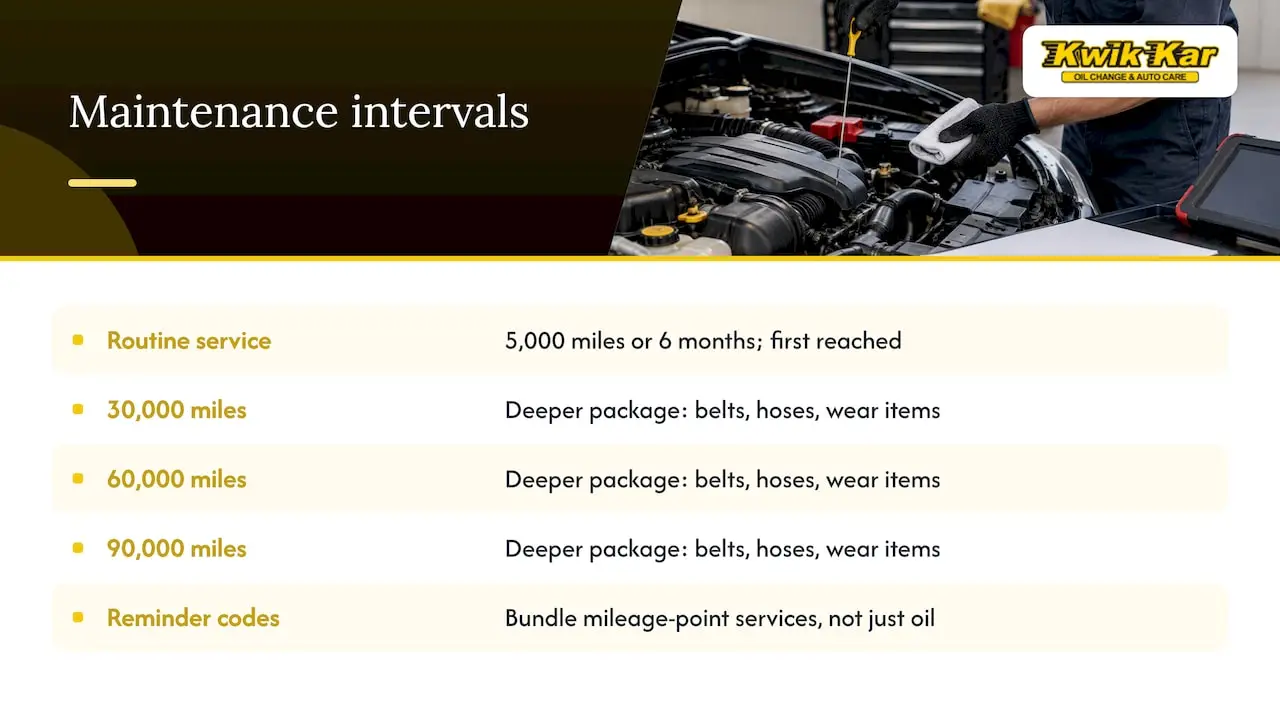
Manufacturers build factory schedules around two measures: mileage and time, whichever comes first. A car driven mostly on highways might hit 5,000 miles well before six months pass, while a car that sits more often might hit the time mark first. Many manufacturers list 5,000 miles or six months as a common interval for routine service, though your owner’s manual has the figure that applies to your vehicle.
You’ve likely heard the “30-60-90” shorthand. It refers to the deeper service packages that typically show up at 30,000, 60,000, and 90,000 miles, where inspections expand beyond the basics into belts, hoses, and other wear items.
When a dashboard code like “service due soon” appears, it usually represents a bundle of inspections and services tied to that mileage point, not just an oil change. Dashboard reminder codes often map to several required services at once, so we recommend a full inspection before resetting the light. Clearing it without doing the work just delays an honest picture of what your car needs. Our oil change interval guide breaks down how those reminders line up with real-world driving in our area.
How Your Driving Habits Change the Schedule
Owner’s manuals split service intervals into “normal” and “severe” driving categories, and most Van Alstyne commutes fall closer to severe than drivers expect. Severe conditions include short trips that never let the engine fully warm up, frequent towing, dusty or unpaved roads, lots of idling, and extreme heat or cold.
If your daily routine includes several of those, shorter oil change intervals and more frequent brake inspections make sense. A quick look at your commute pattern, trip length, and typical load helps determine which schedule actually fits your car, rather than defaulting to the printed “normal” timeline.
How to Get Factory Scheduled Maintenance in Van Alstyne
Booking factory scheduled maintenance is straightforward when you come prepared. Here’s how we approach it:
- Bring your VIN or owner’s manual, along with any past service records and active dashboard codes.
- We confirm your factory requirements through a VIN lookup and manufacturer service guidelines, then follow the prescribed procedures for your model.
- During the visit, we run a multi-point inspection and document every item performed.
- You receive a Digital Vehicle Inspection with photos and notes, so you can see exactly what we found and what we did.
- Records are kept on file, which makes future visits and warranty questions easier to track.
Pro Tip: Snap a photo of your dashboard reminder before your visit. It helps us match the code to the right service package instead of guessing from mileage alone.
Most routine visits wrap up the same day, and documented records mean your next appointment starts with history instead of guesswork.
Why Trust an ASE-Certified Local Shop for Factory Scheduled Maintenance
ASE certification means technicians have passed standardized tests covering maintenance and light repair, a recognized signal that the person under your hood knows manufacturer procedures inside and out. Our technicians follow manufacturer procedures, and our Digital Vehicle Inspections add photos and real-time notes so you see what’s happening instead of taking someone’s word for it.
Documented service records also matter down the road. They support warranty claims and help preserve resale value by showing a clear history of care. Add in after-hours drop-off and free local rides, and factory maintenance fits into a packed week instead of derailing it. Our auto repair overview covers the full range of work backed by our 2-year/24,000-mile warranty.
A Local Shop’s View on Records and Follow-Up Care
We think continuity matters more than most drivers realize. When your service history lives in one place, follow-up visits move faster because we already know what’s been done and when. Local experience also means we’re familiar with regional driving conditions and inspection timing, so manufacturer specifics get handled without guesswork or delay.
— Kwik Kar
How Kwik Kar of Van Alstyne Handles Your Factory Scheduled Maintenance

Factory scheduled maintenance works best when it’s done by people who treat your owner’s manual as the rulebook, not a suggestion. That’s the approach we take on every visit, whether it’s a routine oil change or a larger interval service tied to your mileage mark.
- Factory-scheduled maintenance performed to manufacturer specifications
- Digital Vehicle Inspections with photos so you see exactly what we checked
- Technicians trained on manufacturer procedures
- Documented service records to help with warranties and future visits
Convenience comes built in, too: features like after-hours drop-off and local rides help make a factory service visit fit into your day. Ready to get your vehicle on schedule? Call us at (903) 712-5945 or visit our factory-scheduled maintenance page to see what’s included and request an appointment.
FAQ
What is included in factory scheduled maintenance?
Factory scheduled maintenance typically includes oil and filter changes, tire rotation, multi-point inspection, brake checks, fluid top-offs, and filter replacement at set intervals. The exact items depend on your make, model, and mileage, as listed in your owner’s manual.
What does Volvo factory maintenance include?
Volvo factory maintenance follows the same manufacturer-recommended structure as other brands: scheduled oil changes, fluid checks, filter replacements, and inspections tied to specific mileage markers. The precise items and intervals for your Volvo are listed in its owner’s manual, which we can confirm during booking.
What is the 30-60-90 rule for car maintenance?
The 30-60-90 rule refers to expanded service packages that many manufacturers schedule at 30,000, 60,000, and 90,000 miles. These visits typically go beyond basic oil changes to include inspections of belts, hoses, and other wear items specific to your model.
What is the recommended maintenance schedule for a Ford Transit van?
A Ford Transit’s maintenance schedule depends on the model year and how the van is used, including cargo loads and daily mileage. Your owner’s manual lists the exact intervals, and we can confirm the current schedule using your VIN before your appointment.
How do I know if my vehicle needs “severe” service intervals?
If you drive mostly short trips, tow frequently, or deal with dusty roads and extreme temperatures, your vehicle likely falls under the “severe” service category. That usually means shorter oil change intervals and more frequent brake inspections than the standard schedule.