


An engine knocking sound can be minor or serious, and the difference comes down to when it happens and what it sounds like. A light pinging or rattling when you accelerate is often fuel or combustion related. A deep, rhythmic thump that follows engine speed, especially with an oil pressure warning light, can mean worn bearings and needs attention right away. We can’t diagnose a knock from a description, but this guide will help you sort out what you’re hearing, what is safe to check, and when to stop driving.
TL;DR
- A light, metallic pinging or rattling under load (accelerating, climbing a hill) is usually detonation, also called spark knock. Fuel, carbon buildup and ignition timing are the usual suspects.
- A deep, rhythmic thump that gets louder with RPM is a different animal. It can point to worn rod bearings or low oil and should not be ignored.
- If the oil pressure light comes on with a knock, pull over safely and shut the engine off. Do not keep driving.
- Check the oil level first. It takes two minutes and is the most useful thing you can do before calling a shop.
- Any knock that persists needs a real inspection. We’ll never promise a cause until we’ve looked at the vehicle.
Table of Contents
- Not every knock is the same noise
- Pinging when you accelerate: detonation
- A deep thump at idle: rod knock and low oil
- What you can safely check before you call
- Why a knock can be tricky to pin down
- Other causes on the list
- How serious is it, really?
- What happens when you bring it in
- Our perspective: don’t normalize the noise
- Prevention: keep knocks from starting
- Engine knock help for Van Alstyne and nearby towns
- FAQ
- Sources
Not every knock is the same noise
People use “knocking” for several different sounds. Naming the sound correctly is half of the diagnosis, so start here.
| What you hear | When it happens | Common direction |
|---|---|---|
| Light pinging or marbles-in-a-can rattle | Accelerating, climbing hills, heavy load | Detonation: fuel octane, carbon, timing |
| Deep, heavy, rhythmic thump | Idle and revving, often louder under load | Worn connecting rod or crankshaft bearings, low oil |
| Fast, light tapping or ticking | Often cold start, may fade as the engine warms | Valvetrain, lifters, exhaust leak, loose components |
| Slap or clatter that fades when warm | Cold start | Piston-to-cylinder clearance or similar wear |
The first row is generally manageable. The second row is the one that can end an engine. The sounds can overlap, which is why a professional listen matters.
Pinging when you accelerate: detonation
If the noise shows up when you press the gas, think detonation first. It happens when the air-fuel mixture in a cylinder ignites at the wrong moment instead of burning smoothly. Engine-noise guidance describes it as usually heard during acceleration and commonly called pinging or rattling.
Common triggers include:
- Fuel with too little octane for your engine. Check your owner’s manual or fuel door for the grade your engine requires.
- Carbon buildup on pistons and in the combustion chamber, which is more common on higher-mileage engines.
- Ignition timing or spark problems, including worn plugs.
- A lean mixture from a vacuum leak or fuel delivery trouble.
Left alone, repeated detonation is not harmless. The same source notes it can cause pitting on piston and cylinder wall surfaces. That’s why a “mild” ping that never goes away deserves a look.
Does premium gas fix it?
Sometimes. Switching to a higher octane can quiet a ping if low octane was the cause. But if your car is designed for regular, premium usually isn’t needed. Consumer Reports tested two SUVs on regular and premium and found the same fuel economy, with no pinging or knocking on regular. If you hear pinging on the grade your manual calls for, more octane is a test, not a cure. If the noise stays, get it diagnosed.
Old fuel and “bad gas”
A tank that sat is a real suspect. AAA says fuel can start to lose combustibility after sitting for as little as one to three months, especially ethanol blends, which can bring knocking or rough idle. If the car has been parked a while and the noise started after a fill-up or a restart, tell us. It changes where we look first.
Spark plugs and ignition
Worn or incorrect spark plugs can contribute to combustion problems. If your car is also hesitating or running rough, read our guide to the signs your spark plugs need replacement. If the check engine light is on with a misfire code, our P0300 diagnosis walkthrough explains how we avoid swapping parts blindly.
A deep thump at idle: rod knock and low oil
This is the knock people worry about, and they’re right to. Rod knock is a rhythmic thumping typically tied to worn rod bearings, insufficient oil or contaminated oil. Bearings ride on a thin film of pressurized oil. When the film thins out, metal starts contacting metal, clearances grow and the sound gets louder.
Clues that point toward a bottom-end knock rather than a ping:
- The sound follows engine speed, not just load.
- It’s present at idle and gets heavier as you rev.
- It’s accompanied by low oil pressure, a flickering oil light or a dropping oil level.
- It doesn’t change with a different fuel.
We can’t tell you from a description which bearing or which cylinder. That takes listening with the engine running, checking oil pressure and condition, and often further testing.
The oil pressure light is not a suggestion
AAA’s guidance is clear: when the oil pressure warning light comes on, pull over safely and turn the engine off. If the light stays on or returns after you’ve checked and refilled the oil, the engine should not be run and the vehicle should be towed for professional diagnosis. The same page notes that a normal running oil pressure reading typically falls between 25 and 65 PSI, though your vehicle may differ.
That is the line between “schedule an appointment” and “call a tow truck.” Driving a few more miles to get home is how a repairable problem becomes a replacement engine.
What you can safely check before you call
None of this requires tools beyond a rag. Do it with the engine off and the car on level ground.
- Check the oil level. The AAA oil guidance says the engine should be off for at least two to three minutes and the vehicle parked on level ground before you read the dipstick. Low oil is a leading reason for knocking, and checking and refilling it is the first step in sorting out a knock.
- Look at the oil. Very dark, gritty or milky oil is worth mentioning to us.
- Note any warning lights. Oil pressure, check engine (steady or flashing) and temperature all matter. A flashing check engine light is serious, and our article on what a flashing check engine light can do to your catalytic converter explains why.
- Write down when it happens. Cold start only? Only on hills? Only at idle once warm? Does it change when you let off the gas?
- Check the fuel. When did you last fill up, and with what grade? How long did the car sit?
What not to do: don’t keep revving the engine to “hear it better,” and don’t pour in additives hoping the sound goes away. If the knock is deep and rhythmic, every extra mile counts against you.
Why a knock can be tricky to pin down
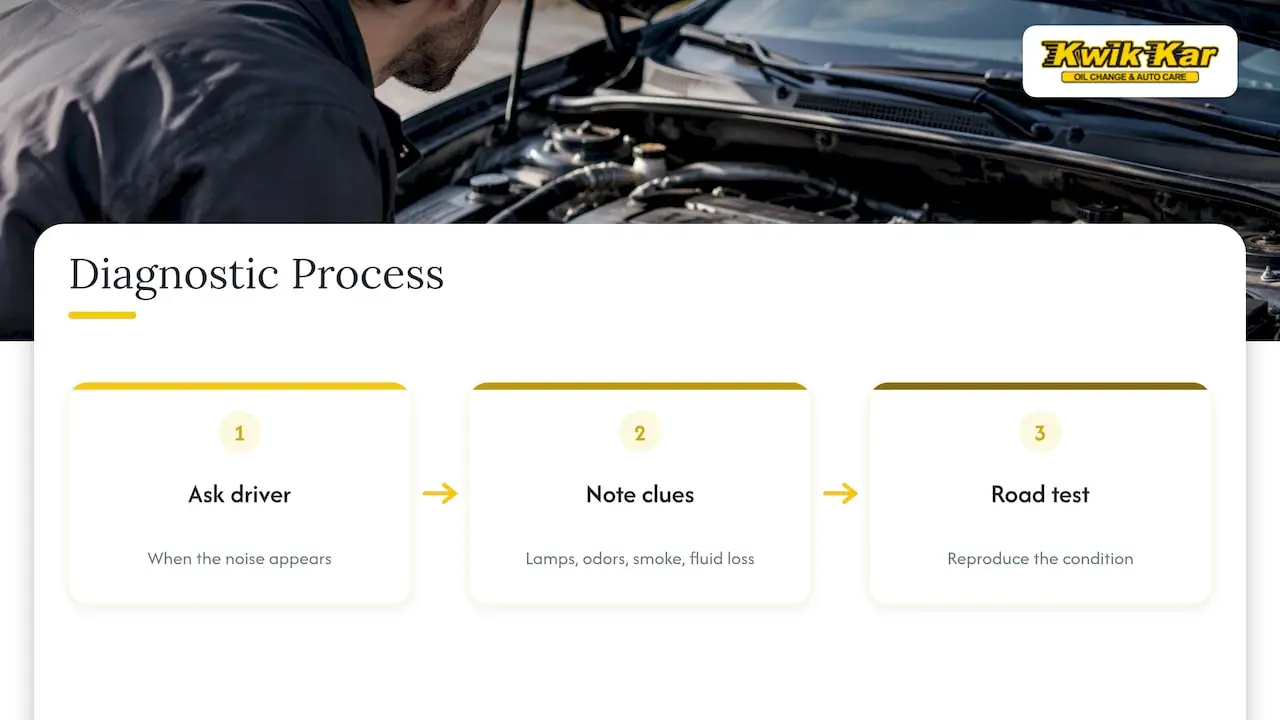
Noises travel through the engine block, so the spot you hear it isn’t always the spot it starts. A loose accessory, an exhaust leak, a bad pulley or an injector tick can all mimic a knock. Professional technicians use a structured process. One ASE-oriented study guide describes it as interviewing the driver about when the noise appears, such as cold start, acceleration, idle or after warm-up, then noting warning lamps, odors, smoke and fluid loss, and then duplicating the condition on a road test.
That’s why your notes help. The more precisely you describe the sound, the faster we can narrow it down.
Other causes on the list
Beyond detonation and bearings, knocking or knock-like noises can come from:
- Fuel delivery trouble. A weak pump or restricted flow can lean out the mixture. See the signs of fuel pump failure. Dirty injectors can also upset the spray pattern; this French-language guide covers the warning signs of clogged fuel injectors.
- Overheating or cooling problems. Hot spots in the combustion chamber promote detonation. If your temperature gauge has been climbing, our page on cooling system repair with a digital inspection is a good next read.
- Head gasket trouble. A failing gasket can bring overheating and misfires. We lay out five tests that confirm head gasket failure.
- Loose or worn components. Heat shields, belts, accessories and mounts can rattle in ways that sound like engine knock.
- Valvetrain wear. Lifters and valves usually make a lighter tick; engine ticking has its own list of causes.
How serious is it, really?
Here is a plain way to think about urgency.
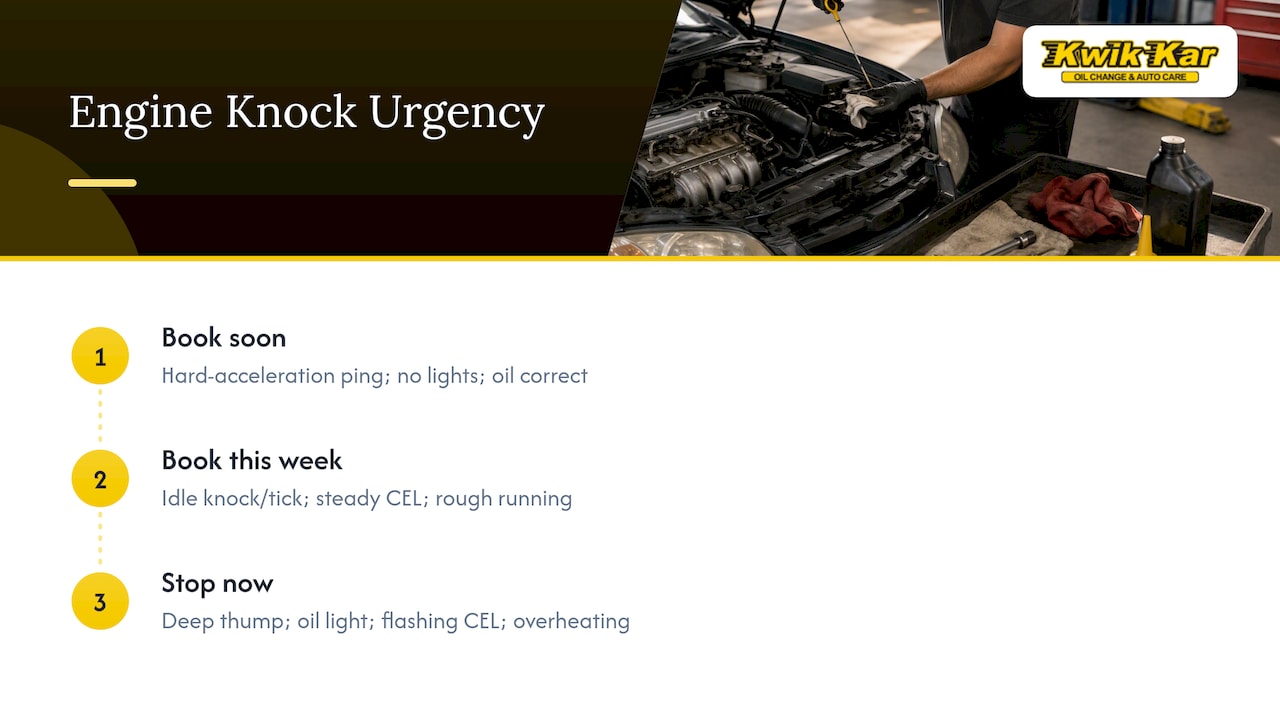
Book soon, drive gently: a light ping under hard acceleration, no warning lights, oil level correct. Try the correct fuel grade, avoid heavy loads and schedule an inspection.
Book this week, minimize driving: a persistent knock at idle, a ticking that doesn’t fade, or a steady check engine light with rough running.
Stop now: a deep, heavy thump, a lit oil pressure light, a flashing check engine light, overheating or a sudden loud change in sound. Pull over safely, shut it off and call us or a tow.
What happens when you bring it in
We start with a conversation, then the vehicle. Our engine diagnostics usually involve:
- Listening to the engine cold and warm, and on a road test when it’s safe to do so.
- Checking oil level and condition, and looking for leaks.
- Scanning for stored codes and reviewing live data.
- Inspecting plugs, ignition components, fuel delivery and cooling as the symptoms suggest.
- Showing you what we find in a Digital Vehicle Inspection with photos and real-time updates, so you see the same thing we do.
Then we explain your options and the cost before work starts. No surprises.
Repair options, from simplest to most involved
What’s needed depends entirely on the cause. Typical paths include:
- Correcting fuel grade or replacing old fuel.
- Replacing worn spark plugs or fixing ignition issues.
- Cleaning carbon or addressing the condition that creates it.
- Repairing a vacuum leak, fuel delivery or cooling problem.
- Oil and filter service, plus fixing the cause of any oil loss.
- Internal engine repair or replacement when bearings or other internal parts are damaged.
We won’t tell you which one applies until we’ve inspected the vehicle.
Our perspective: don’t normalize the noise
The most common thing we see with engine noises is waiting. The sound starts small, it comes and goes, and it’s easy to turn the radio up. We understand: you have work, kids to drive and a full week. But a knock is one of the few symptoms where time directly affects the repair.
We’d rather you come in for a ping that turns out to be a plug and a tank of fuel than see you after a bearing has failed. Our approach is built around that: ASE-certified technicians, a Digital Vehicle Inspection with photos, and plain-English recommendations. You decide what happens with your car, with the facts in front of you.
If a knock comes with an oil light, please don’t try to make it to us. Call, and we’ll help you figure out the safest next step. Repairs we perform are backed by a 2-year/24,000-mile warranty.
— Kwik Kar
Prevention: keep knocks from starting
- Stay on top of oil changes. Our oil change interval guide helps you match the schedule to how you drive. Between changes, check the dipstick.
- Use the fuel your owner’s manual calls for. Higher-quality fuel can help limit carbon, and AAA notes Top Tier fuel can reduce buildup.
- Don’t let fuel sit. If a vehicle will be parked for months, plan for it.
- Replace spark plugs on schedule and fix misfires quickly.
- Watch the temperature gauge and address coolant loss early.
- Follow factory maintenance. Seasonal checks such as fall fluids and filters catch small problems.
Engine knock help for Van Alstyne and nearby towns
We serve drivers in Van Alstyne, Anna, Howe, Melissa, Gunter and surrounding communities. If your engine is making a knocking sound, our engine repair team can inspect it, and our diagnostics service gets to the cause instead of guessing. We offer after-hours drop-off, free local rides and a comfortable waiting area with WiFi and coffee. Not sure who to trust with your engine? Read three proofs to look for in a mechanic.
Call us at (903) 712-5945 or visit kwikkarvanalstyne.com to request an appointment.
FAQ
Is engine knock bad?
It depends on the type. A light ping can often be traced to fuel or ignition, but repeated detonation can pit pistons and cylinder walls if ignored. A deep, rhythmic knock can mean worn bearings and is more urgent. Either way, get it inspected rather than waiting.
Can low engine oil cause knocking?
Yes. Low or contaminated oil is a well-known factor in bearing-related knocking. Check the dipstick with the engine off on level ground. If the oil is low, refill it. If the noise or an oil pressure light remains, do not run the engine and have it towed in.
Why does my engine knock when I accelerate?
A light pinging or rattle under acceleration is most often detonation, linked to low-octane fuel, carbon buildup or ignition timing. Try the fuel grade your owner’s manual specifies. If it continues, it needs a professional diagnosis.
Why does my engine knock at idle?
Idle knocking can come from worn bearings, low oil pressure, loose components or valvetrain wear. Because the causes range from minor to serious, check the oil and warning lights, then have us listen to it. If the oil pressure light is on, shut it off and call for a tow.
Can bad gas cause engine knock?
It can. Old fuel, especially ethanol blends that sat for a few months, can lose combustibility and contribute to knocking or rough idle. Low octane for your engine’s requirement can do it too. If a fresh tank of the correct grade doesn’t fix it, something else is going on.
Sources
- Detonation, Pre-ignition (Pinging) Noise
- Why You Might Not Actually Need Premium Gas, Consumer Reports
- Does Gasoline Go Bad? AAA Club Alliance
- Answers to Common Questions About Oil Changes, AAA Via
- Engine Knocking Sound: What Does it Mean?
- Engine Leak, Noise, and Cover Inspection